

-
AboutMount Heng, an outstanding representative of the splendid mountains and rivers of China, a symbol of national prosperity, a totem of national spirit, an important geographical indication of the country, and holds the status of a national mountain.More
-
CultureHengshan has been a famous scenic spot and important birthplace of Taoism in northern China since ancient times. Carrying the symbols of Chinese civilization, it has nurtured profound regional culture and folk customs.More
-
-
Tourist GuideUnderstand relevant information about the scenic area and enjoy a better travel experience.More
-
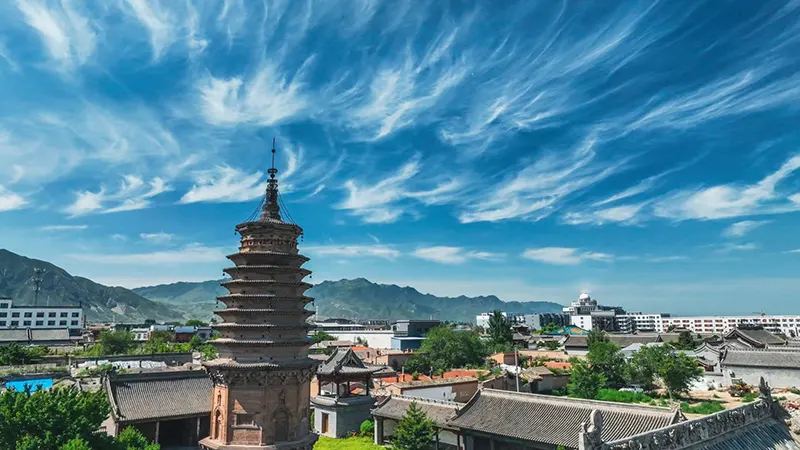
Surrounding activitiesThe ancient city of Hunyuan at the foot of Mount Heng in Beiyue has a long history, rich cultural heritage, beautiful scenery, and a convergence of agriculture, commerce, and animal husbandry. It has nurtured a unique regional culture and is renowned for its fine wine and delicious food.More








The Number One Mountain in North China - Hengshan Mountain
Publish Time:
2020-01-15 16:17
Source:

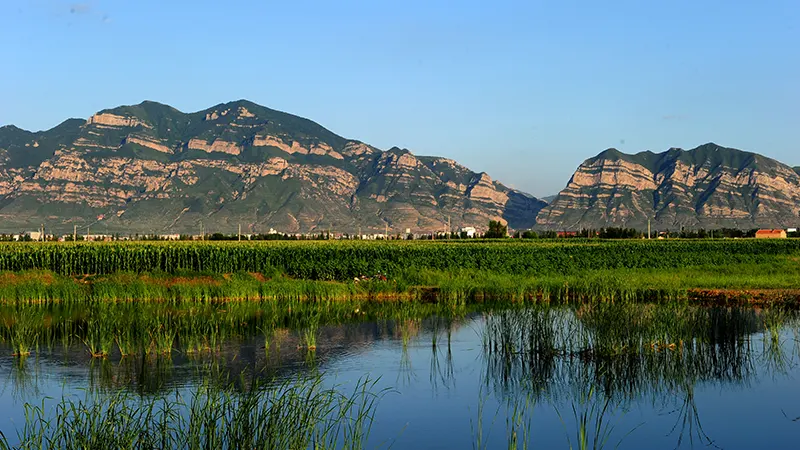
Mount Heng, also known as the Northern Mount, is one of the Five Great Mountains of China, along with Mount Tai (East), Mount Hua (West), Mount Heng (South), and Mount Song (Central). Mount Heng has long been called the "Northern Pillar of Heaven and Earth" and a "famous mountain in the remote areas". In 1982, it was designated as a nationally key cultural relic protection unit by the State Council.
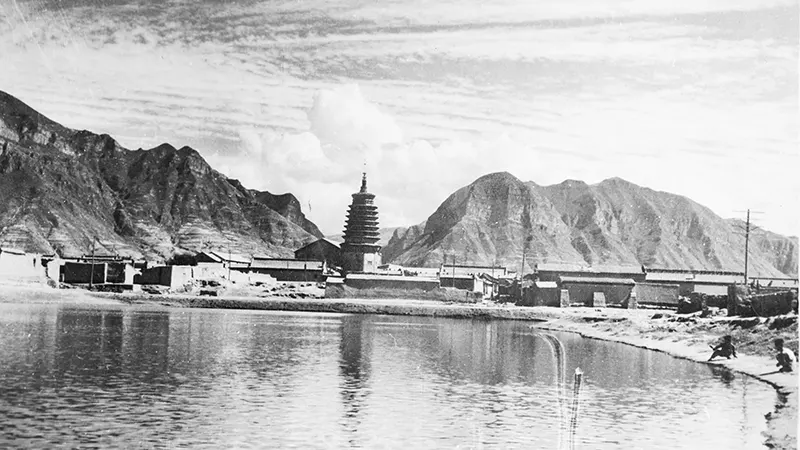
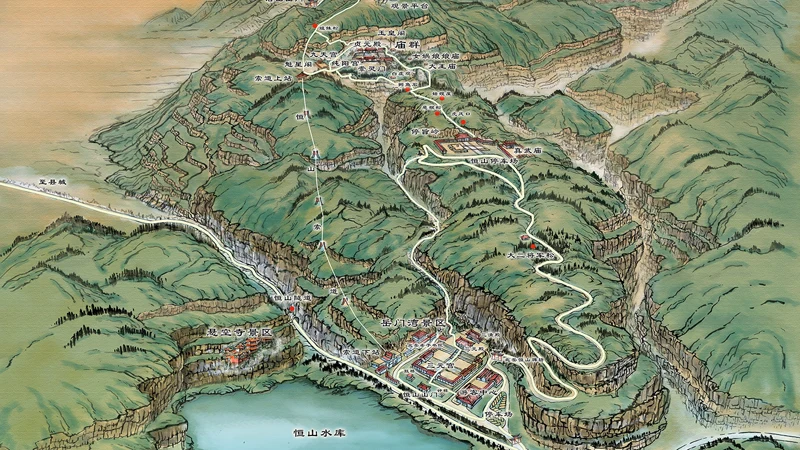
Mount Heng, historically known as Changshan, Hengzong, Yuan Yue, and Zi Yue, is located 10 kilometers south of Hunyuan County and 62 kilometers from Datong City. The strategically important passes of Daomanguan, Zijinguang, Pingxingguan, Yanmenguan, and Ningwuguan, served as a vital gateway between the northern plateau and the plains of Hebei, making it a historically significant battleground.
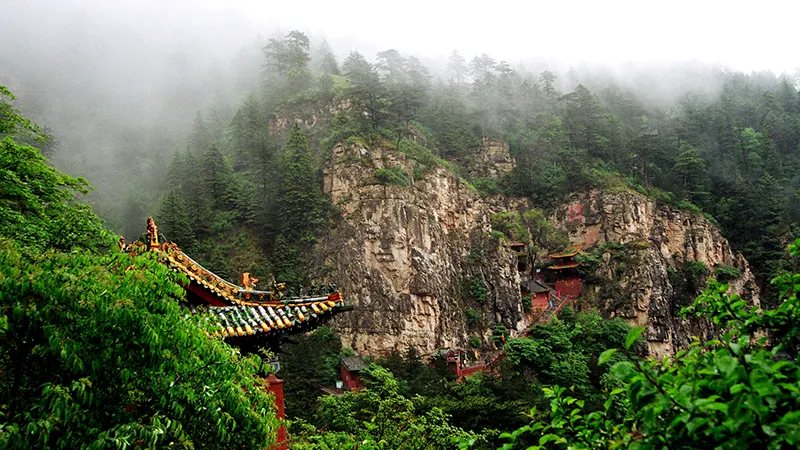
Mount Heng forms the watershed between the Sanggan River and the Hutuo River, tributaries of the Hai River. It boasts 108 peaks and stretches 150 kilometers east to west, spanning Shanxi and Hebei provinces. Westward, it connects to Yanmen Pass; eastward, it extends across the Taihang Mountains. It shields the three Jin provinces to the south and overlooks Yunzhou and Daizhou to the north. Its vast, imposing presence dominates the northern landscape. There is an ancient saying: "Mount Heng is like a journey; Mount Tai is like sitting; Mount Hua is like standing; Mount Song is like lying down; Mount Heng is like flying."
The main peak of Mount Heng, situated south of Hunyuan County, reaches an altitude of 2016.8 meters, the highest among the Five Great Mountains. It is known as the "Northern Pillar of Heaven and Earth," a "famous mountain in the remote areas," and the "second highest mountain in the world". Mount Heng is renowned for its Taoist heritage and has attracted visitors for centuries with its spectacular and perilous scenery.
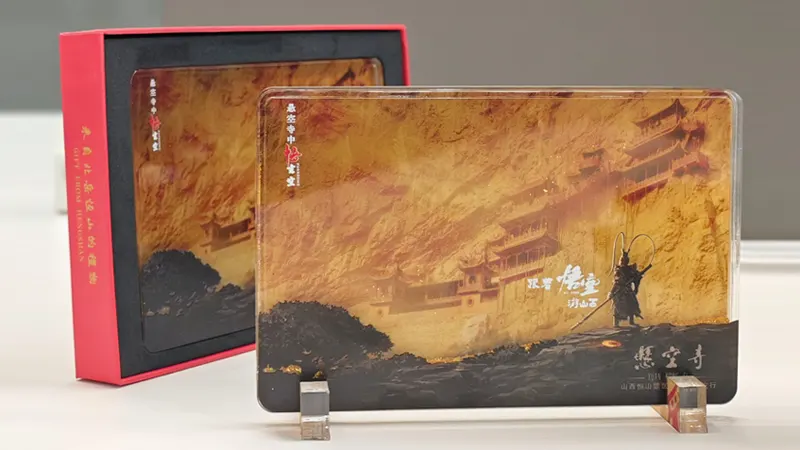
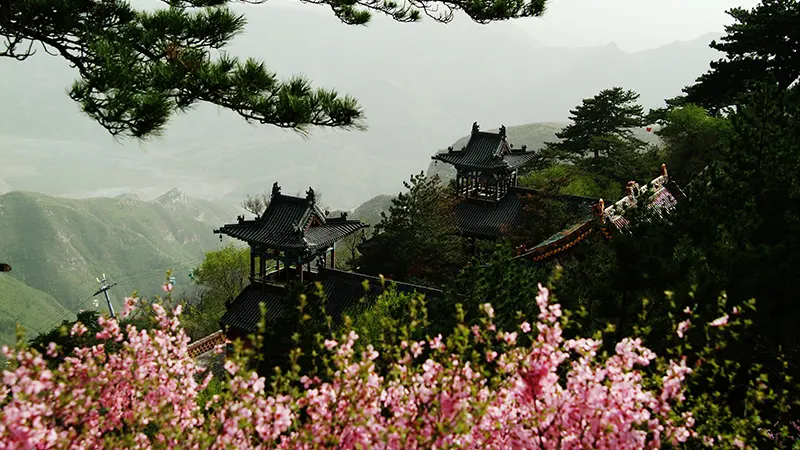
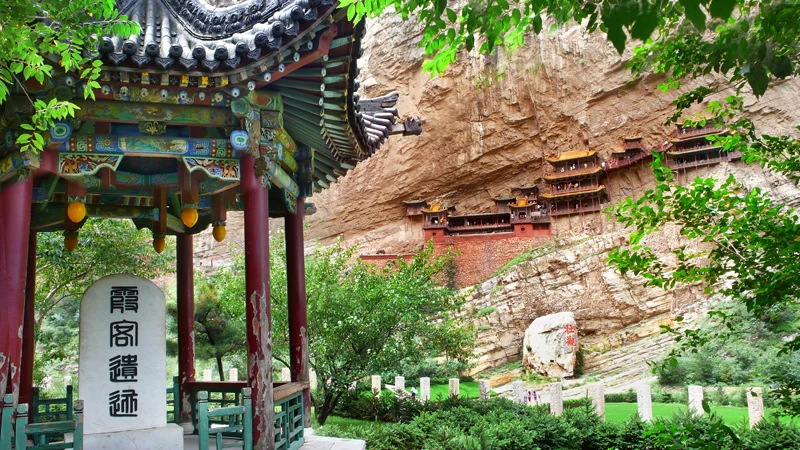
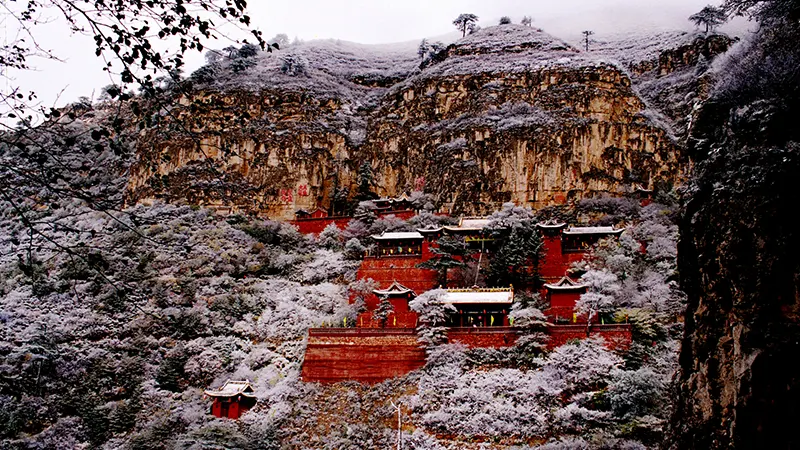
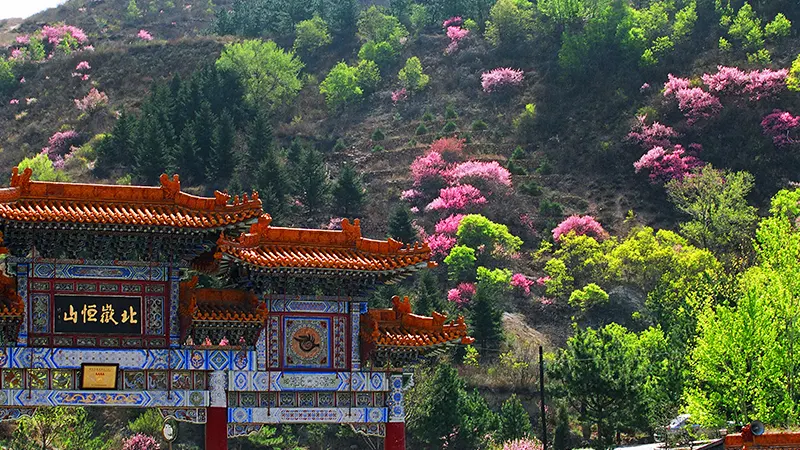
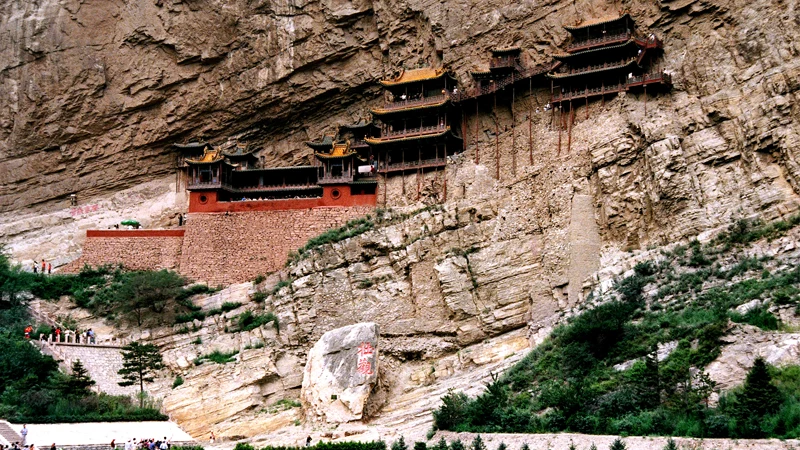
Ascending Mount Heng reveals a breathtaking panorama of verdant pines and cypresses, temples and pavilions, exotic flowers and plants, and mysterious caves and rocks, forming the famous Eighteen Views of Mount Heng. Places like Guolaoling, Gusaoyan, Feishiku, Huanyuandong, Hufengkou, and Dazibai are imbued with mystical charm. The Hanging Roots Pine, Zhizhuy, and the Bitter-Sweet Well are natural wonders of Mount Heng. The Bitter-Sweet Well, located halfway up the mountain, consists of two wells a meter apart, yet their waters differ dramatically; one is sweet and cool, known as the Sweet Well, while the other is bitter and undrinkable. Despite its shallow depth, the Sweet Well provides an inexhaustible supply of water, sufficient for thousands. During the Tang Dynasty, Emperor Xuanzong bestowed the name "Dragon Spring Temple" on the Sweet Well. The Hanging Temple, known as an earthly paradise, is built precariously into the cliff face, its horizontal beams supporting it above a steep valley. The inscription "Magnificent" carved on the cliff below the temple is believed to have been written by the famous Tang Dynasty poet Li Bai after his visit.
Keywords:
Hengshan
Next Page
Related News
Contact Us
Beiyue Hengshan Scenic Area:
Travel Inquiry:+86-352-8333077
Ticket Inquiry:+86-352-8333031
Travel Complaints:+86-352-8333081
Emergency Rescue:+86-352-8333037
Scenic Area Product After-Sales Service Hotline:
+86-18636203837
+86-15383522518
Mount Hengshan Scenic Area Administration Center (Official)
+86-352-8322142
Hanging Temple
+86-352-8327795
Yuemenwan (Hengshan Mountain Gate)
+86-352-8480060 +86-352-8328318 +86-352-8328530
Hengzong
+86-352-8480115
Tianfeng Ridge
+86-352-8480114
Yong'an Temple
+86-352-8322390
Li's Family Cemetery
+86-352-8322381
Hengshan Cableway
+86-352-8322255
Official Media
Tiktok