

-
AboutMount Heng, an outstanding representative of the splendid mountains and rivers of China, a symbol of national prosperity, a totem of national spirit, an important geographical indication of the country, and holds the status of a national mountain.More
-
CultureHengshan has been a famous scenic spot and important birthplace of Taoism in northern China since ancient times. Carrying the symbols of Chinese civilization, it has nurtured profound regional culture and folk customs.More
-
-
Tourist GuideUnderstand relevant information about the scenic area and enjoy a better travel experience.More
-
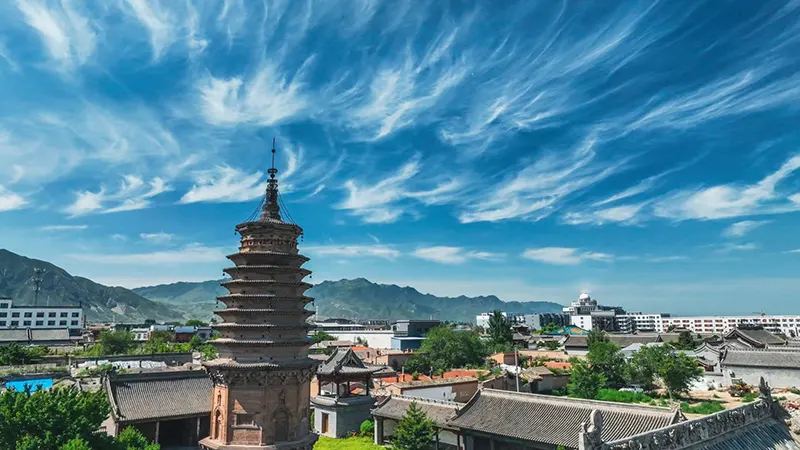
Surrounding activitiesThe ancient city of Hunyuan at the foot of Mount Heng in Beiyue has a long history, rich cultural heritage, beautiful scenery, and a convergence of agriculture, commerce, and animal husbandry. It has nurtured a unique regional culture and is renowned for its fine wine and delicious food.More

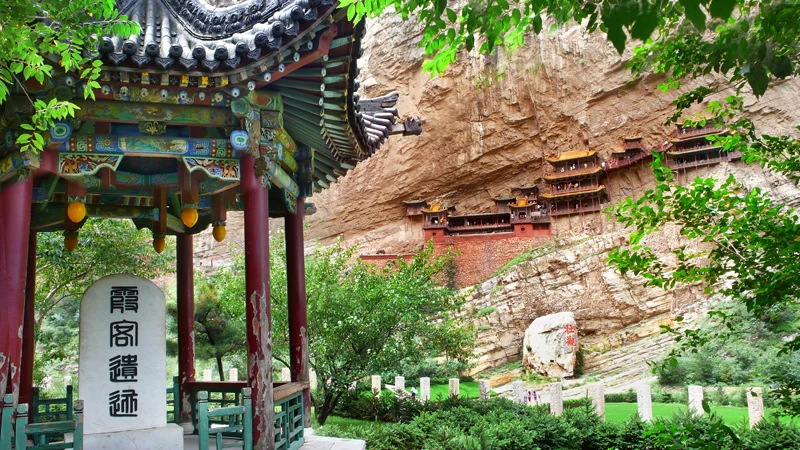
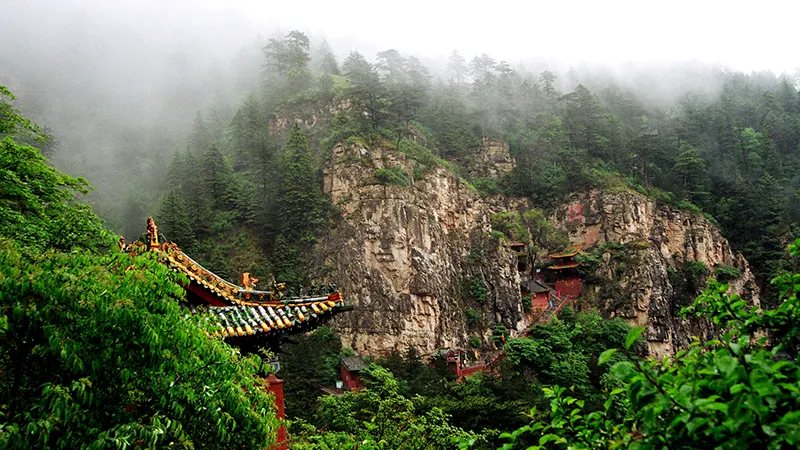
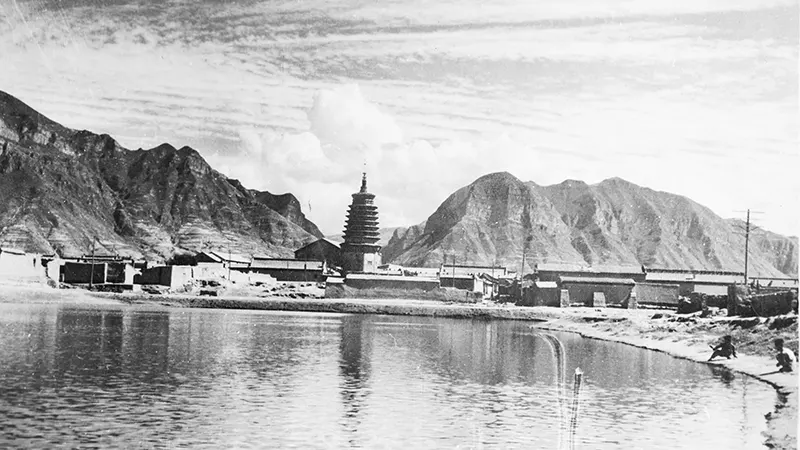
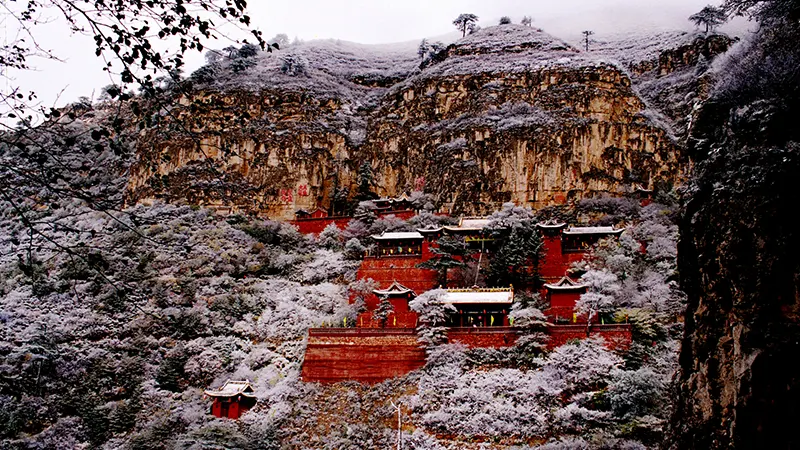





Republic of China waistcoat tripod | 1916 Hengshan Mountain travelogue
Publish Time:
2025-03-18 10:40
Source:
In the autumn of 1916, Ma Jiading, a journalist from Shanxi Province, went to Lingqiu on business. After finishing his work, he traveled to Hunyuan and visited Hengshan Mountain. He wrote a travelogue titled "A Travelogue of Hengshan Mountain in North Shanxi," which was serialized in three installments in the Shanxi newspaper, "Laifu Daily."
Editor's Note
In the autumn of 1916, Ma Jiading, a journalist from Shanxi Province, went to Lingqiu on business. After completing his work, he visited Hengshan Mountain in Hunyuan on the way, wrote the "Travel Notes of Hengshan Mountain in North Shanxi," which was serialized in three issues of the Shanxi "Laifu Bao." Ma Jiading was a prominent figure in modern Shanxi. Because of his close cultural exchanges with Guo Xiangsheng (son-in-law of Hunyuan), a literary master of the Three Jins, and frequent interactions with Rong Jiasan (a native of Hunyuan), an important figure in the military and political circles, although he was familiar with Hunyuan, this was his only visit to the area and Hengshan Mountain. His writing is magnificent and extraordinary, with a grand scale. Reading it is like being there, as if you are traveling together, happy and carefree.
Travelogues of modern figures visiting Hunyuan and Hengshan Mountain have always been a focus of this journal. This article is now published to share with our readers.
Ma Jiading's Filial Piety

Ma Jiading (left) and his grandmother (right)
Photographed in Taiyuan in 1930
Ma Jiading (approx. 1890—1954), courtesy name Libo, was a native of Wudoui Village, Jishan County, Shanxi Province. He was a prominent figure in the political and academic circles of the Republic of China, a "Tong" generation brother of the Qing Gang, a pioneer of modern martial arts in Shanxi, and a famous bibliophile.
When Ma Jiading was a minor, his parents passed away one after another, and he was raised by his grandmother, Madame Yang (1839—1931). Later, he took his grandmother to live with him in his private residence on Dong Erdao Street, Jingying Street, Taiyuan, showing utmost filial piety. After his grandmother's death, Ma Jiading respectfully invited several prominent figures from Shanxi to jointly compose an epitaph. Guo Xiangsheng wrote the text, Zhao Tieshan wrote the calligraphy, and Zhao Changyuan, Zhao Tieshan's younger brother, wrote the inscription. This could be regarded as the top-level collaboration for epitaphs in the province at that time.

Travel Notes of Hengshan Mountain
Travel Dates: Autumn 1916
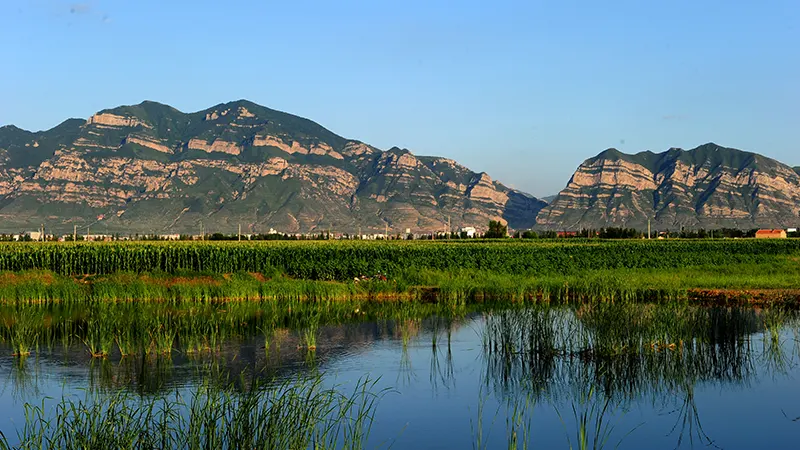
Hengshan Mountain is located more than ten li south of Hunyuan County, Shanxi Province. It was also known as Changshan in ancient times, presumably taking its name from the "constant" in "Fengsu Tong Hengchang." All things submit to the north, the meaning of its "constant" and long-lasting way. One theory is that it was changed from "Heng" to "Chang" to avoid the taboo of Emperor Wen of Han. To the north, it connects with Yu Hua, to the south it overlooks all of Jin, to the east it spans Youyan, and to the west it controls Yanmen. It is indeed the key to the northern frontier and the throat of the Central Plains. In the past, its strategic location was dangerous and crucial for military use, which is far from comparable to Song Hua Tai Heng. According to "Shangshu", it is recorded that Shun made a hunting tour to Damo Mountain, and because of the obstruction of snow, he made a remote sacrifice. Later generations followed this. Some were puzzled by the legend of flying rocks, some started from the border between Yi and Xia, therefore, the sacrificial rites of past dynasties were mostly held in Quyang. Even during the Ming Dynasty, although Ma Wensheng had requested corrections, he was blocked by the Minister of Rites, Ni. At the beginning of the Qing Dynasty, the Minister of War, Qian Ben, initially requested a change of location for the sacrifice, and only then did it return to the true face of the mountain spirit. The abundance of material resources is inferior to the Four Great Mountains, but the springs and stones are naturally unique.
Although inferior to the Four Great Mountains in terms of boat and carriage tracks, records of merits, tourists' footprints, and poets' inscriptions, the traces of Mao Ying, Zhang Guo who practiced alchemy, and those who sought immortality are still close. Apart from grains, the mountain produces plants such as melons, mushrooms, and pine and cypress; apart from livestock, the animals include pheasants, eagles, deer, and leopards and tigers; medicinal herbs include Polygonatum odoratum, white mushrooms, Chinese nettle, and fragrant grass. There are also nineteen kinds of sacred herbs; other unique flowers and plants are unique to this mountain, which are countless and unnamed. Those who do not hide themselves, entrust themselves to the spiritual realm, explore the depths, and travel to and fro in the valleys can only hear them, but not see them. I, as a person in exile, am always burdened by worldly matters, and my body and soul are exhausted. I have a fondness for literature, but I lack the opportunity to meet Hongjing. I am biased towards the shackles of benevolence and righteousness, and I am fond of clouds and pines. Every time I am on duty, I will fulfill my long-cherished wish. The real meaning is elsewhere, seeking the reputation and communication is useless, and sacrificing ambition and integrity is not desirable either.
In the autumn of Bingchen (1916), I had business in Lingqiu. Lingqiu is where the tomb of King Wuling of Zhao is located, named after the place, and borders Hunyuan to the west. After completing my business, I set off early in the morning and encountered rain at Wangzhuang (Wangzhuang Fort is 85 li from Lingqiu). Riding a donkey over Qingfengling (Qingfeng Ridge is extremely dangerous and difficult to climb), the clouds and mountains were newly clear, overlapping and slender, competing for beauty and charm, and welcoming me with green. I have been longing for Hengshan Mountain, so I asked about it wherever I went, but I could not see it yet. Winding my way through the valleys, it was like entering a pot, cliffs standing on both sides, and a ray of light shining through the sky. After leaving the valley, I arrived at Xiapanpu (also called Xiabanpo). There is a majestic mountain squatting at the northern pole, that is Mount Taihang.


Originally published in Shanxi "Laifu Bao", No. 419
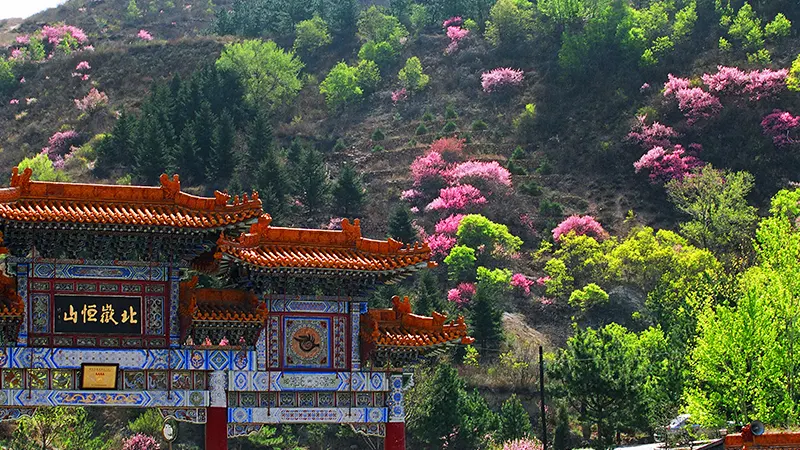
After walking about four li, there are three pine trees, ancient and tall, like umbrellas. It is a pity that they grow here, unable to compete with the "Five Dukes". Is it because the emperor cannot be a minister, and the feudal lords cannot be friends? However, in terms of their loftiness, they cannot be compared with the pine trees planted by the emperors and kings of Qin and Han. Passing Wangxian Pavilion and resting at Tingzi Ridge (the name of a village halfway up the mountain), there are three to five farmhouses, with earthen houses and thatched windows, carefree and enviable. From the mountain gate to here, the soil is more than the stone. After this, there is more stone than soil, and the ancient pine trees are also dense.
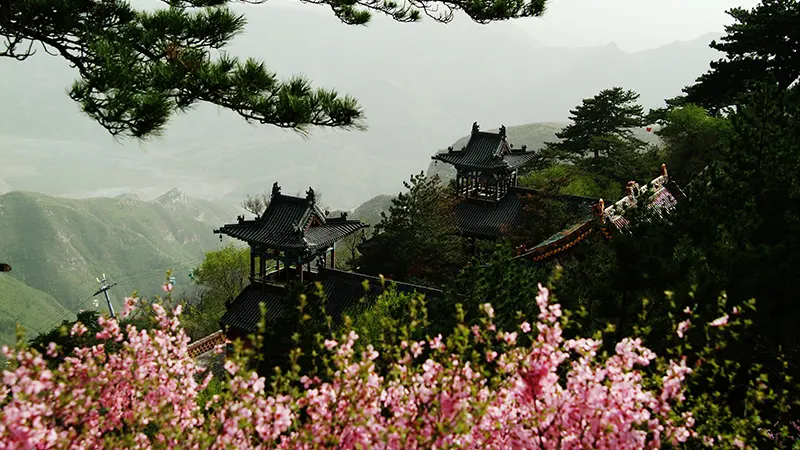
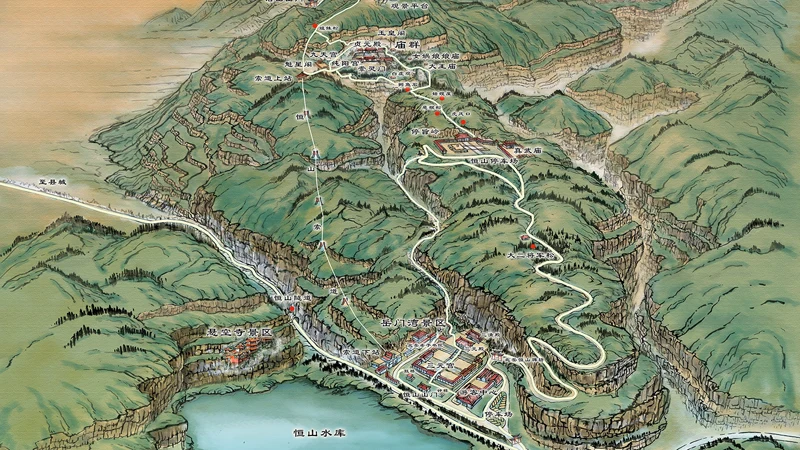
Passing Hufu Wind Pass (with a stele saying "Jie Shi") and Jinlong Pass, the stone road is steep, clouds and mist are steaming, following the dangerous cliffs and climbing the steep slopes, winding along the bird path and entering the layers of clouds, gazing at the picture of the rock fat, standing in the hall of the clear capital, there are government offices, kitchens, and towering towers (a couplet: "One morning, clouds and mist rise, heaven and earth are connected"), the Cold Spring Pavilion. From here, passing a pavilion, turning east, ascending to the sleeping palace, where the cave of flying stones and the cave of returning to the source are located.
Turning westward, we ascended towards the Yue Dian, the valley of purple fungus and the abode of immortals. Towering stelae stood majestically in the corridors and porticos, while cypresses and pines lined the steps and terraces. Suddenly encountering a monk, we entered a Zen room, where a mat lay in the green shade, a testament to a half-life of experiences. The morning bell and midday fragrance dispelled the dreams of a foolish man; the mountain light and shadows extinguished the soul of a recluse. Looking east from Yue Dian, the two cliffs abruptly ended, with a thousand-foot drop of grass and brushwood, the path where Xia Ke risked his life to reach the summit.
West of the immortal's abode, sheer cliffs rose, draped with countless strands of green vines. This was the legendary platform where the Daoist immortal played Go by the flowing water. High, perilous, secluded, and wondrous, it was a place that made travelers hesitate and brave men linger. Even Xia Ke, with his adventurous spirit, had never reached it. At that moment, I could not resist the urge to explore the hidden depths, and my determination to venture forth grew stronger. Thus, I pushed through thorns and brambles, climbed vines and clung to creepers, moving with the agility of a crab or a sparrow. I crouched in the stone gorge, as nimble as a monkey climbing a tree, and tested the remaining footholds like a cunning donkey crossing a river. My eyes never wavered, my fingers never faltered. With trembling hands and cautious steps, I leaped to the top, my chest swelling with exhilaration. The ground was barely half a bow wide, about a foot and a half across. The remnants of the ancient game remained, but the old sounds were gone. To the west, I looked down on Wutai Mountain; to the south, I gazed at the four sacred mountains. The descendants were arrayed before me, their dwellings like mounds. I witnessed the clear succession of nine celestial bodies and the magnificent clouds, the vast expanse of the ten thousand things, boundless and hazy. Below, I looked down on countless ravines; above, I seemed to pluck the stars. In a moment, the scene changed a thousand times. Wind and rain suddenly arose, thunder and lightning clashed, their sounds shaking the valleys. I saw strange rocks tumbling down, light piercing through the trees, and what seemed like golden snakes flying and rising to the clouds. I felt detached from the world, my fear subsiding and my sense of transcendence growing. I looked around and let out a long cry. The wonders were endless, each person seeing and understanding differently. This was enough. Why should I claim to be the only one soaring in the nine heavens, not sharing a single feather with the chickens and ducks of the lower world? While ascending, I was worried about the danger of climbing; while descending, I feared the risk of falling. Looking down at the thousands of feet below, a misstep would mean death. I was but a speck in the vast ocean, and even if I didn't want to risk my life, could I help it? Just as I was filled with fear and doubt, Master Mingcheng shouted from halfway down the mountain: “In this world, there is nothing easier to ascend and harder to descend. Don't worry, I will tell you how to get down. Calm your mind, still your spirit, resolve your will, and be bold. Don't linger, don't hesitate. Let your elbows trail, your feet hang down, your eyes look outward, and your palms face down. Use your fingers to find the old marks, and lean your back against the rock wall. Without relying on your feet or hands, slowly descend, and you will succeed.”
Upon hearing this, it was like a sudden awakening, guiding me out of confusion. Following his instructions, I descended without any danger. I sighed with relief, saying: “Those who are enthusiastic about things often use the excuse of the difficulty of descending, remaining ambiguous and making themselves a laughingstock. Alas, is it really easier to ascend than to descend? It is a pity that no one has awakened them from their delusion, allowing them to calm their minds, still their spirits, resolve their will, and be bold. The so-called enlightenment is the understanding of this principle (there are four characters on the Qinqi Terrace: "Traces of Enlightenment"). I hope that those who are enthusiastic about things will come here for a visit, gain this understanding, and verify the truth of my words. Then, perhaps the world will become brighter.”


Originally published in the 420th issue of Shanxi Laifu Bao
After a short rest at the temple, I planned to go from Shanyin to Hunyuan. I took a side path and climbed to the top of the western peak, where there was a pavilion overlooking Xiyangling. To the north, I saw the city of Hunyuan, like an inverted bowl, with villages and forts scattered like chess pieces. The setting sun cast its rays, illuminating the surroundings. Red leaves and green vines covered the mountain like a painting. Soon, dusk arrived, and I had only traveled halfway up the mountain. The mountain path was steep and narrow, the stone path slippery and uneven. The most dangerous place was called "Smoke Pipe Valley," a steep and secluded ravine, dark and gloomy, with thorny bushes in front and rushing water behind. As I was filled with fear and doubt, wind and rain started again. The sounds of thunder, frogs, insects, water, and the stones under my feet formed a chaotic symphony, making me feel uneasy and apprehensive. Fortunately, I was still strong enough to avoid serious trouble, but even with my eyes closed, I thought it was extremely dangerous. Unexpectedly, as soon as I reached the foot of the mountain, the rain stopped and the clouds dispersed. A bright moon appeared, illuminating my slow walk as I recited poems and sang songs, enjoying myself immensely.
By the time I reached Hunyuan, it was already two o'clock in the morning. I went to a guesthouse in the South Gate and stayed there. I fell asleep, dreaming of mountains and clouds, palaces of jade and crystal, reliving my journey. I forgot my fatigue and worries, feeling relaxed and refreshed. I awoke to the sound of chickens in the thatched hut, my poetic mood lingering, and I suddenly thought of the wonders of the Hanging Temple.
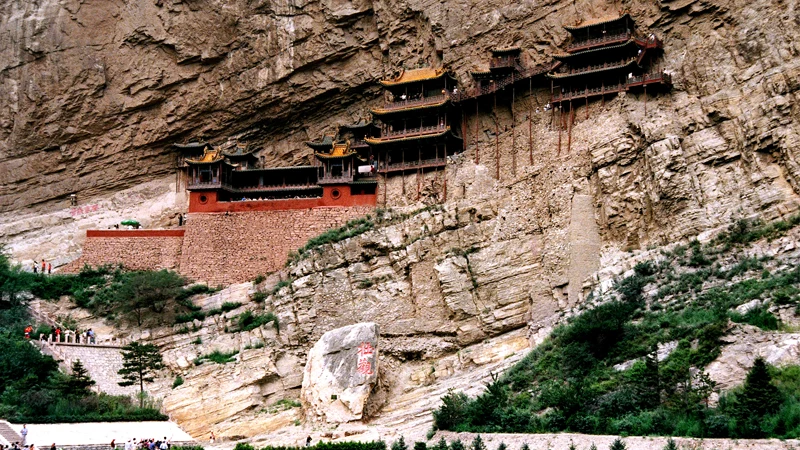
My enthusiasm remained high. As dawn broke and the sun rose, I called my servant to pack my food and set off with my walking stick. In the morning, the mountains were beautiful, each peak charming. The autumn rice after the rain was lush and green. I crossed a small stream and entered Nan Yu, following the foot of the mountain to Ci Xia. On both sides of the ravine were steep cliffs, and the stream meandered several times. It was secluded and beautiful, unparalleled. The travelogues of the past, describing the towering peaks of Yi Que and the nine bends of Wu Yi, were insufficient to compare with this place. After three turns, the cliffs became steeper, the gorge narrower, the wind stronger, and the sound of the water clearer. On the western cliff, halfway up, a mirage suddenly appeared, ethereal and empty, seeming like a fairyland—the Hanging Temple. It was secluded, exquisite, and wonderfully constructed. The corridors and Buddhist palaces were precarious and surrounded by a few trees. Entering the temple and going north, the pavilions were high and low, the walkways winding, each with its own unique charm. The topmost level is called the Zhan Han Yun Pavilion. Water constantly flows below, and clouds and mist swirl above. I felt as if I were in the celestial realm, hearing the sounds of enlightenment, my spirit soaring beyond the heavens. In quiet contemplation, I found enlightenment. Fallen leaves rustled, and I composed a poem at the railing. I traced moss-covered walls and searched for inscriptions. I saw traces of the Northern Wei Dynasty's soldiers, and the remnants of Yang Ye's army. The Yinping of Western Shu could not compare, and the Penglai and Jiu Ling mountains were less magical. It was truly a strategic location in Yunzhong and a magnificent sight in the world. This journey, what I saw and heard, and what I understood, is only a glimpse, expressed in words. The vastness and grandeur, like reading a wonderful book, the magnificent scenery, and the ever-changing clouds and mist, I could not capture even a fraction of it. I regret my limited talent and learning, unable to describe the scene like Gu Ren Jijiu did for Mount Tai, expressing its grandeur, its nurturing power, its brilliance, and its mysteries. Although I have experienced it firsthand, it is difficult to fully convey it.
For the benefit of future travelers, I have merely recorded my journey and memories. As for my experiences and poems along the way, they are recorded elsewhere and will not be included here.


Originally published in the 421st issue of Shanxi Laifu Bao
Proofread: Xue Fang
Edited: Xing Xuelin
Ma Jiading: The Man and His Deeds
-
Politics: Graduated from the Shaanxi Provincial Police and Military Training School during the late Qing Dynasty. In the early years of the Republic of China, he served as an editor and secretary in Yan Xishan's provincial government. In 1912, when Mr. Sun Yat-sen toured Shanxi and arrived in Taiyuan by special train, he attended a welcoming meeting held in the Shanxi Grand Hall on the morning of September 19th. Shanxi's military and political leaders were present. Shanxi's Governor Yan Xishan announced the opening of the meeting, and Ma Jiading delivered a welcome speech on Yan's behalf, saying: "Mr. Sun Yat-sen advocated revolution and traveled abroad for more than 20 years. He finally overthrew the tyranny that had lasted for 4,000 years and established a republican system. His achievements are unprecedented in recent history." On October 10th, Taiyuan held a grand celebration of the "Double Ten Festival." That evening, at a public gathering, Ma Jiading (head of the Sino-foreign Joint News Agency), Liu Yue (military representative, member of the Tongmenghui), and Jing Mei-jiu (veteran of the Xinhai Revolution in Shanxi, Minister of the Political Affairs Department of the Shanxi Military Government) took the stage and delivered impassioned speeches, deeply moving the audience.
In May 1916, he was appointed Instructor of the Shanxi Provincial Tongwu Junzhang Office; in the same year, he was appointed County Magistrate of Xi County (serving for more than a year). Around 1931, Ma Jiading, then Secretary of the Shanxi Provincial Government (Head of the Social Affairs Section), concurrently served as Section Chief of Section 1 of the First Prison in Shanxi Province.
In 1935, Yan Xishan established the Anti-Communist Committee with nine members: Jia Jingde (Secretary-General of the Taiyuan Pacification Headquarters), Rong Honglu (Commander of the Taiyuan Garrison), Li Shangren (Member of the Provincial Government), Zhu Shouguang (Chief of Staff of the Pacification Headquarters), Cheng Shurong (Director of the Provincial Public Security Bureau), Li Runfa (Commander of the Gendarmerie), Bo Yuxiang (Secretary-General of the Justice Corps), Ma Jiading (Provincial Government Secretary), and Tang Wenhuan (Provincial Government Secretary). He served as Secretary-General of the Third Army's General Depot, and was a "Tong" generation leader of the Qingbang, the master of Zhao Shuli (joined in 1934) and Shi Jiyan.
During the period of Japanese puppet rule, he served as the County Magistrate of Jishan County, a special commissioner of the Shanxi Provincial Committee for the Administration of Seized Property, a member and concurrently the administrative director of the Taiyuan City Anti-Communist Committee, and the chairman of the Shanxi Provincial Anqing Tongyi Committee.
-
Culture: A modern Shanxi journalist, founder of the Shanxi Zongsheng Bao newspaper, president of the Sino-foreign Joint News Agency (Taiyuan), and president of the Guoshu Xunjian (Shanxi) magazine. He had a vast collection of books, including Song edition and Qing edition line-bound ancient books. The famous Shanxi scholar Guo Xiangsheng wrote a poem in 1914 titled "Taiyuan City Book Buying Song" to commemorate this: "Li Bo is talented and understands the meaning of books, often claiming to be poor when facing people. Buying books and selling horses is not a mistake, this poetic act also honors our group. (Ma Libo's name is Jiading)"
In 1924, he joined the Taoyuan Poetry Society and became a Taoyuan poet. The Taoyuan Poetry Society was founded by people from the military, political, and cultural circles of Shanxi, including Jia Jingde and Guo Xiangsheng, on the Double Ninth Festival in 1923. The initial 10 members were Jia Jingde, Guo Xiangsheng, Zhao Binglin, Jiang Han, Chang Zanchun, Zhao Yikong, Bao Zhenyong, Zhang Youtong, Zhang Shaomin, and Xiong Jikan (or Jikan). The following year, 12 more people were admitted, including Chen Jitang, Guo Baoqing, Feng Sizhi, Zeng Zhaojia, Wang Juchu, Chen Zhucheng, Yang Gengshao, Wang Shiru, Xiao Ziling, Li Berin, Yu Zicai, and Ma Jiading. Others who frequently visited Taoyuan included Wu Xiqiao, Yang Zhaotai, Dai Kefeng, Wen Xiaxian, Wu Renda, Li Jingrong, Zhang Jie Ren, Sun Huanlun, and Zhang Ruiji. There were frequent elegant gatherings and prosperous poetry meetings. Taoyuan poets were mostly former officials from the late Qing Dynasty, all versed in traditional Chinese studies and skilled in poetry, calligraphy, and painting. New-style figures who returned from studying abroad were also educated in Confucianism. After the establishment of the Taoyuan Poetry Society, the poets used poetry to exchange ideas and comfort their hearts, sometimes sending off friends or drinking and writing. On auspicious days, they would gather with tea, snacks, and fruits, and would write impromptu poems on the spot.
From 1925 to 1933, at the invitation of Guo Xiangsheng (both teacher and friend; he studied classical Chinese prose under Guo), he taught at the Higher Normal Department of the Shanxi Provincial National Normal School (later renamed Shanxi Provincial Education College), alongside renowned colleagues such as Zhao Yikong, Lan Chengrong, Qiao Wanxuan, Gu Sikai, Zhang Youtong, Chang Zanchun, and Zhang Shulin.
-
Sports: After the "September 18th Incident", patriotic people from all walks of life in China were filled with indignation. The whole country was united against the enemy and sought ways to save the nation. The martial arts community in Shanxi also put forward slogans such as "Practice martial arts to strengthen the body" and "Practice martial arts for the country." In 1932, the Shanxi Provincial Wushu Promotion Association was established, with Ma Jiading and Qiu Yangjun (Director of the Provincial Department of Civil Affairs) as honorary presidents and Li Huaiyin as president.
Ma Jiading founded the "Shanxi Guoshu Sports Xunjian" and served as its president. In his article "Schools of Taijiquan," he wrote: "Modern Taijiquan is divided into three schools: 1. Chen style of Henan; 2. Yang Luchan style of Yongnian; 3. Hao style of Yongnian, which is from Zhen who studied under Li Yishe..." In the preface to the "Li Style Taijiquan Manual" in 1935, he mentioned that there were "Chen style, Yang style, Li (Yishe) Hao (Wei Zhen) style, and Wu (Jianquan) Wang (Maozhai) style." This is a famous discussion on the origin and inheritance of the Taijiquan styles.
He participated in various national martial arts events. In 1934, Taijiquan master Li Xiangyuan and Shen Weizhou, a member of the Beijing Military Commission, etc., came to Shanxi. Ma Jiading hosted a banquet at his home, attended by important figures from the provincial military and political circles such as Rong Honglu, Duo Zhen, Geng Buchan, Qiu Yu Chuan, Zhang Hansan, Wang Huiming, Xu Daokan, and more than 20 national martial arts masters from Taiyuan. In the same year, Ma Jiading delivered a speech at the National Martial Arts Gathering in Beiping. When the Tai Gu National Martial Arts School opened, it received financial support from some social and political figures and wealthy people, including Kong Xiangxi who donated 300 yuan and Ma Jiading who donated 100 yuan.
-
Later Years: After 1949, Ma Jiading, in order to avoid his past, used his literary name, and his name in official records became "Ma Libo." After receiving training at Shanxi Public School, he worked at the Shanxi University Library, responsible for sorting out line-bound ancient books. He died in 1954. After his death, his wife (? – 2001) donated all his books to Shanxi University.
He wrote about his own expertise: "Able to write Chinese characters of various sizes, able to identify ancient books and objects, and has research on health-promoting martial arts." Ma Jiading enjoyed traveling and often wrote articles about his travels, publishing them in newspapers and magazines at the time. Currently, only his early Republic of China travelogues such as "Travelogue of Mount Tai" and "Travelogue of Hengshan Mountain" are known to exist. In 1933, he wrote a preface for the "Huo Shan Zhi" compiled by the famous monk Shi Likong.
Keywords:
Hengshan
Related News
Contact Us
Beiyue Hengshan Scenic Area:
Travel Inquiry:+86-352-8333077
Ticket Inquiry:+86-352-8333031
Travel Complaints:+86-352-8333081
Emergency Rescue:+86-352-8333037
Scenic Area Product After-Sales Service Hotline:
+86-18636203837
+86-15383522518
Mount Hengshan Scenic Area Administration Center (Official)
+86-352-8322142
Hanging Temple
+86-352-8327795
Yuemenwan (Hengshan Mountain Gate)
+86-352-8480060 +86-352-8328318 +86-352-8328530
Hengzong
+86-352-8480115
Tianfeng Ridge
+86-352-8480114
Yong'an Temple
+86-352-8322390
Li's Family Cemetery
+86-352-8322381
Hengshan Cableway
+86-352-8322255
Official Media

Tiktok