

-
AboutMount Heng, an outstanding representative of the splendid mountains and rivers of China, a symbol of national prosperity, a totem of national spirit, an important geographical indication of the country, and holds the status of a national mountain.More
-
CultureHengshan has been a famous scenic spot and important birthplace of Taoism in northern China since ancient times. Carrying the symbols of Chinese civilization, it has nurtured profound regional culture and folk customs.More
-
-
Tourist GuideUnderstand relevant information about the scenic area and enjoy a better travel experience.More
-
Surrounding activitiesThe ancient city of Hunyuan at the foot of Mount Heng in Beiyue has a long history, rich cultural heritage, beautiful scenery, and a convergence of agriculture, commerce, and animal husbandry. It has nurtured a unique regional culture and is renowned for its fine wine and delicious food.More

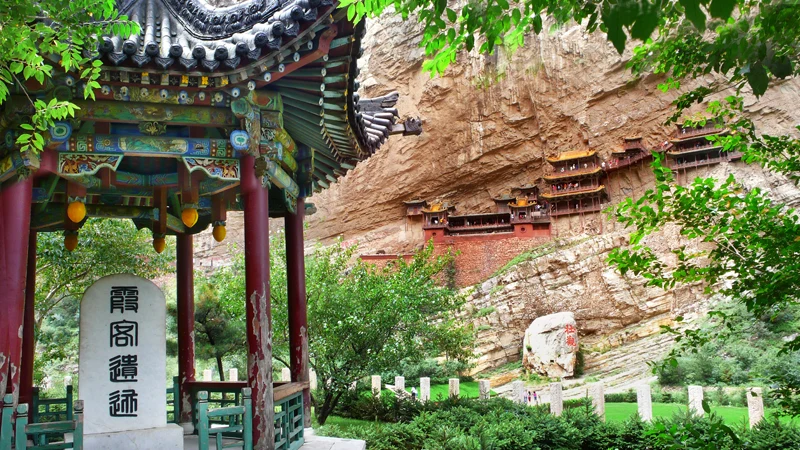
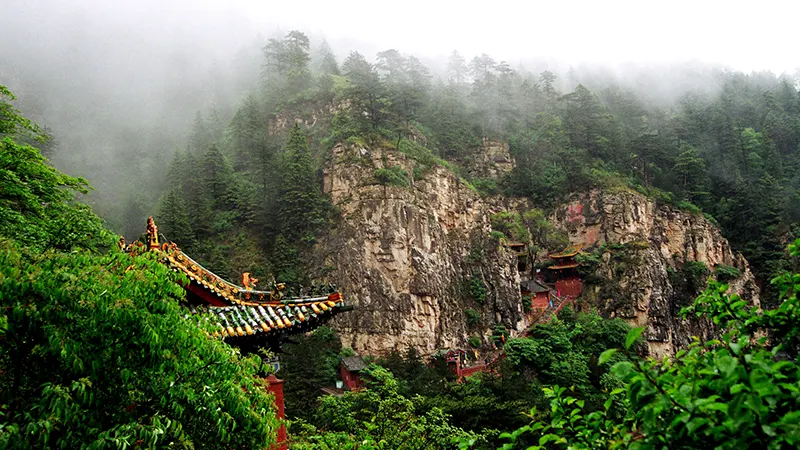
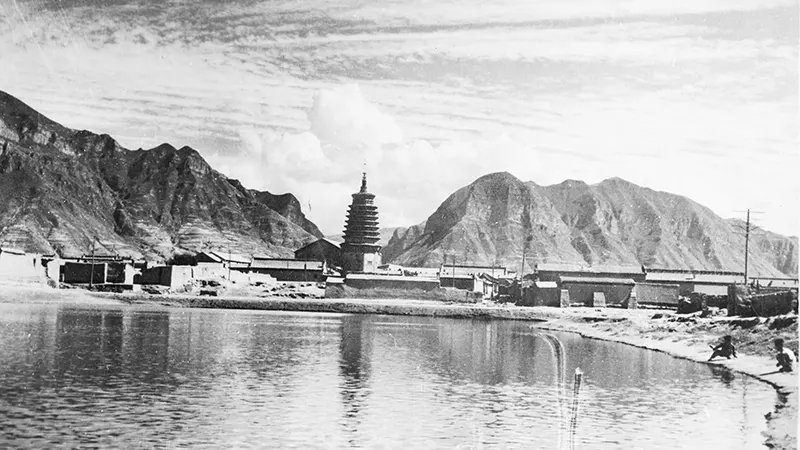
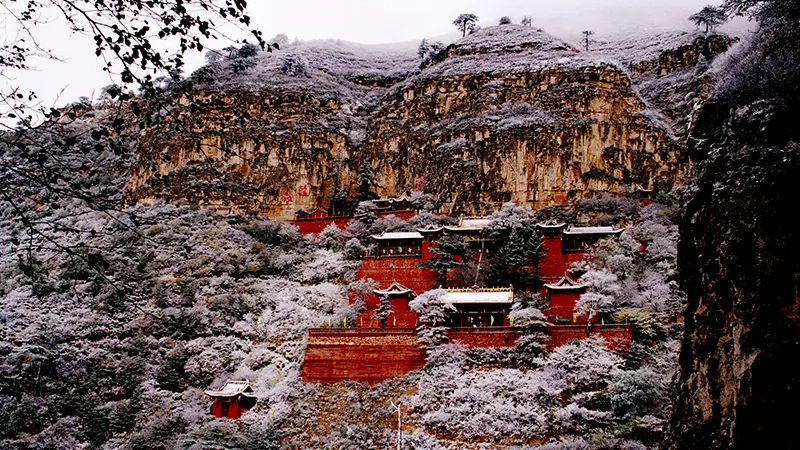





Katsutoshi Ono (Japan) | A Journey to Hunyuan (1940)
Publish Time:
2026-01-27 16:24
Source:
After the Marco Polo Bridge Incident in 1937, many Japanese scholars followed the advancing Japanese army into China and carried out various archaeological excavations and cultural relic surveys of tombs, ruins, scenic sites, and other historical remains in the occupied areas. Ono Katsunari was one of these scholars. Before the war, Ono Katsunari worked at the Faculty of Letters at Kyoto University. In October 1937, he was dispatched to China by the Japanese Ministry of Foreign Affairs to conduct a survey of historical sites in the occupied territories. Starting in March 1940, he continued his investigations and research on historical sites as a researcher with the North China Transportation Company, remaining in this role until he was recalled to Japan in June 1945.
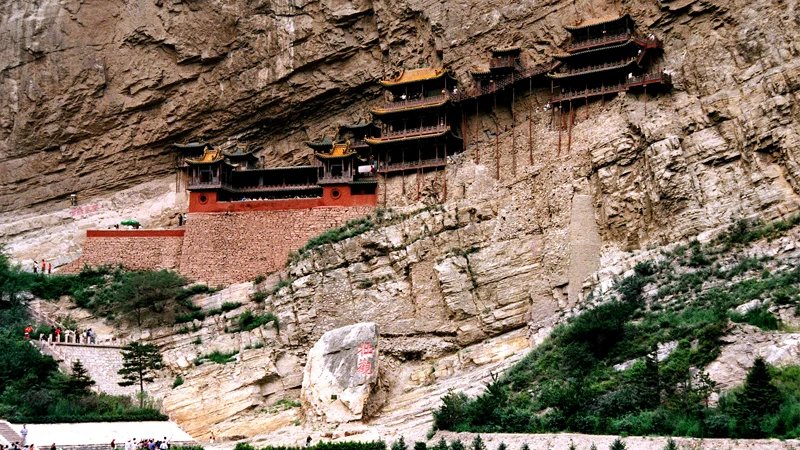
In 1940, the puppet Hunyuan County Office was under the jurisdiction of the Jinbei Administrative Office of the Mengjiang Government within the Japanese puppet regime’s administrative system. Ono Katsunari, who had already arrived in Datong, received assistance from the puppet Jinbei Administrative Office and, accompanied by Okihisa and Hibiya Osamu, conducted a two-day survey of Hunyuan on November 27 and 28. The survey focused on historical sites such as Yong’an Temple, Yuangjue Temple, the site where Liyu bronze artifacts were unearthed, and the Hanging Monastery, and resulted in the capture of some precious photographs. Ono Katsunari had previously participated in archaeological excavations at the ancient tombs in Yanggao and had studied relevant historical materials such as the "Hunyuan Prefecture Gazetteer" as well as travelogues about Hengshan Mountain written by famous figures from the Republic of China era. Thus, he was no stranger to Hunyuan’s history, its mountains and rivers, and its historic sites. Naturally, his experience of setting foot on this land this time evoked deeper and more acute impressions than those of most people. In 1941, Ono Katsunari sent his report on the Hunyuan survey back to Japan under the title "Hunyuan Journey," which was published in Volume 6, Number 5 of "Eastern History Studies," a journal founded by the Association for Eastern History Research at Kyoto University. The photographs and discussions in the article concerning Hunyuan’s historic sites and ancient relics are particularly valuable and insightful, making them an important reference for our understanding of our hometown and for research on Hunyuan.
Travelogues by modern figures exploring Hunyuan and Hengshan Mountain have always been a key focus of this journal, and those written by Japanese historians are even rarer. We would like to extend our heartfelt gratitude especially to translator Teacher Zhang Muhong and proofreader Teacher Ye Ping. It is thanks to your concerted efforts and hard work that this article has finally seen the light of day; our journal sincerely thanks you both.
Author
Katsutoshi Ono (December 1905 – December 1988) was a renowned Japanese historian, holding a Ph.D. in Literature from Kyoto University, and served as the Director of the Curatorial Department at the Nara National Museum and as a professor at Ryukoku University. His research areas included East Asian history, Buddhist history, and the study of the relationship between art and religion.
Translator
Zhang Muhong, female, is a lecturer at Qiannan Institute of Science and Technology in Guizhou. She holds a Master’s degree in Translation and specializes in Japanese-Chinese translation and research.
Proofreading
Ye Ping, female, professor at Hubei University.

“Journal of Oriental History Studies” was founded in 1935 and is published by the Japanese Society for Oriental History Studies (based at Kyoto University). It enjoys a high international academic reputation. The journal’s content covers the construction of the discipline of Oriental history as well as regional studies, breaking away from the traditional framework of Chinese history by incorporating Manchu, Mongol, Hui, Tibetan, Korean, and Southeast Asian regions into its research scope. It has also put forward theories such as the “Tang-Song Transformation.” Its research integrates Qing dynasty textual scholarship with Western modern methodologies, thus establishing the tradition of the Kyoto School of Sinology. Together with “Historical Journal” and “Journal of Oriental Studies,” it forms the main platforms for Oriental history research in Japan.
Hunyuan Journey
Written by Katsutoshi Ono
Translated by Zhang Muhong / Reviewed by Ye Ping
In the spring of the 13th year of the Showa era①, I had planned to take a trip to Hunyuan but kept putting it off, never quite finding the right opportunity. It wasn't until November 27 of last year that I finally managed to make the journey. There were three of us traveling together: Mr. Okita from the Northern Shanxi Provincial Government③, Mr. Hibino④, and myself. Thanks to the kind assistance of the Provincial Government⑤, we were able to borrow winter gear from the patrol police. After careful preparation, around noon we climbed aboard a truck, headed out through the eastern gate of Datong, and crossed the Yu River. The cold wind gradually seeped into our skin, leaving our cheeks as icy as if cut by a blade. The bridge over the Yu River was newly built—a truly impressive structure. In days gone by, when there was no bridge, people crossing the river waded through in leather trousers made of cowhide or pigskin; but such scenes will probably be hard to see again in the future. The truck climbed up the slope beside Dongguan⑥, then continued southward across an open, expansive plain. On our right, we could glimpse the Yu River flowing toward distant mountain ranges—the so-called Xiangshan⑦ range. The Sanggan River runs along this range, having already joined the Yu River upstream from the crossing point. Beyond the river lay a small village called Jijiazhuang. As we passed through the village, the road suddenly became steep, making it increasingly clear that we had entered mountainous terrain. Continuing onward, the road wound its way through valleys; in some sections, it felt less like a road and more like the riverbed itself. Both sides of the road were sheer cliffs, and certain stretches were exceptionally narrow, with rock layers clearly exposed and often displaying rare fold structures. Coal-bearing strata were visible everywhere—initially, I even tried counting them, but soon realized that doing so was utterly pointless. Along the way, there were neither trees nor birds flying overhead; only occasionally did we encounter pedestrians driving donkeys or horses. After passing these travelers, all that remained around us was the sound of the truck’s engine. If we strayed from the tracks, we risked overturning; if oncoming traffic appeared, we’d find ourselves in an impossible predicament; and should someone drop a grenade from the cliff above, it would spell the end for us all. Since we’d all gotten into this vehicle together, we might as well share whatever fate awaited us. It was only natural that the officials from the Provincial Government urged the driver to stay focused and drive with utmost caution.
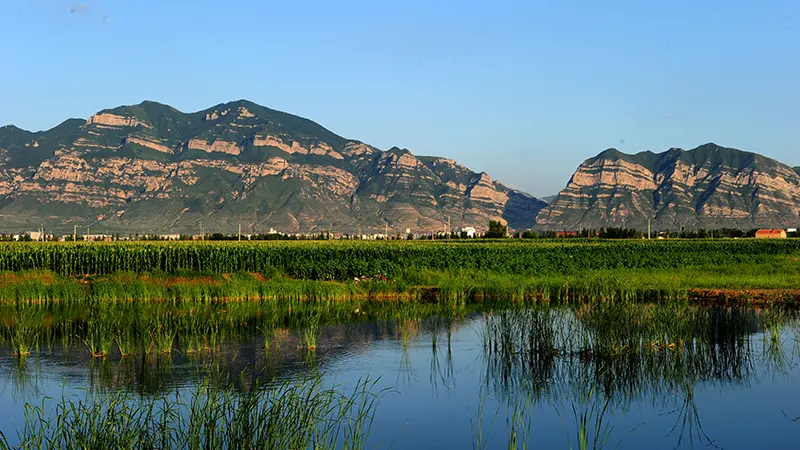
As we approached the boundary marker at the junction of Datong and Hunyuan, the road began to gradually descend. After passing Songshuwan, the view suddenly opened up, revealing the entire Hunyuan Basin below. On the southern edge of the basin, the Hengshan Mountain range stood majestically. This vista was quite similar to the view from the Datong Basin looking toward the Xiangshan Mountain range—except that the latter basin was much larger. The northern slope of the Xiangshan Mountain range was steep and precipitous, while its southern slope was relatively gentle, forming a landform known as a loess alluvial terrace. Later, I learned that the topographical features of the Hengshan Mountain range were roughly similar: the hypotenuse of a right triangle corresponded to the southern slope of the mountain range, while the side forming the right angle corresponded to the northern slope. If these two mountain ranges had been uplifted by faulting, then the Hunyuan Basin must have been a product of subsidence. The area of this basin is slightly smaller than that of the Kyoto Basin.
Note:
① Showa 13: 1938. Editor's Note.
② Last year: refers to 1940; this article was written in 1941. Editor's Note.
③ Jinbei Political Office: The Jinbei Political Office (1939–1943) was a prefectural-level puppet government established by the Japanese, subordinate to the Mongol United Autonomous Government set up with Japanese support. It was headquartered in Datong and administered thirteen counties in Yanbei, including Hunyuan. Editor's Note.
④ Mr. Hibi-no: Hibi-no Osamu (1914–2007), a Japanese historian of East Asian studies and professor at Kyoto University. He graduated from the Department of History, specializing in East Asian History, at the Faculty of Letters of Kyoto Imperial University, and later joined the Institute for Oriental Culture. In 1939, he went to China as a special research fellow in the Cultural Affairs Division of the Japanese Ministry of Foreign Affairs. He participated in the joint research project on “Juyong Pass” and was awarded the Japan Academy Prize. His major works include “Studies in Chinese Historical Geography,” among others. Editor's Note.
⑤ Political Office: Refers to the Northern Jin Political Office, also known as the Datong Political Office; the same applies hereinafter. Editor's Note.
⑥ Dongguan: The original text reads “Dongguan,” but it is suspected to be “Dongguan.” Editor's Note.
⑦ Xiangshan: Also known as Liuling Mountain, which lies at the border between Yanggao County and Guangling County. It belongs to the Hengshan Mountain Range. Its main peak, Huangyangjian, has an elevation of 2,420 meters and is the highest peak in Datong City. During the Jin Dynasty, it was called Xiangshan; the area south of Xiangshan was known as Sanggan River Valley and Yangyuan in Hebei Province, and was referred to as Xiangyin during the Jin Dynasty. Xiangshan can be considered the northern extension of Hunyuan Mountain or the eastern continuation of Hunyuan’s northern mountains. Editor's Note.
We arrived in Hunyuan County at 3:30 p.m. We immediately headed to the county government office, hoping to meet with the counselor①—but unfortunately, he was in a meeting and we couldn't see him. We then turned to a Japanese official for advice on lodging, but his response was vague and evasive. Nothing seemed to be moving forward. Originally, we had been dispatched by the Datong Administrative Office with a specific mandate, but as evening approached, we decided it would only add to our frustration to keep pressing the issue further. So we took our leave and instead went to the local police station to try our luck there. By sheer coincidence, Captain Inamori was on duty at the station. After we explained our purpose, he not only readily arranged accommodation for us but also provided us with numerous conveniences for visiting Liyu and Hengshan Mountain. Captain Inamori had previously served in the Land Survey Department and had participated in mapping the area around the Ueda Highlands in Shinshu—truly a benefactor to mountaineering enthusiasts. He was exceptionally talkative, sharing details about how the Northern Yue Temple on Hengshan Mountain enjoyed deep-rooted faith among local residents and about plans to build a pilgrimage road to the temple. He also mentioned that the mountain range featured pristine forests densely populated with larch trees, along with crystal-clear springs and natural flower gardens. Furthermore, he informed us that the armed forces operating in this region were affiliated with the Eighth Route Army—though their numbers were relatively small, they frequently carried out anti-Japanese activities in the mountainous areas and the county town. He even specially called over his aide-de-camp and showed us the banknotes they used—notes issued by the French Currency, the Shanxi Provincial Bank, and the Jin-Sui Local Railway Bank. Among these, the banknotes issued by the Jin-Cha-Ji Border Region Bank were particularly rare. However, these notes, which bore inscriptions such as “Public and private funds are universally accepted,” had relatively crude printing techniques and inferior paper quality compared to the French Currency and other higher-grade notes; they circulated mainly within the Jin-Cha-Ji Anti-Japanese Border Region.
Note:
① Counselor: The highest-ranking official in the Japanese-puppet Hunyuan County Office, appointed by the Japanese. Editor's Note.

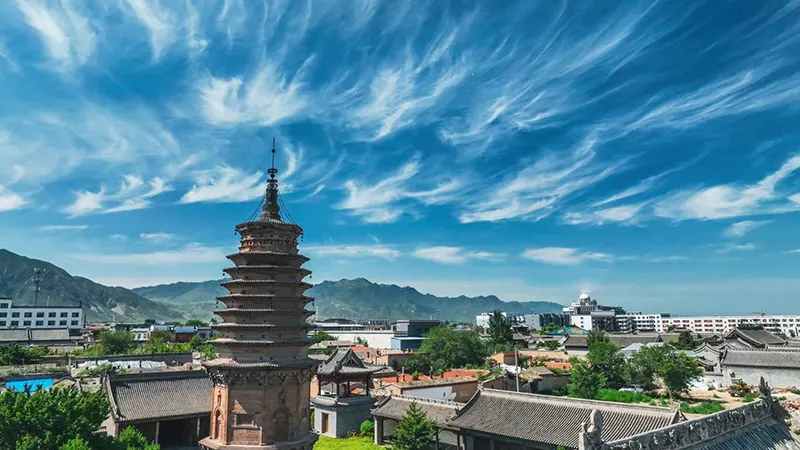
Accommodation has finally been confirmed, and I’m finally at ease. Although dusk was already approaching, I still decided to rush into the city for a visit. My first stop was Yuangjue Temple. As I’d anticipated, the temple boasted an imposing pagoda. The mountain gate stood wide open, and the pagoda rose majestically in the center of the courtyard. The former main hall still remained, though the Buddha statues and ritual implements had long since been damaged or lost. No monks lived there anymore; the temple had fallen into complete disrepair. Nevertheless, the pagoda itself was quite spectacular—over thirty meters high, built in the eight-sided, multi-eaved style typical of Beijing’s Tianning Temple. It exuded a sense of balance and solemnity, immediately evoking the Xigang Pagoda in Laishui County, Hebei Province—but on a smaller scale. The base of the first level lacked the lotus pedestals commonly found beneath such pagodas. The pagoda’s eaves consisted of nine tiers, with the topmost tier uniquely adorned with eight small niches—a rather rare feature. The finial atop the pagoda appeared to be cast from bronze, perfectly preserved and beautifully shaped: below it was a treasure vase, above which three alternating finials and three jeweled orbs were arranged in sequence; the top of the spire was crowned by a phoenix. With the exception of the first-tier eaves, all other tiers featured projecting cornices. The dougong brackets were used only on the first-tier eaves and the base. Though both employed a two-jump structural system, their designs differed: under the second longitudinal arch of the eaves, a horizontal arch was added, supporting three small dougong brackets that in turn held the eave beams; whereas the brackets at the base directly supported the tie beams from beneath the second longitudinal arch. On the four principal sides of the first-tier body, arched doorways were carved, while the remaining sides were fitted with rectangular lattice windows. On the south side, a deep niche was set up, housing a Buddhist statue① inside. Above the archway’s lintel, decorative motifs included phoenixes (on the north side), dragons (on the south side), and intertwined peony vines—these intricate patterns, along with the floral and animal-face designs adorning the balustrades between the dougong brackets, created a distinctive feature unparalleled in Ming and Qing architecture. Moreover, above each doorway’s lintel, a small niche was carved, each containing a seated Buddha statue—a layout known as the “Four Buddhas in Four Directions.”
According to the provincial chronicles, Yuangjue Temple was first built in the third year of Zhenglong during the Jin Dynasty and was extensively renovated in the early years of the Chenghua period of the Ming Dynasty; the Buddhist pagoda was also constructed in the same year②. If these records are reliable, then this pagoda should have been built during the Zhenglong era. Judging from its architectural style, this inference seems entirely reasonable.
Note:
① Upon examining the niche from the rear ladder, we found that it houses two seated Buddha statues—one in the front and one in the back. The craftsmanship is not particularly refined, suggesting that these statues are relatively recent creations. The inner walls of the niche are adorned with murals, each of the eight sides featuring a different deity: three images of the Buddha Shakyamuni, four Bodhisattvas, and one image of the Thousand-Handed Guanyin. Based on the style of brushwork, these paintings appear to be in the Ming Dynasty aesthetic. The niche’s ceiling features a domed structure supported by double-layered dougong brackets; all beams and lintels are decorated with colorful paintings, which, despite having been repainted multiple times, still largely retain their original patterns. At the very top, eight seated Buddha statues are also depicted. On the east and west side doors, only animal-head door rings are present; on the north door, however, there is a vivid scene of a young boy pushing open the door, as if about to enter. On the wall containing windows, there are three inscribed stone tablets commemorating previous renovations: one records the renovation carried out in the fifth year of the Chenghua era, another documents the renovation of the Sakyamuni Pagoda in the Bingchen year of the Wanli era, while the third has become so worn that its inscription is no longer legible. Original publication note.
② The Sakyamuni Pagoda is located in Yuanjue Temple. It was built in the third year of the Jin Zhenglong era by the monk Yuanzhen. The pagoda has nine levels and is constructed of polished bricks. Its height barely exceeds one hundred feet. From several dozen li away, it appears towering high in the heavens. Local residents regard it as a sacred relic. [Hunyuan Prefecture Gazetteer, Volume Ten—Supplementary Records] Original publication note.

Figure 2 The decoration of the base of the Sakyamuni Pagoda
After leaving Yuanjue Temple, we headed to Yong’an Temple. The former is commonly known as “Little Temple,” while the latter is often referred to as “Big Temple.” Entering through the side gate, one immediately sees a front hall measuring five bays in width. Judging from the style of its dougong brackets and other architectural features, this hall should date back to the Qing Dynasty. Yet its columns feature a remarkably distinctive tapering curve, drawing immediate attention. Behind the hall stands a stage for operas, facing the main hall across a central courtyard; in front of the main hall is a platform called yuetai. The site itself is elevated and spacious, with a wufudian-style roof structure—five bays wide and three bays deep. At both the column capitals and between the columns, there is a single dougong bracket, lending the building a distinctively ancient charm. The dougong brackets are made of sizable wooden timbers and follow a two-jump, single-eave-and-single-ang design, similar to those found beneath the eaves of Yuanjue Temple’s pagoda. The ang supports the horizontal arch and the ma zha tou, then rests on three small dougong brackets that in turn support the eaves beam. Notably, the main beam does not adopt the closely fitted style commonly seen in Ming and Qing architecture; instead, it features small dougong brackets inserted midway, reflecting an older construction technique. On the underside of the eaves at the front of the main hall hangs a plaque inscribed with the words “The Hall of the True Transmission of the Dharma.” In smaller characters on the left side, it reads: “In the fourth month of the second year of Yuan Yanyou, the great virtuous patron, Yong’an Layman Sun Jiangshi, formerly the Judge of this Prefecture, Gao Pu, initiated its construction.” It also bears inscriptions indicating that the hall was renovated in the 15th year of Wanli, the 22nd year of Jiajing, and the 26th year of Qianlong. On the right side, the inscription reads: “Written by Xue’an Puguang, Grand Scholar of the Zhaowen Pavilion and Honorary Minister of Ronglu, specially bestowed with the title of Round-Through, Profoundly Enlightened Great Zen Master, and established by Yue Xi Jueliang, the abbot who succeeded the lineage of the Dharma.”①
According to the local chronicles, this temple was “built in the third year of Yuanyou during the Yuan dynasty by Du Yuanshuai Gao Ding.” This date differs slightly from what is inscribed on the plaque—“commenced in the second year of Yuanyou, in the fourth month.” Presumably, the inscription on the plaque is more accurate. Perhaps “Du Yuanshuai Gao Ding” was actually the original name of “Yong’an Jushi,” and the temple was ultimately completed by his grandson, Gao Pu. The temple’s name, meanwhile, was derived from the elder grandfather’s monastic title. The calligrapher of the plaque, Monk Xue’an, was a native of Datong and was renowned for his calligraphy at the time. It is said that Zhao Ziyang himself held him in great respect, and many plaques in imperial palaces were penned by him.
Inside the hall are enshrined three statues—Vairocana, Shakyamuni, and Amitabha—whose craftsmanship is crude and hardly worthy of praise. The four walls are adorned with murals depicting celestial deities, aquatic and terrestrial divine kings, Guanyin, and heavenly kings; however, due to subsequent clumsy restorations by later generations, the original artistic integrity has been compromised, leaving visitors without a lasting impression②. Looking upward, one notices a celestial palace pavilion at the ceiling. Although its craftsmanship is not particularly exquisite, its unique architectural style makes it all the more striking③.
Note:
① Zhou Yang’an recorded in “Journey Through the Clouds” that the plaque was removed at the time, and a rubbing was subsequently made of it. (Special Issue on Mountain Tours, “Yi Lin Monthly”). Original publication note.
② Regarding the murals inside the hall, Fu Zengxi once highly praised them: “The four walls are adorned with paintings of various celestial deities and figures—both male and female—participating in the Water and Land Rituals. Their expressions are serene and dignified; their Buddhist forms are exquisite and wondrous. The profound truths seem to well up spontaneously on the tip of the tongue, and their compassion seems to radiate from their brows and eyes. After beholding these masterpieces, one cannot help but feel a shared sense of awe and reverence—as if standing amidst the hundred treasures of light at the Dragon Flower Assembly. Indeed, the artistic conception behind these murals is extraordinarily imaginative and original, and their coloring is particularly rich and vibrant. Compared to the works at the Huayan Temple in Datong, these murals possess a uniquely antique charm that would be difficult for even the most renowned artisans of the Jin and Yuan dynasties to replicate.”
But when I first saw it, I suspected it had been re-painted in later times and didn’t find it particularly exquisite. Moreover, since I’d already planned to visit again for a more thorough examination, I didn’t pay much attention to it at the time. Unexpectedly, when I visited the temple once more, the monk happened to be out, and unfortunately, I missed my chance. Original publication note.
③ The layout diagram of the temple is found in the “Hunyuan Prefecture Gazetteer”; however, the locations of the bell tower and the drum tower are incorrectly indicated. In fact, they should be situated on the south side of the two wings. Volume Nine of this gazetteer, under the section titled “Arts and Literature,” includes the “Record of the Reconstruction of Yong’an Temple,” written by Gui Jingshun in the year Gengchen of the Qianlong reign. It states: “The temple consists of five main sections: first, the foundation; second, the Hall of Dharma Protectors; third, the Great Hero Hall; fourth, the monks’ quarters; and fifth, the Iron Buddha Shrine. On either side of the main hall are flanking halls housing statues of the Bodhisattva Avalokiteshvara and Guan Shengdi. Each of the two wings comprises five bays. The offices of civil and military officials hold their celebratory gatherings here, with the drum tower and bell chamber located below them. To the left and right of the Hall of Dharma Protectors are the abbot’s chambers, which also serve as a guesthouse for passing travelers.”
The meaning of the term “Chudi” remains unclear, but it is speculated to refer to the mountain gate. In the illustration, the central and western parts of the “monk’s quarters” have already collapsed, and the eastern side is on the verge of falling down. Inside the Iron Buddha Hall, one iron Buddha statue still remains; all other statues have been replaced by plaster sculptures. On the platform in front of the main hall stands a partially damaged scripture pillar, while the courtyard features four stone steles, among which the oldest ones have completely lost their inscriptions due to weathering. On the front walls of the wing halls are embedded commemorative tablets: the eastern hall bears the inscription “Inscription Commemorating the Abbot of Shenzhou Dayong’an Chan Temple,” dated to the 31st year of the Yuan dynasty, and the Kangxi year of Jiwei; the western hall displays the inscription “Record of the Renovation of the Dizang Hall,” dated to the Gengyin year of the Wanli era, and the inscription “Record of the Procurement of Ritual Vessels for Yong’an Temple,” dated to the 23rd year of the Kangxi era. Above the two side corridors hang plaques reading “Ancestral Master Hall,” “Frost God Hall” (on the east side), and “White Robe Hall,” “Garland Hall” (on the west side). Additionally, the Guest Hall and the Protector Hall are now being used as elementary school buildings. Original publication note.
Keywords:
Related News
Contact Us
Beiyue Hengshan Scenic Area:
Travel Inquiry:+86-352-8333077
Ticket Inquiry:+86-352-8333031
Travel Complaints:+86-352-8333081
Emergency Rescue:+86-352-8333037
Scenic Area Product After-Sales Service Hotline:
+86-18636203837
+86-15383522518
Mount Hengshan Scenic Area Administration Center (Official)
+86-352-8322142
Hanging Temple
+86-352-8327795
Yuemenwan (Hengshan Mountain Gate)
+86-352-8480060 +86-352-8328318 +86-352-8328530
Hengzong
+86-352-8480115
Tianfeng Ridge
+86-352-8480114
Yong'an Temple
+86-352-8322390
Li's Family Cemetery
+86-352-8322381
Hengshan Cableway
+86-352-8322255
Official Media

Tiktok