

-
AboutMount Heng, an outstanding representative of the splendid mountains and rivers of China, a symbol of national prosperity, a totem of national spirit, an important geographical indication of the country, and holds the status of a national mountain.More
-
CultureHengshan has been a famous scenic spot and important birthplace of Taoism in northern China since ancient times. Carrying the symbols of Chinese civilization, it has nurtured profound regional culture and folk customs.More
-
-
Tourist GuideUnderstand relevant information about the scenic area and enjoy a better travel experience.More
-
Surrounding activitiesThe ancient city of Hunyuan at the foot of Mount Heng in Beiyue has a long history, rich cultural heritage, beautiful scenery, and a convergence of agriculture, commerce, and animal husbandry. It has nurtured a unique regional culture and is renowned for its fine wine and delicious food.More






Traces of Immortals on Hengshan Mountain: The Mysterious Yue Immortal Recorded in Ancient Texts (Part 1)
Publish Time:
2026-04-24 10:39
Source:
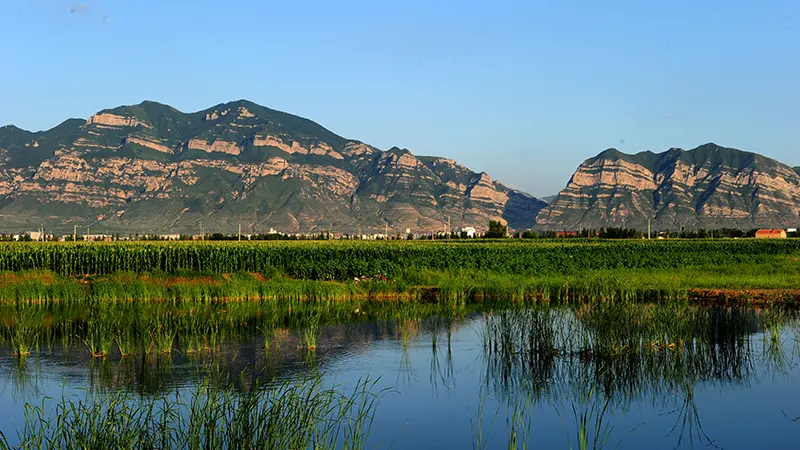
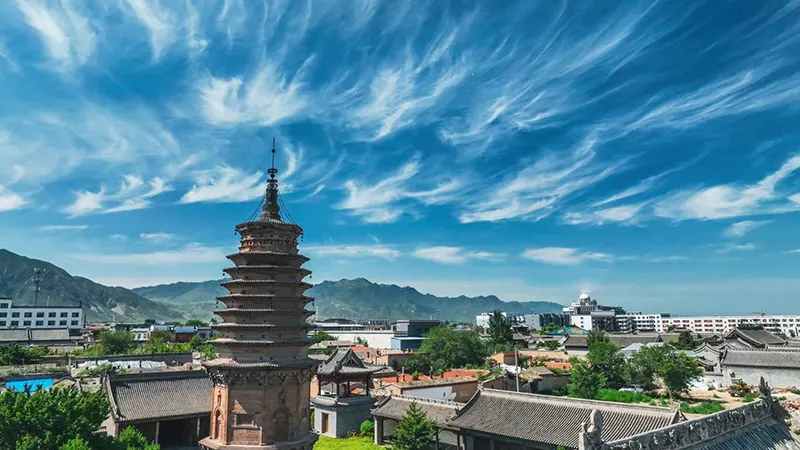
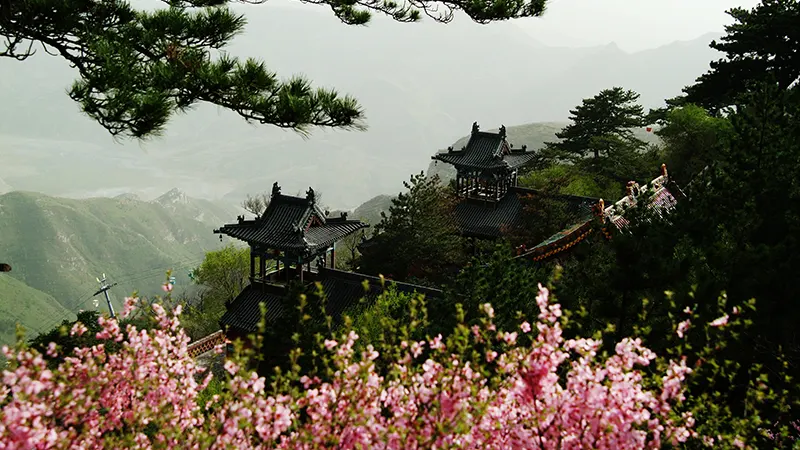
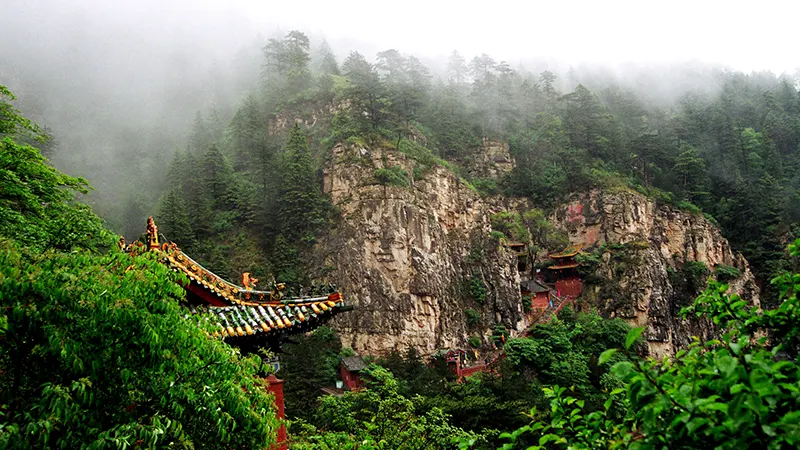
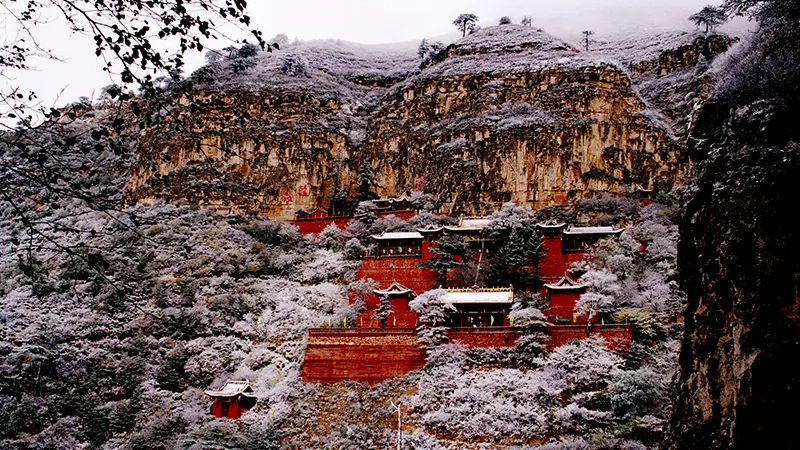
Since ancient times, many famous mountains have been associated with immortals. As one of the important birthplaces of Taoism, Hengshan Mountain has long been known as the “Mysterious Mountain,” with its cave named Taiyi and its land called Jincheng. It has always been a blessed paradise for cultivating immortality and seeking the Dao. Historical records show that seventy households here have attained immortality, and eight or nine individuals are specifically documented. Some secluded themselves in the deep mountains to abstain from food and cultivate qi, while others practiced magic to enlighten and transform the world, adding a rich aura of immortality to this majestic mountain and passing down numerous well-known tales of immortals.
The divine affinity of Hengshan Mountain can be traced back to the primordial age. According to the “Record of the Immortals,” Zhuanxu, the Black Emperor, once governed Mount Taiheng, linking the imperial divinity of ancient China with the spiritual essence of Hengshan’s landscapes and waters, thereby imbuing this mountain with an innate sacred aura. As one of the Five Great Mountains, Hengshan embodies the vital energy of heaven and earth; it is both a symbol of the northern cosmic order and, in the hearts of ancient ancestors, a sacred mountain that connects humanity with the divine. This primordial, ethereal charm sowed the seeds for later immortals to cultivate here.
Among the many immortals of Hengshan Mountain, Changrong is one of the earliest to be recorded. According to Biographies of Immortals As mentioned above, Changrong is a Taoist priest of Changshan (the ancient name of Hengshan Mountain) who claims to be a woman from the Shang Dynasty and has been taking medicinal herbs for many years. Pengli root , traveling back and forth at the foot of Hengshan Mountain. Over more than three hundred years, everyone who has seen her has said that her appearance has always been that of a woman in her twenties, showing no sign of aging, which vividly demonstrates the depth of her cultivation. She does not covet fame or fortune, nor does she seek publicity; she subsists on grass and trees, blending harmoniously with the mountains and waters of Hengshan, thus becoming a model for early immortals on Hengshan and making “eating grass and abstaining from grain” a hallmark image of Hengshan’s immortal realm.

When it comes to the immortals of Hengshan Mountain, the most renowned are the Three Pure Ones, with the cultivation stories of the eldest brother, Mao Ying, being the most detailed. According to the "Comprehensive Records of Immortals," Mao Ying His courtesy name was Shushen, and he was the great-great-grandson of the ancient immortal Maomeng (courtesy name Chucheng). Maomeng went to Mount Hua at the end of the Zhou Dynasty to cultivate himself; in the 30th year of Emperor Qin Shi Huang’s reign, he ascended to heaven on a dragon in broad daylight. Even before his death, a nursery rhyme foretold that his great-great-grandson, Maoying, would also become an immortal. Upon hearing this, Emperor Qin Shi Huang even changed the lunar month of “La” to “Jiapin” as a sign of his reverence. Maoying was born in the fifth year of the Zhongyuan era of Emperor Jing of the Han Dynasty. From an early age, he was unlike ordinary people, with a special fondness for the Way of Clarity and Emptiness. At the age of eighteen, he resolutely left his family and went to Hengshan Mountain to practice cultivation, taking Atractylodes as food and devoting himself wholeheartedly to the Dao. Later, he became a disciple of Wang Jun, traveled west to Mount Gui to pay homage to the Queen Mother of the West, and received the “Classic of the Supreme Ultimate Mystical Truth.” At the age of forty-nine, he returned to the northern valley of Hengshan Mountain to continue his cultivation.
After Mao Ying attained the Dao, he returned home to visit his still-living parents. His father, enraged at his long absence on distant travels, was about to chastise him with a rod. Mao Ying knelt at length and confessed his guilt, explaining that he had already received the sacred talismans and amulets of the Holy Master and was protected by celestial soldiers; if he were beaten with the rod, the heavenly hosts would surely intervene to stop it, thereby only increasing his own transgressions. Unconvinced, his father insisted on striking him—but as soon as the bamboo rod touched Mao Ying, it snapped into dozens of fragments, which shot forth like arrows, piercing the wall and embedding themselves in the pillars. Only then did his parents realize that he had already attained the Dao. Later, Mao Ying’s two younger brothers, Mao Gu and Mao Zhong, both rose to high office: Mao Gu became the Commander of the Golden Guard, and Mao Zhong the Governor of Xihe. When they took up their posts, hundreds of villagers came to see them off. Seated among the crowd, Mao Ying smiled and said that although he himself would not hold a high rank, on the third day of the fourth month next year he would ascend to immortality—surely the scene would be no less grand than that day.
On the third day of the fourth month in the fourth year of the Chuyuan era of Emperor Xuan of the Han Dynasty, several acres of land in front of Mao Ying’s gate were leveled by themselves, with not a single blade of grass growing. Green silk canopies and white felt mats were spread on the ground, enough to accommodate hundreds of people. All the guests gathered, and during the banquet no one served; yet golden platters and jade cups appeared before the feast on their own, offering an abundance of fine wines, exotic delicacies, and rare fruits, while the sounds of stringed instruments, bamboo flutes, bronze bells, and stone chimes never ceased, and the fragrance of orchids and musk wafted for miles. Soon after, hundreds of officials in red robes and jade belts came forward in a grand procession, their banners and armor gleaming in the sunlight. After bidding farewell to his family and friends, Mao Ying got into the carriage and ascended slowly into the sky on a cloud. Upon hearing that their elder brother had ascended, Mao Gu and Mao Zhong immediately resigned from their posts and returned home, seeking him on the Eastern Mountain. When Mao Ying appeared before them, he told his two younger brothers that they were already quite old; although it would be difficult for them to become immortals, he could still teach them the method of prolonging life and attaining immortality, as well as the supreme Dao. He instructed them to observe strict vegetarian fasting for three years, and then presented them with the Ninefold Reversion Pill and divine prescriptions. The two devoted themselves to cultivation and eventually attained the Dao, becoming immortals. Later generations collectively referred to the three brothers as the “Three True Lords of the Three Maos,” making them the most influential legend in the lore of Hengshan Mountain’s immortals.

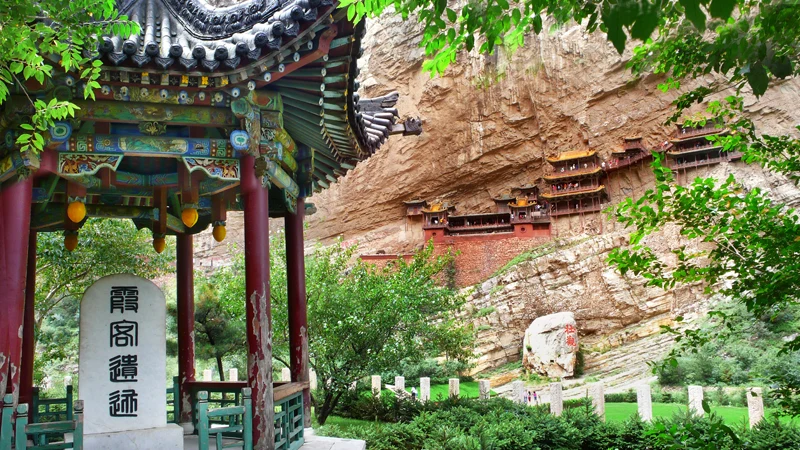
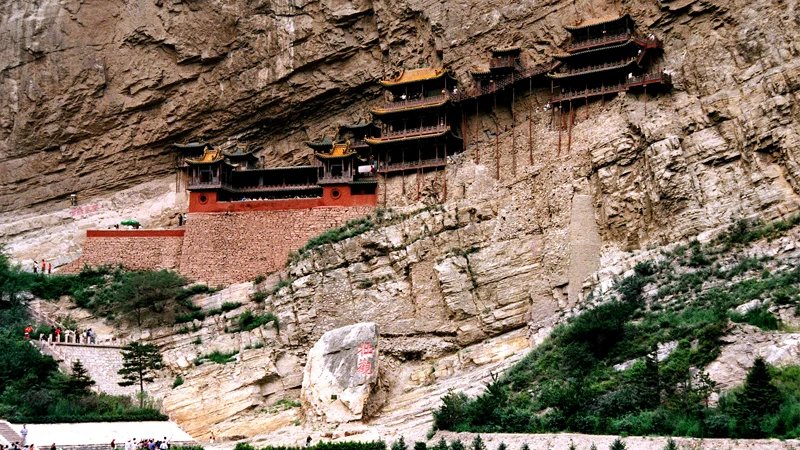
During the Northern Wei period, there were also traces of immortals on Hengshan Mountain, and Li Jiao was one of them. According to the Book of Northern History, Li Jiao was a native of Zhongshan and a disciple of the renowned Daoist priest Kou Qianzhi. He practiced breath control and abstained from food for several decades, then retired to Hengshan Mountain, where, even in his nineties, he still looked like a young man. One day, Li Jiao bathed, changed his clothes, sat upright, and passed away. People at the time believed that he had achieved immortality through “corpse dissolution,” thus perpetuating the legend of Hengshan’s immortals who “ascended to immortality by dissolving their bodies.” Kou Qianzhi once left a last instruction to build an aerial monastery on Hengshan Mountain, “reaching up to the ethereal clouds above and cutting off all worldly noise below.” As Kou Qianzhi’s disciple, Li Jiao’s cultivation on Hengshan Mountain added a mark of his era to the mountain’s aura of immortality.
Within Hengshan Mountain, there is also an unnamed immortal, whose deeds are recorded in Book of the Northern Qi . This immortal of Hengshan Mountain was well-versed in Taoist talisman water and spell-casting techniques, and had an intimate knowledge of medicinal properties. During the Northern Qi dynasty, a man named Wu Daorong came seeking fame and offered to serve him. Seeing his sincerity, the immortal imparted all his knowledge to him. One day, the immortal told Wu Daorong that he was originally an immortal of Hengshan Mountain, but had been banished to the mortal realm by the Heavenly Officials for a transgression in his youth. Now that his term of exile was over, he was about to return to Heaven, and instructed Wu Daorong to escort him to the Fen River. When they arrived at the Fen River, the water was suddenly in full flood. The immortal tossed a talisman into the river, and the surging waters instantly ceased. A moment later, the water level rose almost to the sky, yet the immortal calmly walked across the river on the sand and pebbles. Only Wu Daorong witnessed this clearly; others only saw the immortal floating across the water, marveling at the feat. Thus, the miraculous display of this nameless immortal became a mysterious and celebrated tale in the lore of Hengshan’s immortals.
Since ancient times, legends of immortals have been an important part of Chinese culture, and the traces of immortals on Hengshan Mountain have spanned both ancient and modern times, from the primordial legend of Zhuanxu governing the mountain to Chang Rong From secluded cultivation to the ascension of the Three Mao Immortals, Li Jiao’s post-mortem transformation into an immortal, and the manifestation of nameless immortals to save sentient beings—each tale embodies the ancients’ yearning for the path of longevity and their pursuit of the realm of purity and emptiness. These immortal stories recorded in classical texts not only imbue Hengshan Mountain with a mysterious aura of immortality but also ensure that this renowned northern sacred mountain has, throughout the passage of time, consistently maintained its unique character of communion with heaven and earth and intimate connection with the spirits of immortals, thus becoming an enduring mark of immortality on the land of Huaxia. (Li Xiangkui)
Keywords:
Related News
Contact Us
Beiyue Hengshan Scenic Area:
Travel Inquiry:+86-352-8333077
Ticket Inquiry:+86-352-8333031
Travel Complaints:+86-352-8333081
Emergency Rescue:+86-352-8333037
Scenic Area Product After-Sales Service Hotline:
+86-18636203837
+86-15383522518
Mount Hengshan Scenic Area Administration Center (Official)
+86-352-8322142
Hanging Temple
+86-352-8327795
Yuemenwan (Hengshan Mountain Gate)
+86-352-8480060 +86-352-8328318 +86-352-8328530
Hengzong
+86-352-8480115
Tianfeng Ridge
+86-352-8480114
Yong'an Temple
+86-352-8322390
Li's Family Cemetery
+86-352-8322381
Hengshan Cableway
+86-352-8322255
Official Media

Tiktok