

-
AboutMount Heng, an outstanding representative of the splendid mountains and rivers of China, a symbol of national prosperity, a totem of national spirit, an important geographical indication of the country, and holds the status of a national mountain.More
-
CultureHengshan has been a famous scenic spot and important birthplace of Taoism in northern China since ancient times. Carrying the symbols of Chinese civilization, it has nurtured profound regional culture and folk customs.More
-
-
Tourist GuideUnderstand relevant information about the scenic area and enjoy a better travel experience.More
-
Surrounding activitiesThe ancient city of Hunyuan at the foot of Mount Heng in Beiyue has a long history, rich cultural heritage, beautiful scenery, and a convergence of agriculture, commerce, and animal husbandry. It has nurtured a unique regional culture and is renowned for its fine wine and delicious food.More
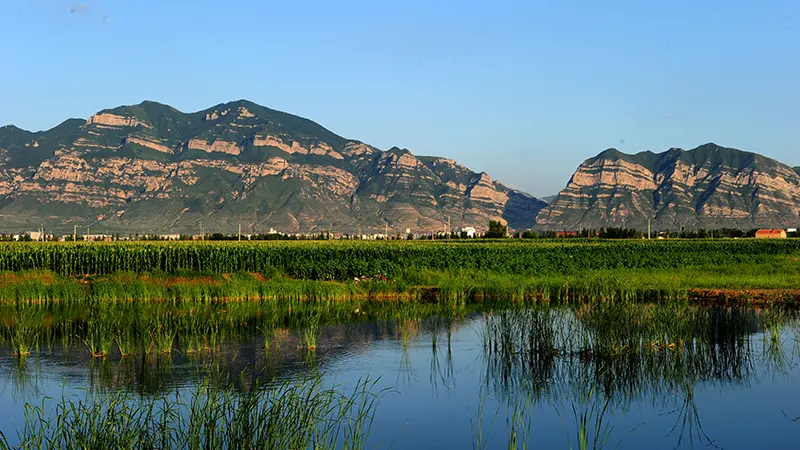

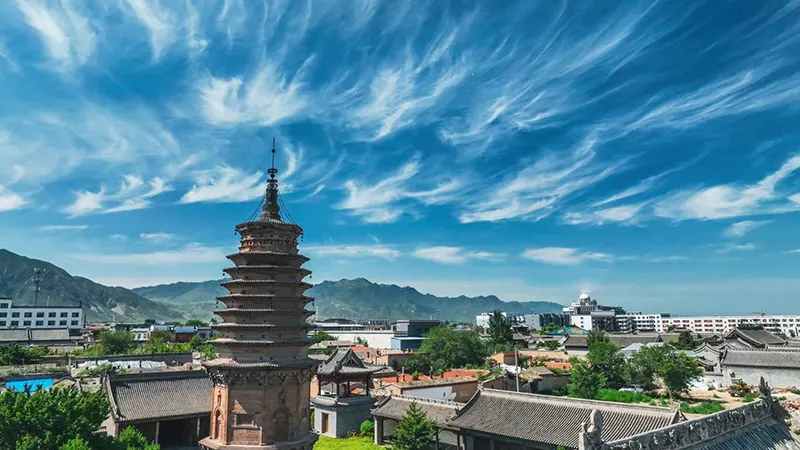
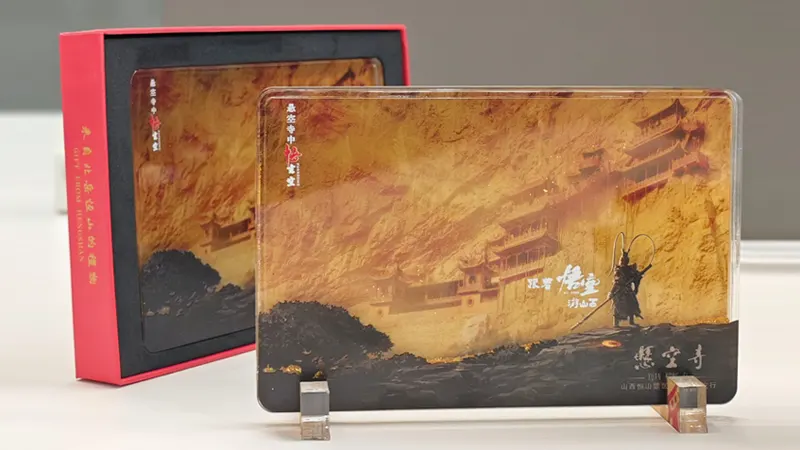
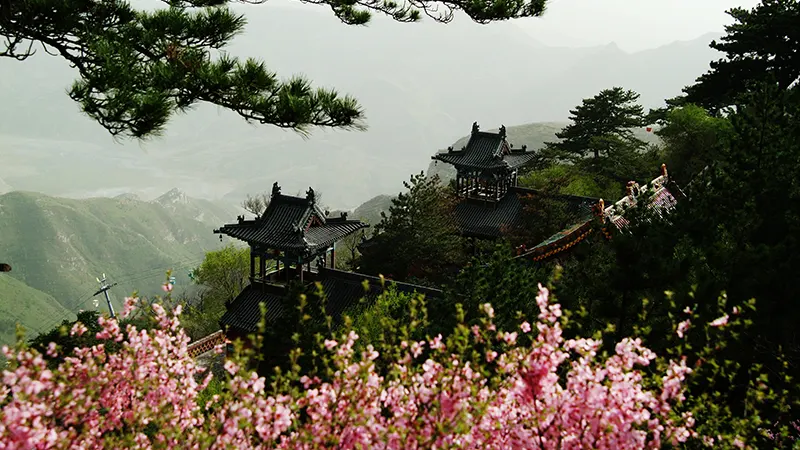
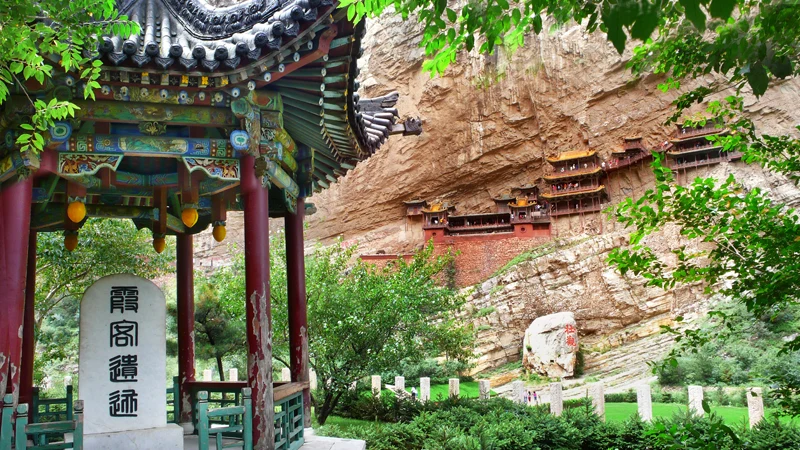
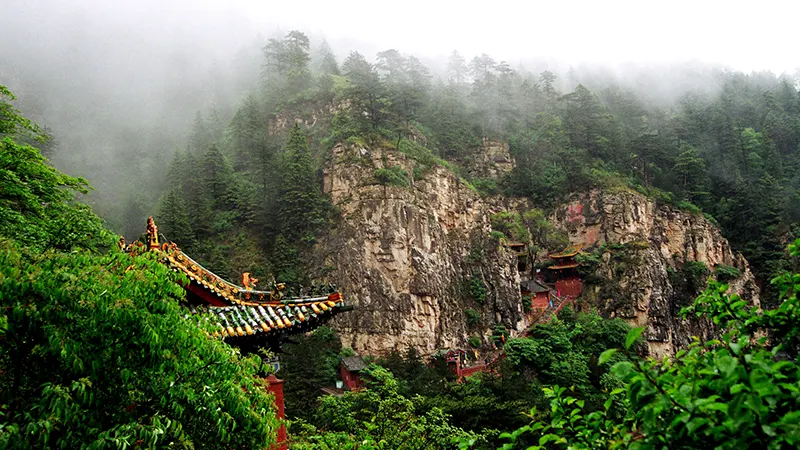
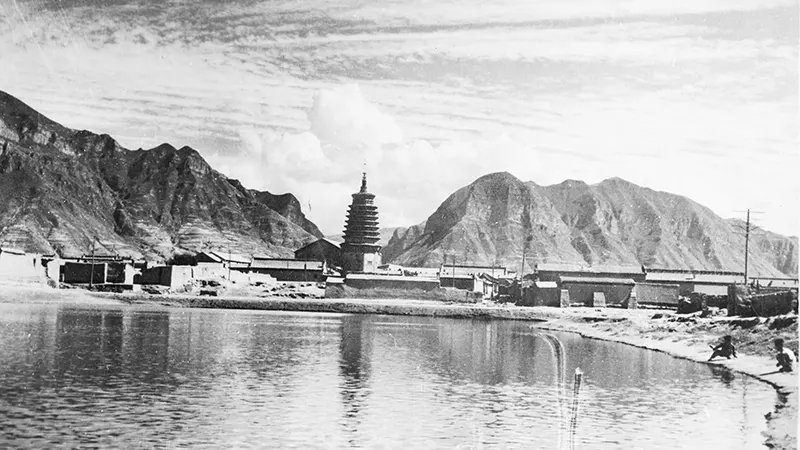
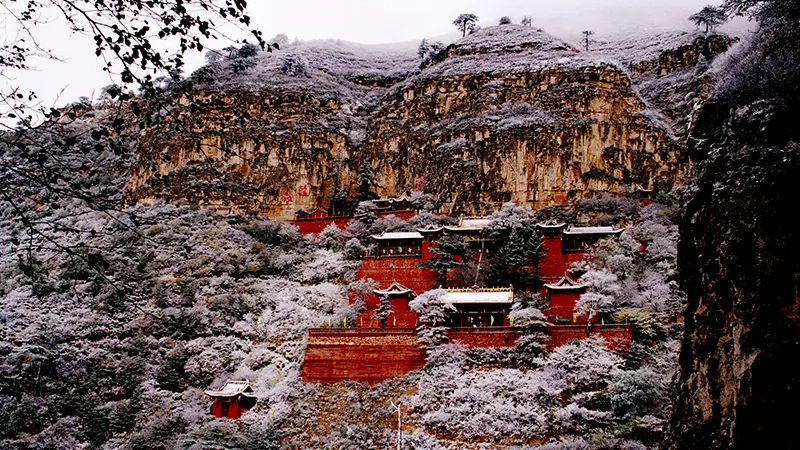





Standing tall and towering, a masterpiece of divine craftsmanship—whose hand guided the construction of the Hanging Monastery?
Publish Time:
2026-03-06 19:41
Source:
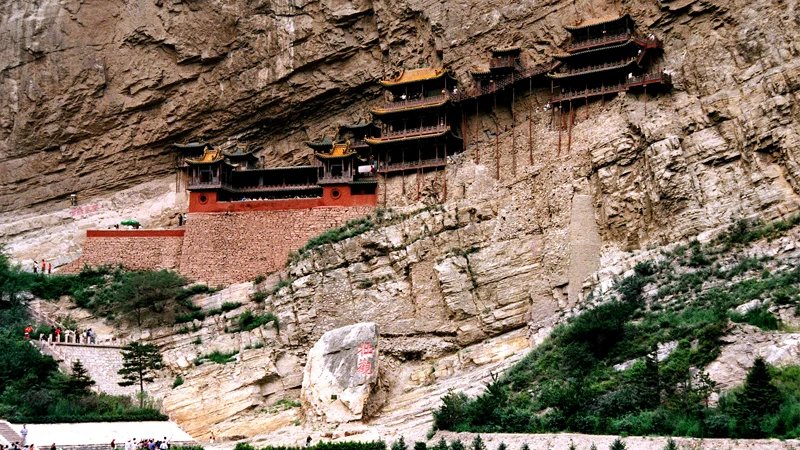
Perched between the steep cliffs on the west side of the Jinlong Gorge of Hengshan Mountain is an ancient temple that has stood for a thousand years—a temple renowned throughout the world. Hanging Temple “The Hanging Temple, perched high in the sky, suspended by three horse-tail cables.” Locals have long used this time-honored folk rhyme to precisely capture its extraordinary beauty, perilous location, and ingenious craftsmanship. This ancient temple is built atop precarious cliffs and overlooks a deep abyss below; it hangs in midair yet has stood firm through millennia of wind and rain. The exquisite choice of its site and the astonishing ingenuity of its construction can truly be described as masterpieces wrought by divine hands. For thousands of years, debates have raged over the origins of this temple and who its builders were. Some attribute its creation to the ingenious craftsmanship of the siblings Lu Ban, while others speculate that it holds profound secrets of Daoism from the Northern Wei dynasty. In conjunction with the “Book of Wei,” The Commentary on the Waterways Based on records from official historical texts and literature, as well as field investigations and research conducted by Professor Li Xiangkui, we have traced the historical trajectory of the Northern Wei Dynasty to fully reconstruct the entire process behind the construction of Chongxu Temple (the Hanging Temple), and to uncover the mastermind behind this “divine masterpiece.”
To unravel the mystery behind the construction of the Hanging Temple, we must first trace its historical origins—the development of Taoism and the evolution of Taoist altars during the Northern Wei period in Pingcheng. And all of this is inseparable from a central figure: the National Preceptor of the Northern Wei Dynasty and leader of the Celestial Master Sect. Kou Qianzhi Before we proceed, let’s first review the pivotal figures who played an indispensable role in this historical period: the Taoist reformer and leader of the Celestial Masters Sect, Kou Qianzhi; his mentor, the renowned scholar Cheng Gongxing, a master of Daoist and Confucian traditions; Cui Hao, a representative of a prominent Confucian family and a minister during the Northern Wei dynasty; Emperor Taowu Tuoba Tao, the third emperor of the Northern Wei, along with his crown prince Tuoba Huang; and Emperor Xiaowen Tuoba Hong, the seventh emperor of the Northern Wei and a celebrated reformer. It was precisely through the efforts of these individuals that the Chongxu Monastery (the Hanging Monastery) came into being.
The story begins with the Northern Wei dynasty’s development of Pingcheng (modern-day Datong in Shanxi Province). In the seventh month of the first year of Tianxing (398), Emperor Daowu, Tuoba Gui, officially established Pingcheng as the capital and immediately “issued an imperial edict to the relevant authorities to demarcate the inner territory and define the suburban districts,” thereby delineating the boundaries of the Northern Wei capital region. According to the “Food and Goods Chronicle” in the Book of Wei: “In the early years of Tianxing, the capital city was established, stretching eastward to Dai Commandery (present-day Weixian County in Hebei Province), westward to Shannu (present-day Youyu County in Shuozhou City), southward to Yin Guan (present-day Shuocheng District in Shuozhou City), and northward to Shenhe (present-day Yanggao County in Datong City), encompassing all the land within these boundaries.” This defined area clearly established Pingcheng as the core of the capital region; at that time, the present-day Hunyuan County—then known as Guoshan County—also belonged to the inner capital region.

Figure 1: Map of the Northern Wei Capital Region (Note: This map was drawn by Tan Qixiang and depicts the 21st year of Taihe, corresponding to AD 497; hence, the place names indicated on the map do not fully align with those cited in the referenced literature. In the 18th year of Taihe, the Northern Wei moved its capital to Luoyang and renamed Sizhou as Hengzhou.)
During the Northern Wei dynasty, the Northern Wei government carried out large-scale immigration and development in the capital region. According to scholar Li Ping’s article, “Large-Scale Migration during the Reign of Emperor Daowu and the Development of Yanbei,” during the reign of Emperor Daowu, Tuoba Gui, the population that migrated into Yanbei was approximately 1.56 million. After Emperor Daowu, Emperors Mingyuan Tuoba Si, Taowu Tuoba Tao, Xianwen Tuoba Hong, and Xiaowen Tuoba Hong continued the policy of migration to bolster the capital region. The number of migrant households reached as many as 110,000, with a total population exceeding 36,000 individuals. Assuming an average household size of five persons, the population that migrated to Yanbei after Emperor Daowu still exceeded 580,000. Originally, the Xianbei Tuoba clan made their living through nomadic pastoralism. After establishing their capital at Pingcheng, they immediately began “constructing palaces, erecting ancestral temples, and setting up altars for the state’s deities.” This marked the formal beginning of the Xianbei Tuoba clan’s sinicization. From a geographical perspective, the Sanggan River basin receives annual precipitation exceeding 400 millimeters, making it more suitable for agriculture than for nomadic pastoralism. Moreover, an agricultural civilization can support a much larger population than a nomadic one. This shift in mode of production and lifestyle profoundly influenced the developmental trajectory of the Northern Wei dynasty.
According to research by Mr. Zhang Zhizhong of the Datong City Archaeological Institute, the “palace complex” constructed by Emperor Daowu in the first year of Tianxing (398) was the palace city of Pingcheng. In the sixth month of the third year of Tianci (406), Emperor Daowu again began constructing an outer city, “measuring twenty li in circumference, with markets and residential quarters laid out systematically, and thoroughfares connecting all parts—work was completed in thirty days,” taking just about a month. After Emperor Daowu, Emperor Mingyuan, Tuoba Si, in the ninth month of autumn in the seventh year of Taichang (422), once again undertook the construction of the outer city of Pingcheng. The “Chronicles of the Taizong” records that this outer city had a perimeter of thirty-two li and was built across the Yu River. Based on these findings, we can conclude that the Northern Wei capital, Pingcheng, consisted of three distinct sections—the palace city, the outer city, and the outer wall city—each constructed in the first year of Tianxing, the third year of Tianci, and the seventh year of Taichang, respectively. Moreover, the original Daoist altar of the Northern Wei—the Grand Dao Altar Temple—was located within the outer wall city.

Figure 2: Layout of the Pingcheng Site of the Northern Wei Dynasty (The pink area represents the Imperial Palace City, the blue area represents the Outer City, and the red area represents the Guo City.)
In addition to the development of Pingcheng, the Northern Wei dynasty’s exploitation of Guoshan Mountain (today’s Hunyuan County) also laid the foundation for the construction of Chongxu Temple (the Hanging Monastery). As early as the Eastern Han period, a transportation route from Hunyuan to Lingqiu had already been established; at that time, it was known as Shiming Xing. According to Li Daoyuan’s “Commentary on the Waterways,” during the Northern Wei period, the Qiangfeng Ridge in Hunyuan still bore an inscribed stone tablet dating from the late Eastern Han era, bearing the inscription “Northern Boundary of Jizhou.” During the Northern Wei’s Pingcheng era, the Jinlong Gorge of Hengshan Mountain served as an important node along the Dingzhou Avenue (today’s Datong–Lingqiu–Dingzhou) transportation route. In the first month of the first year of Tianxing (398), Emperor Daowu Tuoba Gui, returning from Zhongshan (today’s Dingzhou City in Hebei Province) to Fanzhi Palace (located within present-day Yingxian County in Shanxi Province), took precisely this Dingzhou Avenue. Subsequently, he “dispatched 10,000 conscripts to repair the straight road, excavating from Wangdu Tieguan through Hengling to Dai, a distance of over 500 li.” The Hunyuan–Lingqiu section was also included within the scope of this construction project.
After Emperor Daowu, the Northern Wei continued to maintain and improve this vital transportation route. In the eighth month of the second year of Taiyan (436), Emperor Taowu issued an imperial edict ordering Duke Zhang Li of Guangping to conscript 12,000 men from seven counties in Dingzhou to clear and repair the Shaquan Road. In the seventh month of autumn in the sixth year of Taihe (482), Emperor Xiaowen again mobilized 50,000 men from various prefectures and counties to renovate the Lingqiu Road. Both Shaquan and Lingqiu are located within the present-day boundaries of Lingqiu County. Since the route from Pingcheng to Lingqiu necessarily passed through Hunyuan, both the Shaquan Road and the Lingqiu Road included the section between Hunyuan and Lingqiu. This made for convenient transportation and construction conditions that later facilitated the building of Chongxu Temple.
Moreover, the scenic beauty of Xuan Yue (today’s Hengshan Mountain) and Guo Mountain (today’s Wohu Mountain north of Xiliucun in Hunyuan County) within the borders of Hunyuan was highly favored by the Northern Wei imperial family. Ninety li south of Xuan Yue lies a hot spring (today’s Tangtou Hot Spring in Wangzhuangbao Town, Hunyuan County). According to the “Commentary on the Waterways,” its water is “warm and hot like soup, capable of curing a hundred ailments.” A hot spring palace was once built beside the spring. According to statistics from the “Book of Wei,” members of the Northern Wei imperial family and high-ranking nobles visited Xuan Yue, Guo Mountain, and the hot spring palace—at least nineteen times—either for leisure and vacation or for hunting and soaking in hot springs. Among them, Emperor Xiaowen Tuoba Hong visited the most frequently, seven times; Emperor Wen Cheng Gaozong Tuoba Jun came second, with four visits. Even Empress Dowager Hui, Lady Dou, out of her fondness for the scenery of Guo Mountain, left a will stipulating that she be buried there. Thus, as early as over 1,500 years ago, Hunyuan and its Xuan Yue had already become an important recreational and vacation area for the Northern Wei imperial family, setting the stage for the relocation of the Daoist altar here.
Having laid the groundwork for the development of Pingcheng and Guoshan, let us now return to our central figure, Kou Qianzhi, and explore the evolution of the Northern Wei Daoist altar as well as the origins of Chongxu Temple. According to the "Wei Shu, Volume 114, Biographies of Taoists and Buddhists," during the reign of Emperor Shizu (i.e., Emperor Taowu Tuoba Tao), the Taoist priest Kou Qianzhi, courtesy name Fuzhen, was the younger brother of Zan, the Inspector of Nan Yongzhou. He claimed to be a thirteenth-generation descendant of Kou Xun. From an early age, he had a deep affinity for the Daoist path and harbored a desire to transcend the mundane world; in his youth, he studied diligently the techniques of Zhang Lu. Kou Qianzhi came from a prominent family in Fengyi. His father, Kou Xiuzhi, had served as the Prefect of Donglai under Fu Jian of the Former Qin. After Kou Xiuzhi’s death, due to Emperor Taowu’s reverence for Daoism and his high regard for Kou Qianzhi, Kou Xiuzhi was posthumously honored with the titles of General Anxi, Inspector of Qinzhou, and Duke of Fengyi. Kou Qianzhi’s elder brother, Kou Zan, after the fall of the Later Qin dynasty at the hands of Liu Yu, the powerful general of the Eastern Jin, led over a thousand households from the provinces of Qin and Yong to surrender to the Northern Wei. The Northern Wei established a temporary administrative division called Nan Yongzhou in Luoyang and appointed Kou Zan as its Inspector. At that time, more than ten thousand households of refugees from Qin and Yong flocked to Kou Zan, earning him both high status and great influence. Throughout the Sixteen Kingdoms period, the Kou clan played a pivotal role in political affairs, providing crucial familial support that enabled Kou Qianzhi later on to carry out reforms in Daoism and gain the emperor’s favor.
The “Zhang Lu’s Teachings” that Kou Qianzhi had been practicing since childhood was none other than the Five Dou Rice Sect—so named because initiates were required to pay five dou of rice as a contribution. The Five Dou Rice Sect was also known as the Celestial Master Sect. According to the “Records of the Three Kingdoms, Volume 8: Biography of Zhang Lu,” both Zhang Lu’s grandfather, Zhang Ling, and his father, Zhang Heng, had been leaders of the Five Dou Rice Sect. At the end of the Eastern Han dynasty, Zhang Lu preached in Hanzhong, “using ghostly teachings to guide the people and styling himself ‘Shijun.’” He even placed rice and meat at post stations for travelers to partake in. His teaching style gained widespread popularity for a time, and thanks to this, Zhang Lu managed to establish and maintain control over Hanzhong for nearly thirty years. During his cultivation of Daoist arts, Kou Qianzhi encountered his master—Cheng Gongxing, a renowned scholar and recluse. As recorded in the “Book of Wei, Treatise on Buddhism and Taoism,” once Kou Qianzhi visited his aunt’s home to pay his respects and happened to see Cheng Gongxing, a laborer with an extraordinary appearance and imposing stature. After obtaining his aunt’s permission, Kou Qianzhi brought Cheng Gongxing back to his own home to help with household chores. One day, Kou Qianzhi was sitting beneath a tree, using The Zhou Bi Suan Jing Although Cheng Gongxing had been meticulously calculating the movements of the sun, moon, and the five major planets—Jupiter, Mars, Mercury, Venus, and Saturn—he could never get the calculations right. One day, Cheng Gongxing happened to catch Ku Qianzhi losing his patience and scolding someone harshly. But Cheng Gongxing sincerely suggested that Ku Qianzhi give his own method a try. To everyone’s surprise, when Ku Qianzhi followed Cheng Gongxing’s approach, he soon managed to determine the correct patterns governing the movements of the “Seven Luminaries.” Deeply impressed, Ku Qianzhi immediately requested to become Cheng Gongxing’s teacher—but Cheng Gongxing insisted on remaining merely his disciple.
Moreover, the “Wei Shu, Volume 91, Biography of Yin Shao” records that Cheng Gongxing also had a disciple named Yin Shao, whom Cheng Gongxing once taught. The Nine Chapters on the Mathematical Art Cheng Gongxing enjoyed close friendships with the monk Shi Tanying and the Daoist Fa Mu. Shi Tanying and Fa Mu, in turn, passed on to Yin Shao knowledge in astronomy, medicine, mathematics, and the study of the Book of Changes. From this, we can infer that Kou Qianzhi had been practicing Daoist arts from an early age. After studying under Cheng Gongxing, he was influenced by the three major Chinese traditions—Confucianism, Buddhism, and Daoism. This laid a solid foundation for his later efforts to draw upon Buddhist monastic rules and precepts, thereby reforming and abolishing the outdated practices of Daoism.
In the tenth month of the second year of Shenrui during the reign of Emperor Mingyuan, Tuoba Si (415), while cultivating Taoist practices on Mount Song, Kou Qianzhi claimed that the Supreme Lord Lao Jun had descended and appointed him as the leader of the Celestial Master Sect. The Supreme Lord also bestowed upon him twenty volumes of the "New Precepts of the Clouds’ Melodic Recitation," instructing him to reform the Celestial Master Sect by primarily abolishing the old Taoist practices of collecting rent, rice, and monetary taxes, as well as the ancient techniques of sexual union between men and women, and by standardizing Taoist ritual procedures. In the tenth month of the eighth year of Taichang (423), Kou Qianzhi again claimed that Li Puwen, the Master of the Pastoral Palace, had descended and granted him the "Record of the Three True Great Texts of the Heavenly Center," ordering him to assist the Northern True Lord of Peace (later known as Emperor Taiwu, Tuoba Tao). Moreover, Li Puwen revealed to Kou Qianzhi that between heaven and earth there are thirty-six layers, each layer containing a palace and a sovereign ruler of its own. Among these layers... The Thirty-Third Layer is the Pastoral Earth Palace, whose ruler is Hong Zhengzhen尊, surnamed Zhao and named Dao Yin. He attained the Tao during the Shang Dynasty. Immortals such as Chisongzi, Wang Zi Qiao, Han Zhong, Zhang Anshi, Liu Gen, and Zhang Ling all served as attendants to Hong Zhengzhen尊. The ruler of the Thirty-Second Layer is Yan Zhen Palace Master, also known as the Western Hu Buddha. Although this notion may seem absurd, it became a crucial motivation behind Kou Qianzhi’s construction of the Jinglun Heavenly Palace—because in ancient times, people believed that towering, majestic mountains allowed one to come infinitely close to the gods at their peaks, facilitating communion between humans and deities and thereby securing blessings and good fortune. The concept of the Jinglun Heavenly Palace originated precisely from this very idea.
Kou Qianzhi’s Taoist reforms won the strong approval of Cui Hao, a prominent representative of the Confucian aristocracy and an official of the Northern Wei dynasty. Not only did Cui Hao become Kou Qianzhi’s disciple and study Daoist arts under him, but he also recommended Kou Qianzhi to Emperor Taiwu, Tuoba Tao. Thanks to Cui Hao’s recommendation, Kou Qianzhi earned the emperor’s high regard. Emperor Taiwu specifically dispatched an envoy to offer sacrifices at Mount Song and brought more than forty of Kou Qianzhi’s disciples into Pingcheng, where they began promoting Taoism nationwide. In the second year of Shiguang (425), Kou Qianzhi had the Tian Shi Dao ritual site—the Dadao Altar Temple—constructed on the southeastern side of Pingcheng, on the eastern bank of Ruhun Water (today’s Yu River in Datong City). Today, this site is located about 600 meters east of Pingcheng Bridge, at the ruins known as Erhou Geda. According to historical records, this altar was a “five-tiered, layered structure.” Combining the accounts in the “Commentary on the Waterways” with archaeological evidence, the ruins still remain standing today, with rammed-earth walls reaching a height of roughly eight meters. The Datong municipal government has now placed the site under protection. This location thus became the first step in Kou Qianzhi’s vision of achieving “communication between humans and deities.”

Figure 3: Site of the Altar and Temple on Dongda Avenue, Pingcheng Bridge
In the fourth year of Shenjia (431), the Northern Wei dynasty began expanding the Daoist sanctuary of the Celestial Master. Kou Qianzhi planned to build a serene celestial palace—“reaching up to greet the celestial guests above and utterly silencing worldly clamor below”—to the northeast of the Great Dao Altar. He stipulated that this palace should be so high that “not even the sounds of roosters crowing or dogs barking could be heard,” thereby facilitating communication with the heavenly deities. In the third year of Taiping Zhenjun (442), Emperor Taiwu, Tuoba Tao, personally visited the Daoist altar and received talismans and magical scrolls from the Celestial Master. From then on, every emperor of the Northern Wei who ascended the throne would come to the Daoist altar to receive these talismans, thus establishing it as an integral part of the dynasty’s ritual system. However, the construction of the Jinglun Heavenly Palace proved immensely ambitious; it consumed vast financial resources, exhausted the populace, and involved countless laborers, yet remained unfinished after years of effort. Seeing this situation, Crown Prince Tuoba Huang suggested relocating the project to the steep cliffs east of Pingcheng, where construction could be accomplished more efficiently and with half the effort. Yet even after Kou Qianzhi’s death in the ninth year of Taiping Zhenjun (448), the eighteen-year-long project still remained incomplete. In the eleventh year of Taiping Zhenjun (450), faced with no other choice, the Northern Wei government was forced to demolish the unfinished Jinglun Heavenly Palace.
After Kou Qianzhi’s death, the Da Dao Altar Temple continued to serve as the imperial Daoist altar of the Northern Wei dynasty. However, as Pingcheng grew and developed steadily, the altar’s location gradually lost its suitability for maintaining the “pure and reverent divine path.” The reason for this was that, over nearly a century—from Emperor Daowu to Emperor Xiaowen—five generations of emperors had carried out large-scale migrations and extensive development. What had once been a sparsely populated settlement with “few dwellings” had by the Taihe period become densely packed with houses and residences, experiencing a dramatic population surge. Consequently, the Da Dao Altar Temple, originally situated within the city walls in a transitional zone between urban and rural areas, had become a place where “humans and deities mingled promiscuously,” no longer able to meet the core requirements of Daoism—that is, “reverently upholding the supreme law and maintaining pure reverence toward the divine path.” Thus, relocating the altar became an inevitable choice for the Northern Wei imperial court.
In the seventh month of autumn in the 15th year of Taihe (491), Emperor Xiaowen, Tuoba Hong, issued an imperial edict formally deciding to relocate the Daoist altar. The “Lower Chronicle of the High Ancestor” records: “In the 15th year of Taihe (491), on the day Wuxu of the seventh month of autumn, the Daoist altar was relocated to the southern slope of Sanggan and renamed Chongxu Temple.” However, this record is rather brief and does not specify the exact location of Chongxu Temple. Fortunately, the “Biography of Buddhist and Daoist Monks” provides a more detailed account: “In the autumn of the 15th year of Taihe, an imperial edict was issued stating: ‘The ultimate Way is formless and characterized by emptiness and tranquility. Since the Han dynasty, altars and shrines have been established; previous dynasties found them suitable for accommodating the Way and thus built temples there. In the past, dwellings within the capital were sparse. Now, however, residential areas are densely packed, and both humans and deities gather in great numbers—this is hardly appropriate for honoring the supreme Way and maintaining pure reverence toward the divine. Therefore, the altar may be relocated to the southern part of the capital, on the southern slope of Sanggan and the northern slope of Yue Mountain, where it shall remain permanently. Fifty households shall be assigned to provide for the temple’s offerings and rituals, and the temple shall continue to bear the name Chongxu Temple. Furthermore, reclusive scholars from all prefectures may be invited until the number reaches ninety.’”
As an imperial edict addressed to the entire nation, this decree precisely pinpointed the exact location of Chongxu Temple. By analyzing it word by word, we can clearly see: First, “to the south of the capital”—taking Pingcheng (modern-day Datong) as a reference point, the area is confined within the northern Wei dynasty’s capital region. Combined with the preceding description, Hunyuan County falls within the inner capital region, thus fitting the broad description of “to the south of the capital”; Second, “on the shady side of the Sanggan River”—in ancient times, the north side of a river was considered yang, while the south side was yin; here, we are referring to the southern bank of the Sanggan River; Third, “on the sunny side of Yue Mountain”—Yue Mountain refers to today’s Hengshan Mountain, known in ancient times as Xuan Yue. In ancient times, the south side of a mountain and the north side of a river were considered yang; hence, here we are referring to the southern side of Hengshan Mountain.
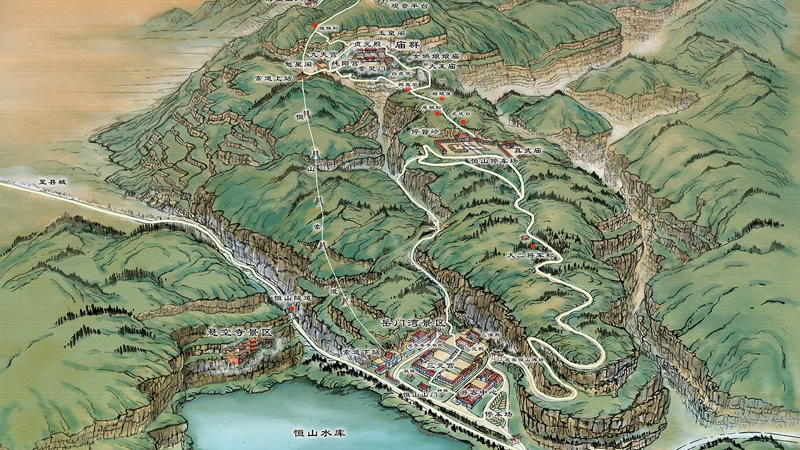
Regarding the location of Hengshan Mountain, the "Shui Jing Zhu, Volume 13, Luo Shui" provides a clear record: "The Luo Shui (today's Sanggan River in the Datong Basin) flows eastward for forty-nine li, passing to the north of Juwei Pavilion. Further east, the Guochuan Water (today's Hunhe River, a tributary of the Sanggan River in Hunyuan County) joins it. The water (today's Tangyu River, a tributary of the Hunhe River) emerges from the south of the ancient city of Guo County (today's Guchengwa in Mazhuang Village, Hunyuan County), which was known as Guozhang during Wang Mang's reign. To the south of the county lies Xuan Yue (today's Hengshan Mountain), and to the right, behind it, is Guoshan (today's Wohu Mountain north of Xiliu Village in Hunyuan County). Situated between these two mountains, the place was thus named Guozhang. The water then flows westward out of the mountains, forming what is called Guokou. It flows northward, passing to the east of the ancient city of Fanzhi County (today's Chengxiachuang Village, northeast of Zhenziliang Township, Ying County), which was known as Dangyao during Wang Mang's reign." Combining this historical account with on-site investigations, we find that the Hanging Temple, built on the western side of Jinlong Gorge at Hengshan Mountain, is perched high atop steep cliffs. Although the riverbed has silted up over the millennia, the temple still stands some 60 meters above the ground level. It is the only structure within the Northern Wei capital region that simultaneously meets all three criteria: "south of the capital, shaded by the Sanggan River, and facing the sunny side of Hengshan Mountain," while also fulfilling the requirement of being "so high that one cannot hear the crowing of roosters or barking of dogs, yet close enough to commune with the gods in heaven."

Figure 4: Schematic Map Showing the Geographical Locations of Xuan Yue, Guo Shan, and the Ancient City of Guo County
Some might wonder: Although the Hanging Temple is visually located on the west side of Tianfengling, the main peak of Hengshan Mountain, how can it be described as “on the sunny side of Yue Mountain”? In fact, by examining a contour map, we can see that the Hanging Temple is situated southwest of Tianfengling. In ancient times, people often recorded directions within broad ranges rather than with precise measurements. Thus, there’s no need to hold ancient people to modern standards. Therefore, the Hanging Temple can indeed be referred to as “on the sunny side of Yue Mountain.” To sum up, we can confidently conclude that the Hanging Temple on Hengshan Mountain is none other than Chongxu Temple—the imperial Taoist altar relocated in the 15th year of Taihe during the Northern Wei dynasty. The architectural concept behind it draws from Kou Qianzhi’s unfinished Jinglun Heavenly Palace, embodying the Taoist ideal of “suspended high above the mundane world, where humans and gods commune.” As for its construction foundation, it rests upon the Jinlong Gorge plank road along the Guoshan–Lingqiu section, which had been developed since the Eastern Han and Northern Wei periods. This path, once traversed by countless imperial nobles and diplomatic missions, provided crucial support for the construction of Chongxu Temple.

Figure 5: Schematic Map of the Geographical Location of Chongxu Temple (Hanging Temple)
Having established that Chongxu Temple is indeed today’s Hanging Temple, the next central question becomes: Who was responsible for constructing this architectural marvel—whose engineering difficulty was extremely high and which combined both imperial ritualistic attributes and Taoist cultural significance? By combining the records from the “Wei Shu, Volume 91, Arts and Skills, Biography of Jiang Shaoyou” with relevant historical materials and making logical inferences, the answer points to Jiang Shaoyou, the Chief Architect of the Northern Wei Dynasty.
Jiang Shaoyou, originally from Bocang in Le'an (roughly the area of Shouguang in today’s Shandong Province), led a life rich in legend. When Murong Baiyao pacified Dongyang, Jiang Shaoyou was captured and taken to Pingcheng, where he was enrolled as one of the “Pingqi Household” members. Later, he was assigned to serve as a soldier in Yuncheng. He was “ingenious and skilled in both painting and carving,” and possessed a keen literary talent; whenever he composed poetry or prose, he could often produce short pieces with remarkable elegance. After settling in Pingcheng, he earned a living by working as a scribe. Despite this, his reputation continued to spread locally. Later, Jiang Shaoyou was summoned to serve as a scribe in the Secretariat, where he joined Gao Cong and became closely associated with the renowned official Gao Yun. Gao Yun recognized Jiang’s exceptional talent and abilities and recommended him along with Gao Cong. Both were subsequently appointed as doctoral scholars in the Secretariat. During his tenure at the Secretariat, Jiang Shaoyou frequently aligned himself with the brothers and nephews of Li Chong. At first, people from the north were unfamiliar with the Jiang clan from Qingzhou; some even doubted that Jiang Shaoyou came from an aristocratic background and speculated that his rise through the ranks had been due solely to his craftsmanship rather than his scholarly credentials. As a result, he did not enjoy much public or private esteem. Only Gao Yun and Li Chong showed him particular favor—this was partly because Jiang Shaoyou’s maternal uncle, Cui Guang, was married to Li Yan, Li Chong’s paternal uncle, making them close in-laws. On one occasion, during a private banquet, Emperor Xiaowen and Empress Dowager Wenming remarked to all the officials: “We had initially thought Shaoyou was merely a craftsman, but it turns out that Old Man Gao Yun regards him as a true scholar.” This clearly demonstrates the high regard and recognition Emperor Xiaowen and Empress Dowager Wenming held for him. Nevertheless, despite this acclaim, Jiang Shaoyou was still frequently called upon to perform various duties within the palace, such as overseeing the carving and decoration of ritual objects. Precisely because of these frequent assignments, he enjoyed great favor and received numerous rewards, enabling him to advance beyond his original rank. Yet, despite all this, he never achieved a truly high-ranking position.
Emperor Xiaowen once issued an imperial edict ordering the Minister Shangshu Li Chong, along with Feng Dan, You Minggen, Gao Lu, and others, to deliberate in the palace on the attire and ceremonial robes of all officials. Relying on his ingenious ideas, Jiang Shaoyou was entrusted with leading this effort and also sought advice from Liu Chang. The two often disagreed, leading to frequent disputes. It took six years to complete the project. Afterward, the newly appointed attire began to be distributed to all officials, and Jiang Shaoyou’s contribution to the formulation of these garments was indispensable. Later, when plans were made to construct the Grand Ancestral Temple and the Taiji Hall in Pingcheng, Emperor Xiaowen dispatched Jiang Shaoyou via express courier to Luoyang to survey the foundations of palaces from the Wei and Jin dynasties, providing crucial reference material for the construction of the Pingcheng palace complex. Subsequently, Jiang Shaoyou served as a Scattered Cavalry Attendant and assisted Li Biao on an envoy mission to the southern regions. When Emperor Xiaowen undertook the construction of new ships, he recognized Jiang Shaoyou’s ingenuity and competence and appointed him as the Imperial Water Commissioner. Later, Jiang Shaoyou was promoted to the rank of Former General and concurrently served as Chief Architect, continuing to oversee matters related to ponds, lakes, and pleasure boats. Moreover, Jiang Shaoyou personally conceived and designed the renovation and expansion of the Hualin Palace and its associated ponds, as well as the reconstruction of the Jinyong Gate Tower. His works were acclaimed for their exquisite beauty and elegance.
Although Jiang Shaoyou possessed literary talent, he was never able to fully realize his literary ambitions. Throughout his life, he remained busy with architectural craftsmanship, ritualistic carvings, and other such tasks, "constantly occupied with chisels and measuring tools, rushing from one task to another." He was often bustling about between gardens, lakes, palaces, and city halls. Wise men felt deeply sorry for him, yet he accepted his lot with equanimity, never complaining of fatigue nor feeling ashamed. Later, he also took on the additional post of Junior Minister of the Taichang Bureau while continuing to hold his position as Imperial Water Commissioner. He passed away in the second year of Jingming (501), and was posthumously honored with the titles of General Longxiang and Governor of Qingzhou. His posthumous name was “Zhi.” He left behind a literary collection of more than ten volumes. Moreover, Jiang Shaoyou also created models for the Taiji Hall and participated in its construction alongside Dong Er and Wang Yu, among others. Unfortunately, these projects remained unfinished when he died.
From the construction period and engineering characteristics of Chongxu Temple to Jiang Shaoyou’s official rank and skills, we can clearly trace the connection between the two, thereby substantiating the possibility that Jiang Shaoyou oversaw the construction of Chongxu Temple (the Hanging Temple). Moreover, this inference is highly plausible from an academic standpoint.
First, the timing perfectly coincides. The construction of Chongxu Temple began in the 15th year of Taihe (491), when Emperor Xiaowen issued an imperial edict ordering its relocation. By the 18th year of Taihe (494), when the Northern Wei dynasty moved its capital to Luoyang, these three years constituted the core period for the temple’s construction. It was precisely during this phase that Jiang Shaoyou reached the peak of his career as Chief Architect. At the time, he was overseeing a series of major imperial projects—including the Ta Miao Temple, the Taiji Hall, and the Hualin Hall—in Pingcheng—and was also responsible for renovating the gate tower of Luoyang’s Jinyong City. The buildings he designed and constructed were renowned for their exquisite beauty and were highly praised by Emperor Xiaowen. Given his exceptional talent and expertise, he was fully capable of leading such a challenging project as the construction of Chongxu Temple.
Second, the official position was a perfect match for the engineering requirements of the project. Chongxu Temple was not an ordinary folk temple; rather, it served as the imperial Taoist altar of the Northern Wei dynasty—a state-sponsored ceremonial structure that played a crucial role in the royal family’s rituals, prayers for blessings, and promotion of Taoist culture. As such, it was deeply intertwined with the nation’s ritual system and the royal court’s prestige. According to the Northern Wei bureaucratic system, major ceremonial projects of this magnitude had to be personally overseen by the Chief Architect of the Imperial Works. During the years from the 15th to the 18th year of the Taihe era, the post of Chief Architect of the Imperial Works was held precisely by Jiang Shaoyou. At that time, Jiang Shaoyou was responsible for coordinating all of the Northern Wei imperial ceremonial projects, and naturally, Chongxu Temple—being an important part of this grand undertaking—could not possibly have been entrusted to an unknown or inexperienced individual.
Moreover, the skills required closely match the engineering challenges involved. The Hanging Monastery, built atop steep cliffs, demands precise structural design, superb construction techniques, and meticulous control over the terrain—balancing the Taoist ideal of “suspended in midair,” far from the hustle and bustle of the mortal world, while ensuring the building’s stability and resilience against wind and rain. The engineering difficulties are immense. Jiang Shaoyou, described as “ingenious and highly skilled in carving and painting,” devoted his entire life to architectural craftsmanship. He not only mastered the construction of conventional palaces, gardens, and boats but also excelled in architectural planning, model design, and intricate craftsmanship. During his mission to the Jiangnan region, he absorbed the exquisite techniques of Jiangnan architecture and blended them with the majestic grandeur of Central Plains architecture. This architectural style, which combines both magnificence and delicacy, was perfectly suited to the needs of constructing the Chongxu Temple. As recorded in the “Book of Wei,” he “always carried chisels and measuring ropes, working swiftly and meticulously.” Even at the height of his official position, he personally supervised every detail of the work. It was precisely this dedication and artisanal spirit that made him indispensable for the construction of such an extraordinary and perilous structure as the Hanging Monastery.
Some might question: Since historical records do not directly state that Jiang Shaoyou oversaw the construction of Chongxu Temple, how can we draw this conclusion? In historical research, a closed loop of “indirect evidence” can be equally persuasive. Between the 15th and 18th years of Taihe, the position of Chief Architect was permanently assigned to Jiang Shaoyou; during this same period, all imperial ceremonial projects were overseen by him. As an important imperial Taoist altar of the Northern Wei dynasty, Chongxu Temple was of high architectural rank and extremely challenging. Thus, it was naturally entrusted to the project manager whom the emperor trusted most. Moreover, Jiang Shaoyou’s skills and responsibilities perfectly matched the construction requirements and engineering complexity of Chongxu Temple. This line of reasoning—“fixed official post + temporal overlap + skill alignment + engineering complexity”—is a reasonable inference that conforms to the standards of historical research.
After the completion of Chongxu Temple (the Hanging Temple), it served exclusively as the imperial Taoist altar of the Northern Wei dynasty for only three years. In the 18th year of Taihe (494), when the Northern Wei moved its capital to Luoyang and renamed Sizhou as Hengzhou, the Taoist altar was likewise relocated southward. According to the "Book of Wei—Biography of Buddhist and Daoist Monks": "When the capital was moved from Luoyang to Ye, the practice continued as before. The Taoist altar was located in the southern suburbs, covering an area of two hundred paces. On the seventh day of the first month, the seventh day of the seventh month, and the fifteenth day of the tenth month, the altar’s chief priest, Daoist priests, and eminent scholars—altogether 160 individuals—would perform ritual worship at the altar." After the Northern Wei moved its capital to Luoyang and the Eastern Wei established its capital at Ye City, the Taoist altars were consistently built in the southern suburbs of the respective capitals. Meanwhile, Chongxu Temple, as the Taoist altar of the northern capital, Pingcheng, continued to be used as before.
Unfortunately, this period of prosperity did not last long. In the twelfth month of the 20th year of Taihe (496), Mu Tai, the governor of Hengzhou, launched a rebellion. Then, in the third month of the fifth year of Zhengguang (524), Po Luohan Baling rallied his followers and rose up in revolt, leading to the fall of Hengzhou. During the Xiaochang era (525–527), the turmoil intensified further. As recorded in the “Geographical Records” of the Book of Wei: “During the Xiaochang period (525–527), the chaos and displacement reached an unprecedented level. From Hengdai northward, the entire region was reduced to ruins.” The former capital region of the Northern Wei experienced repeated devastation by war, resulting in the loss of vast amounts of historical records. Consequently, any mention of Chongxu Temple also sank into the mists of history, leaving behind only this ancient temple suspended in midair—a mystery that has sparked debate for millennia.
Today, the Hanging Temple of Hengshan Mountain still stands tall atop a sheer cliff. The wooden pavilions harmoniously blend with the rocky cliffs, and within their soaring eaves and upturned corners lie the architectural wisdom of the Northern Wei dynasty and Taoist culture—also embodying Jiang Shaoyou’s meticulous craftsmanship. This temple is not only an architectural marvel but also a living fossil that vividly reflects the fusion of Han and non-Han cultures and the cultural inclusiveness of the Northern Wei period—from Emperor Daowu establishing the capital at Pingcheng and developing the metropolitan region, to Kou Qianzhi’s reform of Taoism and his vision of the Jinglun Heavenly Palace; from Emperor Xiaowen’s decree to relocate and rename the Daoist altar as Chongxu Temple, to Jiang Shaoyou’s painstaking craftsmanship that brought this extraordinary spectacle into being—every single detail carries the historical memory of the Northern Wei dynasty.

Nestled amidst towering cliffs rising thousands of feet high, every wooden beam and stone slab of the Hanging Temple seems to whisper tales spanning a thousand years. Although historical records do not provide explicit written accounts, from multiple perspectives—including historical context, official systems, and the alignment of craftsmanship—Jiang Shaoyou, the chief architect of the Northern Wei dynasty, is widely regarded as the most likely mastermind behind this marvel of divine artistry. With unparalleled ingenuity, he seamlessly blended the Taoist concept of “harmony between humans and gods” with architectural expertise, creating on the sheer cliff face a spectacle that has endured for millennia and left behind a precious cultural legacy for posterity. Today, the Hanging Temple has become Hunsun’s signature landmark, tasked with promoting Hunsun’s culture and narrating the history of the Northern Wei dynasty. By delving into the temple’s construction process and tracing the footsteps of its builders, we not only seek to unravel a thousand-year-old mystery but also aim to gain a deeper understanding of the Northern Wei era—a period marked by the fusion of Han and Xian cultures, characterized by inclusiveness and mutual enrichment—and to carry forward the artisanal spirit and cultural heritage that have transcended time. (Li Xiangkui)
Keywords:
Related News
Contact Us
Beiyue Hengshan Scenic Area:
Travel Inquiry:+86-352-8333077
Ticket Inquiry:+86-352-8333031
Travel Complaints:+86-352-8333081
Emergency Rescue:+86-352-8333037
Scenic Area Product After-Sales Service Hotline:
+86-18636203837
+86-15383522518
Mount Hengshan Scenic Area Administration Center (Official)
+86-352-8322142
Hanging Temple
+86-352-8327795
Yuemenwan (Hengshan Mountain Gate)
+86-352-8480060 +86-352-8328318 +86-352-8328530
Hengzong
+86-352-8480115
Tianfeng Ridge
+86-352-8480114
Yong'an Temple
+86-352-8322390
Li's Family Cemetery
+86-352-8322381
Hengshan Cableway
+86-352-8322255
Official Media

Tiktok