

-
AboutMount Heng, an outstanding representative of the splendid mountains and rivers of China, a symbol of national prosperity, a totem of national spirit, an important geographical indication of the country, and holds the status of a national mountain.More
-
CultureHengshan has been a famous scenic spot and important birthplace of Taoism in northern China since ancient times. Carrying the symbols of Chinese civilization, it has nurtured profound regional culture and folk customs.More
-
-
Tourist GuideUnderstand relevant information about the scenic area and enjoy a better travel experience.More
-
Surrounding activitiesThe ancient city of Hunyuan at the foot of Mount Heng in Beiyue has a long history, rich cultural heritage, beautiful scenery, and a convergence of agriculture, commerce, and animal husbandry. It has nurtured a unique regional culture and is renowned for its fine wine and delicious food.More
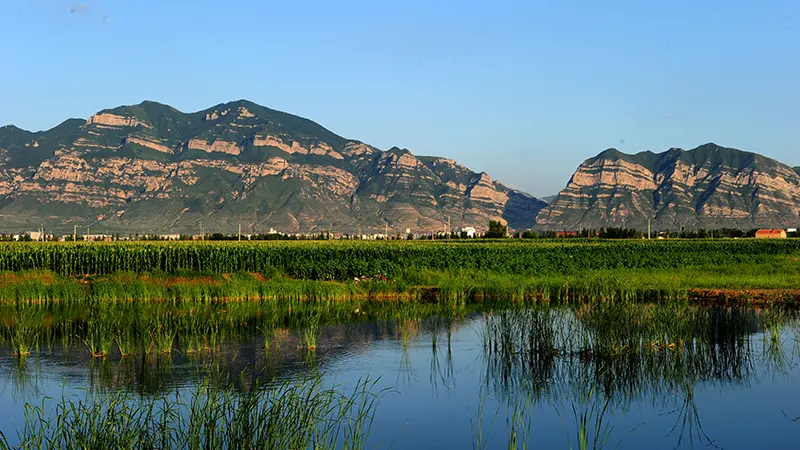

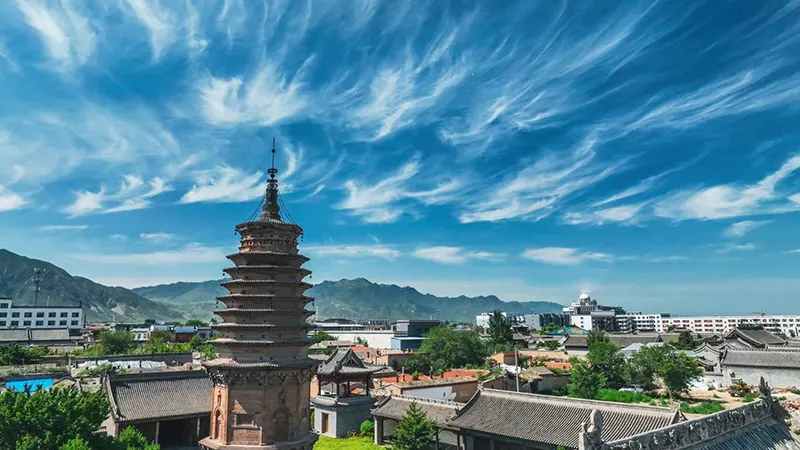
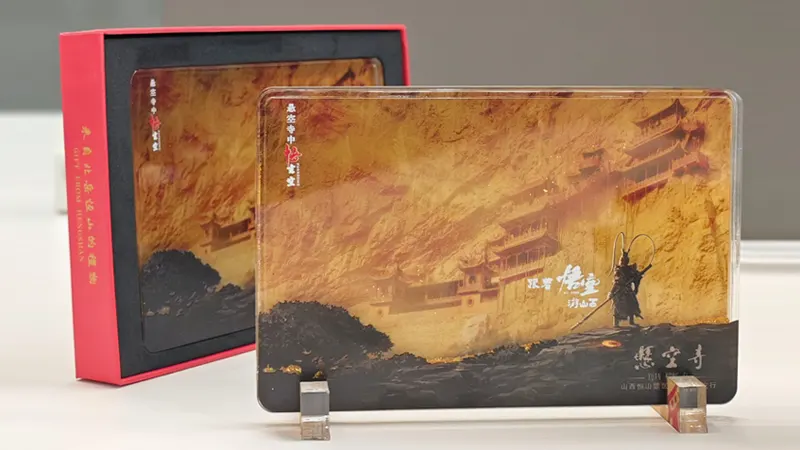
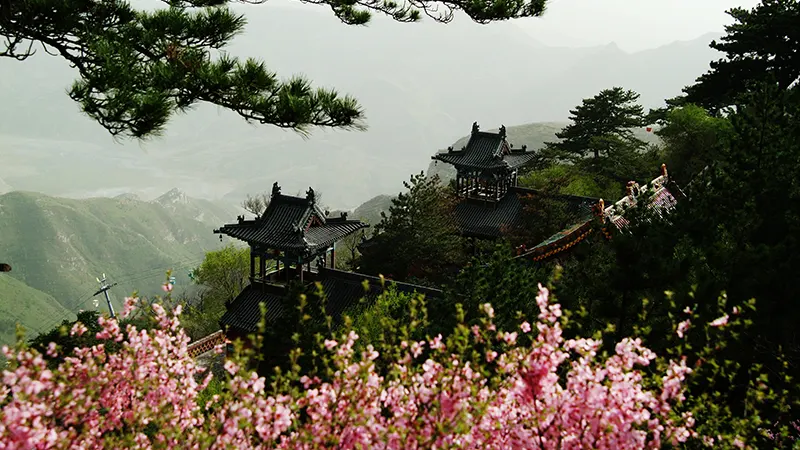






Traces of Immortals on Hengshan Mountain: The Mysterious Yue Immortal Recorded in Ancient Texts (Part 2)
Publish Time:
2026-04-24 10:44
Source:
Among the immortals of Hengshan Mountain, Zhang Guo’s deeds are the most legendary and well-known. As one of the Eight Immortals, he is also among the few immortals whose stories have been recorded in historical texts. According to the “Comprehensive Collection of Immortals,” Zhang Guo lived in seclusion in Puwu County of Hengshan Mountain, concealing his ancestral origins. Later, he retreated to Zhongtiao Mountain, traveling back and forth between the Fen and Jin regions, where he mastered the secret arts of longevity. Elderly people say they saw Zhang Guo when they were still children, while Zhang Guo himself claimed to be several hundred years old. He often rode a white donkey that could travel tens of thousands of li each day; when it was time to rest, he would fold the donkey up until it was as thin as a sheet of paper and put it into a handkerchief box. Whenever he needed to ride again, he would sprinkle it with water, and the donkey would instantly return to its original form.

Zhang Guo was indifferent to fame and fortune; Emperor Taizong and Emperor Gaozong of the Tang dynasty repeatedly summoned him to leave his hermitage, but he always declined. When Empress Wu Zetian came to power, she sent emissaries to summon him to the palace, whereupon he— Temple of the Jealous Goddess He pretended to be dead. At the time it was the height of summer, and the corpse soon began to rot and swarm with maggots, so Wu Zetian took the deception at face value and ceased pressing the matter. Yet later, someone once again saw him in the mountains of Hengzhou. In the twenty-third year of the Kaiyuan era under Emperor Xuanzong of the Tang dynasty, Wei Ji, the governor of Hengzhou, reported Zhang Guo’s deeds to the imperial court, whereupon Xuanzong ordered Tongshi Sheren Pei Wu hastened by relay post to Heng Prefecture to greet him. Upon seeing Pei Wu, Zhang Guo suddenly breathed his last; left with no choice, Pei Wu had no recourse but to burn incense and proclaim the Son of Heaven’s earnest call for talented men. Only after a while did Zhang Guo slowly regain consciousness. Daring not to press the matter further, Pei Wu promptly returned to the palace to report the situation. Emperor Xuanzong then dispatched the Middle Secretariat Scholar Xu Qiao and the Tongshi Scholar Lu Chongxuan, each bearing an imperial edict, to go in person and escort Zhang Guo. It was only then that Zhang Guo accompanied Xu Qiao to the Eastern Capital, where he was lodged in the Jixian Academy. The emperor accorded him the highest honors; high-ranking officials and ministers flocked to pay their respects, and he was even carried into the palace on a palanquin.
Emperor Xuanzong inquired of Zhang Guo about the Way of the Immortals, yet Zhang Guo steadfastly refused to answer. He was adept at the art of regulating breath and nurturing qi; he could go for days without eating, yet he often drank wine. When the emperor bestowed wine upon him, Zhang Guo demurred, saying, “This humble servant partakes of no more than two sheng of wine. I have a disciple who can drink a dou.” The emperor was overjoyed and ordered that the disciple be summoned to the palace. Soon after, a young boy darted down from the eaves of the hall—about sixteen or seventeen years of age, with handsome features and an elegant, refined demeanor. Upon presenting himself before the emperor, his words were crisp and clear, and his manners thoroughly courteous. The emperor bade the boy take a seat, but Zhang Guo declared, “My disciple ought to stand by my side; he should not accept the honor of being seated.” The emperor grew even more fond of him. The boy drank until he had consumed a full dou, yet his countenance remained unaltered. Zhang Guo hastily protested, “No more wine should be bestowed! Excessive drinking is bound to lead to some mishap; all we seek is to win the emperor’s smile.” Yet the emperor insisted on granting more. Suddenly, wine began gushing forth from atop the boy’s head; his cap fell to the ground and transformed into a golden wine vessel. The emperor, together with the imperial consorts and attendants, burst into laughter. But when they looked again, the boy had already vanished, leaving only the golden vessel on the floor. Turning it over, they found that it contained a full dou of wine—upon inspection, it proved to be none other than the very wine vessel from the Academy of Literature.
The supernatural arts displayed by Zhang Guo are countless. He once said, “I was born in the Bingzi year of Emperor Yao’s reign and once held the post of Chamberlain.” Yet his appearance was that of only a man in his sixties or seventies. At the time, there was a person named… Xing Hepu There was a man skilled in calculating the length of human life, and another named Shi Yeguang who could see ghosts. Emperor Xuanzong ordered Xing Hepu to divine Zhang Guo’s lifespan, yet Xing was utterly at a loss; he then secretly dispatched Shi Yeguang to keep watch over Zhang Guo, but not even a trace of him could be found. Xuanzong said to Gao Lishi, “I have heard that those who can drink violet wine without finding it bitter are truly extraordinary individuals.” On that cold day, Xuanzong had some violet wine brought forth and presented it to Zhang Guo. Zhang Guo drank three cups in succession, then slumped back and remarked, “This is no fine wine.” With that, he fell fast asleep. A short while later, everyone saw that his teeth had turned charred and shriveled. Zhang Guo motioned to those around him to bring a ruyi scepter, struck his teeth to the ground, and concealed them in his bosom. He then took out an elixir and smeared it upon his gums; after a long while, new teeth sprang up, as white and lustrous as jade.
On one occasion, Emperor Xuanzong went hunting in Xianyang and bagged a huge deer, ordering the imperial chef to prepare it. Upon seeing this, Zhang Guo remarked, “This is an immortal deer, already a thousand years old. Back in the fifth year of the Yuanshi era under Emperor Wu of the Han, I once attended the emperor on a hunt in the Shanglin Garden and captured this very deer—only to release it afterward.” Xuanzong, puzzled, asked, “There are countless deer throughout the empire; with the passage of time, how could such a venerable creature have escaped the hunters?” Zhang Guo replied, “When Emperor Wu released it, he had affixed a copper plaque beneath its left antler as a mark.” Xuanzong then ordered an inspection, and sure enough, a copper plaque about two inches in size was found beneath the deer’s left antler—though the inscription on it had long since worn away and become illegible. Xuanzong went on to inquire, “What was the sexagenary cycle year of the fifth year of the Yuanshi era, and how many years has it been since then?” Zhang Guo answered, “That year was the Guihai year, and it was precisely in that year that Emperor Wu initiated the excavation of…” Kunming Pool “It is now the year of Jiaxu, and eight hundred and fifty-two years have already passed since then.” Emperor Xuanzong ordered the Imperial Astronomer to verify the calendar, and sure enough, Zhang Guo’s account was spot on.
Emperor Xuanzong once said to Ye Fashan When asked about Zhang Guo’s origins, Ye Fashan replied, “Your servant knows his lineage, but if I were to reveal it, I would surely die; therefore, I dare not speak of it now. Only if Your Majesty would remove your crown and bare your feet to confess your sins before Zhang Guo could I hope to live.” Emperor Xuanzong agreed. Ye Fashan then said, “Zhang Guo is the white bat spirit from the very dawn of primordial chaos.” No sooner had he finished speaking than blood began to gush from all seven orifices, and he collapsed, lifeless on the ground. Hastening to Zhang Guo’s abode, Emperor Xuanzong removed his crown and bare his feet, prostrating himself before Zhang Guo to seek forgiveness. Zhang Guo spoke slowly: “This child is too talkative; if we do not chastise him, he may well divulge the profound mysteries of heaven and earth.” After much pleading on the emperor’s part, Zhang Guo finally sprinkled water upon Ye Fashan’s face, whereupon he instantly regained consciousness. From that moment on, Emperor Xuanzong held Zhang Guo in even higher esteem; he issued an edict to hang a portrait of the sage in the Jixian Academy, bestowed upon him the title of Silver-Green Light-Rank Grand Minister, and conferred upon him the honorific name “Master Tongxuan.”
Zhang Guo lived in the palace for a long time and repeatedly requested to return to Hengzhou on the grounds of old age and illness. Emperor Xuanzong granted his request, bestowing upon him 300 bolts of silk, two attendant disciples, and arranging for a postal carriage and sedan chair to escort him back to Hengzhou. Zhang Guo sent one of his disciples back and, accompanied by the other, retreated to Hengshan Mountain to live in seclusion. In the early years of the Tianbao era, Emperor Xuanzong once again dispatched an envoy to summon Zhang Guo. Upon hearing of the imperial edict, Zhang Guo passed away immediately. His disciples buried him; later, when someone opened the coffin, they found it empty. Emperor Xuanzong then ordered the construction of Qixia Temple to worship Zhang Guo.
Associated with Zhang Guo is another seeker of the Dao named Guan Ge, whose deeds are recorded in the “Biography of the Doubtful Immortal.” Guan Ge was a native of the State of Zhao; from childhood he had a fondness for Daoist arts and eschewed agricultural labor, often traveling between Zhao and Wei. He was proud and arrogant, disliking humility and deference toward others, yet he was quick-witted and eloquent. On one such journey, Guan Ge encountered Zhang Guo, who called out to him: “Come here, Guan Ge!” Guan Ge retorted, “Who are you?” Zhang Guo replied, “I am Master Zhang Guo.” Guan Ge then asked, “On what authority does Zhang Guo summon me?” Zhang Guo said, “Do you not understand the rites of the human world? Even the emperors of the mortal realm pay me respect—why should you not do the same?” Guan Ge answered, “I am no emperor of the mortal realm; why, then, should I pay you respect?”
Zhang Guo then invited Guan Ge to tour Hengshan Mountain together, and Guan Ge agreed to go. Zhang Guo told Guan Ge to close his eyes, but Guan Ge said, “If I can go on a tour by closing my eyes, why can’t I go if I keep them open?” Zhang Guo replied, “You are but an ordinary mortal; how could you possibly endure the rugged mountain paths?” Guan Ge retorted, “You, too, are an ordinary mortal, yet you can still make the journey—why shouldn’t I be able to?” With that, Zhang Guo tossed the staff in his hand, and the staff transformed into a blue ox, which he offered for Guan Ge to ride. Guan Ge mounted the blue ox and, together with Zhang Guo, entered Hengshan Mountain. Zhang Guo led Guan Ge to the very summit of Hengshan, where they sat down and Zhang Guo asked, “You have witnessed the clamor and complexity of the human world, the sorrows and worries of earthly life, the rise and fall of the seasons, and the fleeting passage of time from youth to old age. Why, then, do you spend so much time wandering through the lands of Zhao and Wei, instead of venturing far and wide to the most remote corners of the earth? The lands of Zhao and Wei are rife with war and turmoil—they are hardly the kind of places suitable for those who seek the Way. If your aim is to cleanse your mind of distracting thoughts, to dispel your worries, and to purify your body, you must never linger long in Zhao or Wei.”
Guan Ge replied, “Why, then, do you find yourself between the states of Zhao and Wei? A true cultivator never lets changes in geography alter his original heart. My wandering between Zhao and Wei is no different from my roaming the Jade Pure Realm or the Immortal Isles of Penglai and Yingzhou. If you hold emperors in high regard and commoners in low esteem, casually invoking my name and flaunting the emperor’s respect for you, such behavior is nothing but worldly attachment. Even if you spend the morning in the Jade Pure Realm or the Immortal Isles and arrive in Zhao or Wei by evening, you are still but a mundane person. You should journey far and wide, freeing yourself from the bonds of worldly trivialities. If you refuse to travel far, you will ultimately die in the human realm and be unable to attain the Dao alongside me. Since I have no worldly attachments, why should I wander far?” Upon hearing this, Zhang Guo smiled without reply. Guan Ge went on: “You ask me to visit Hengshan Mountain only to show off your magic of turning your staff into a green ox. Do you not know that all things in the world can transform? The transformation of objects is hardly remarkable; after all, people have been cultivating themselves into immortals for generation after generation—how much more so with objects?” Having spoken, Guan Ge rose and departed without a word, descending from the summit to build a thatched hut in the mountains of Hengshan, where he lived in seclusion and practiced cultivation. Later, his whereabouts became unknown; some say they once saw him at Jishan Mountain.
Keywords:
Related News
Contact Us
Beiyue Hengshan Scenic Area:
Travel Inquiry:+86-352-8333077
Ticket Inquiry:+86-352-8333031
Travel Complaints:+86-352-8333081
Emergency Rescue:+86-352-8333037
Scenic Area Product After-Sales Service Hotline:
+86-18636203837
+86-15383522518
Mount Hengshan Scenic Area Administration Center (Official)
+86-352-8322142
Hanging Temple
+86-352-8327795
Yuemenwan (Hengshan Mountain Gate)
+86-352-8480060 +86-352-8328318 +86-352-8328530
Hengzong
+86-352-8480115
Tianfeng Ridge
+86-352-8480114
Yong'an Temple
+86-352-8322390
Li's Family Cemetery
+86-352-8322381
Hengshan Cableway
+86-352-8322255
Official Media

Tiktok