

-
AboutMount Heng, an outstanding representative of the splendid mountains and rivers of China, a symbol of national prosperity, a totem of national spirit, an important geographical indication of the country, and holds the status of a national mountain.More
-
CultureHengshan has been a famous scenic spot and important birthplace of Taoism in northern China since ancient times. Carrying the symbols of Chinese civilization, it has nurtured profound regional culture and folk customs.More
-
-
Tourist GuideUnderstand relevant information about the scenic area and enjoy a better travel experience.More
-
Surrounding activitiesThe ancient city of Hunyuan at the foot of Mount Heng in Beiyue has a long history, rich cultural heritage, beautiful scenery, and a convergence of agriculture, commerce, and animal husbandry. It has nurtured a unique regional culture and is renowned for its fine wine and delicious food.More

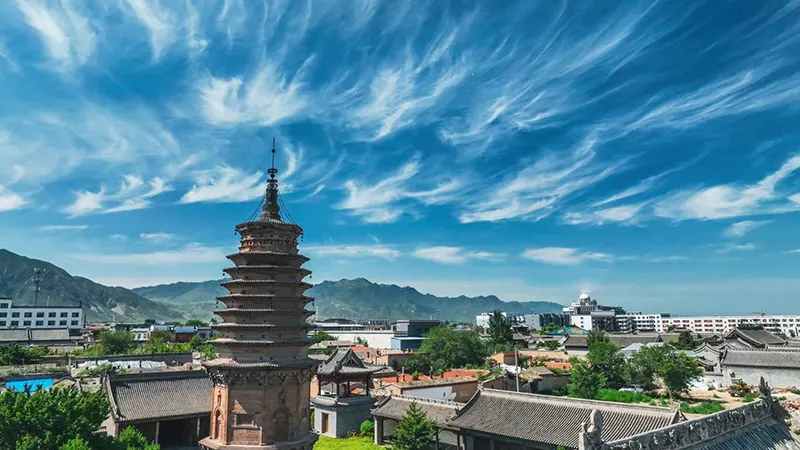
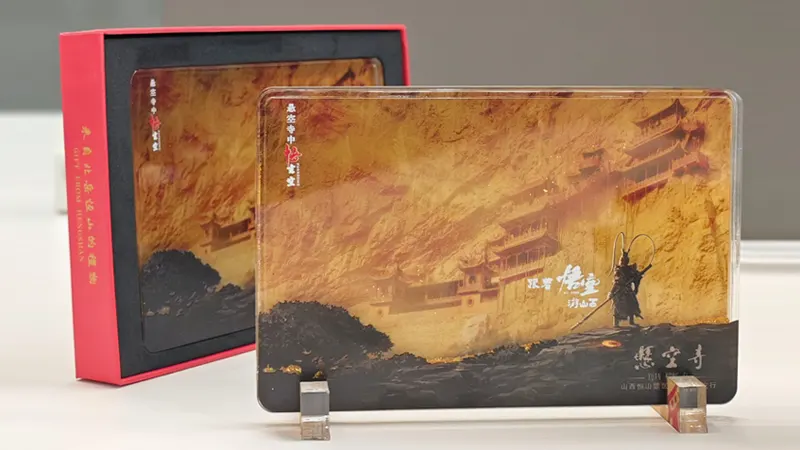
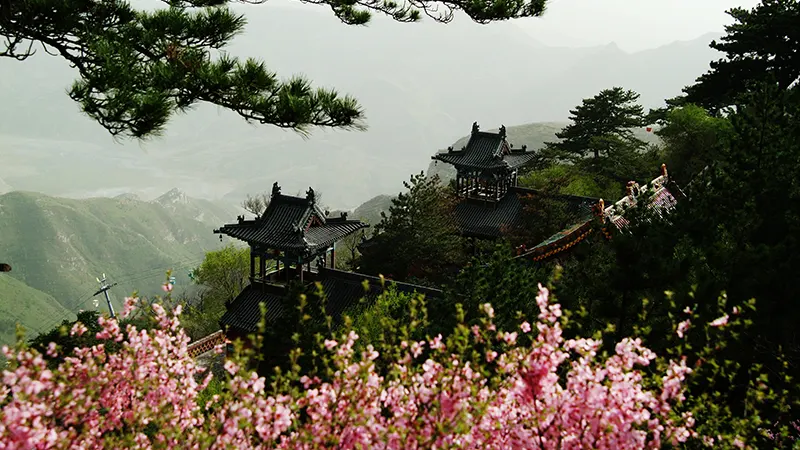
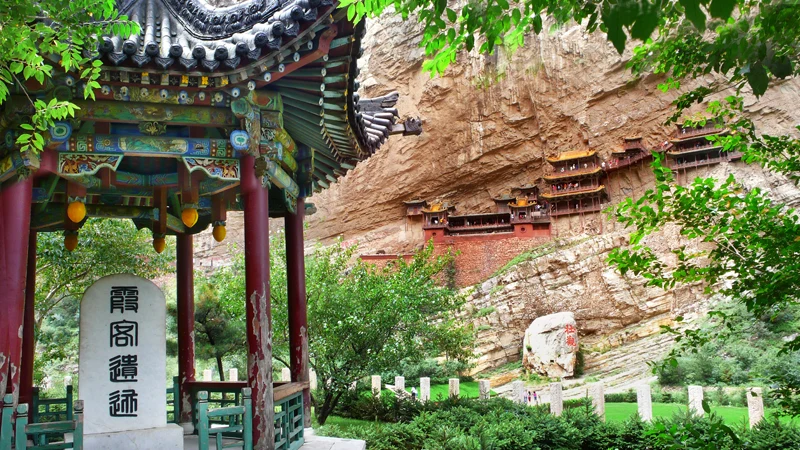
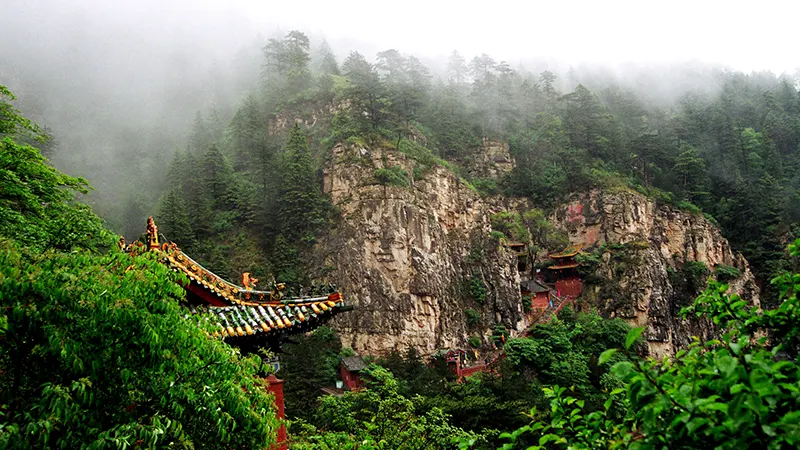
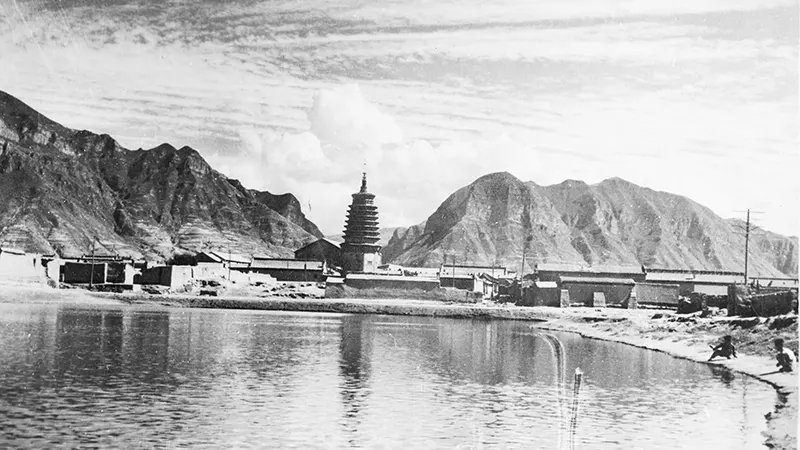
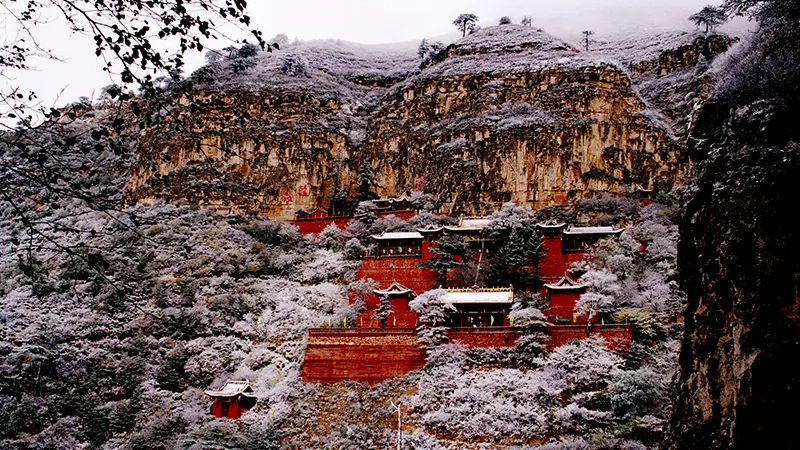
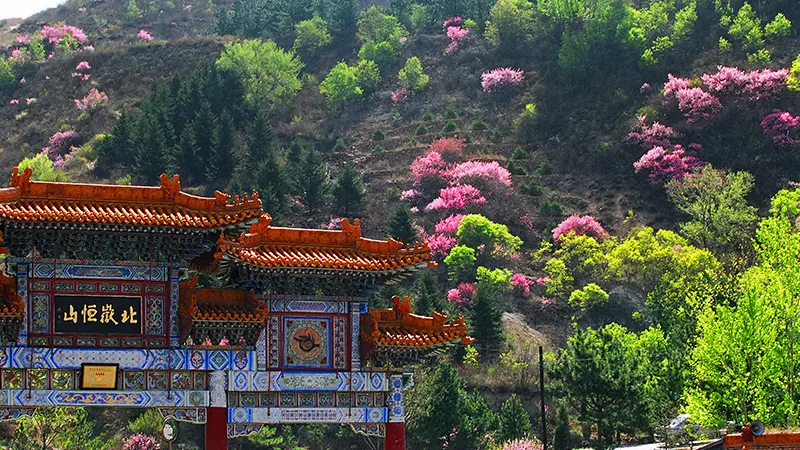






Beiwu Royal Tourism Resort – Hunyuan, Shanxi
Publish Time:
2026-01-13 12:58
Source:
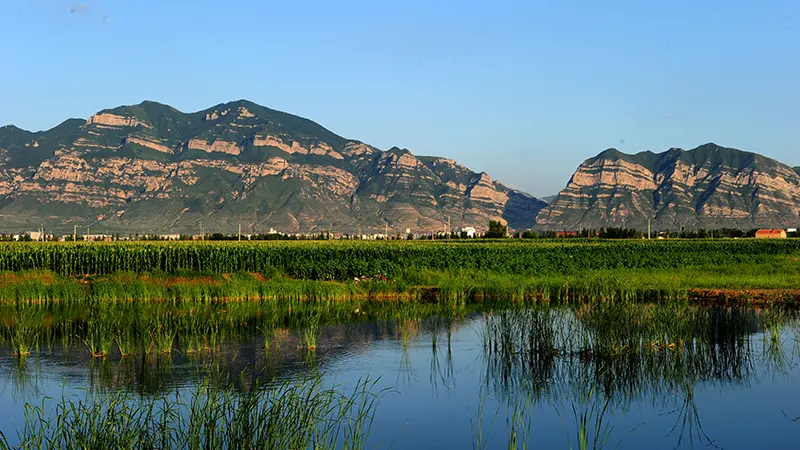
In the first year of Tianxing (398), the Northern Wei dynasty moved its capital to Pingcheng (modern-day Datong in Shanxi Province) and delineated the capital region’s boundaries: to the east, it extended to Dai Commandery (present-day Weixian County in Hebei Province); to the west, it reached Shanwu (present-day Youyu County in Shanxi Province); to the south, it bordered Yin Guan (present-day Shuocheng District in Shuozhou, Shanxi Province); and to the north, it stretched as far as Canhe (present-day Yanggao County in Shanxi Province). Hunyuan, located deep within the heart of the capital region, thus entered a period of large-scale development and became a favored imperial retreat spot cherished by the Northern Wei royal family.
During the Northern Wei period in Pingcheng, Hunyuan’s geographical and cultural advantages were particularly prominent. The Jinlong Gorge of Hengshan Mountain served as a vital transportation hub along the Dingzhou Road (today’s Datong—Lingqiu—Dingzhou route), linking two breathtaking scenic spots—Xuanyue (today’s Hengshan Mountain) and Guoshan (today’s Wohushan north of Xiliucun Village in Hunyuan County). With its layered green peaks and picturesque landscapes, this region deeply captivated the imperial court. Moreover, ninety li south of Xuanyue lay a hot spring (today’s Tangtou Hot Spring in Wangzhuangbao Town, Hunyuan County), which was highly praised in the “Commentary on the Waterways—Volume Eleven—The Li River” for its “warmth resembling hot soup, capable of curing a hundred ailments.” The royal family specially built a hot-spring palace here for rest and recuperation. Together, Xuanyue, Guoshan, and the hot-spring palace formed an exclusive resort system reserved for the Northern Wei imperial family. Throughout the entire Northern Wei dynasty, aristocratic members of the imperial court frequently traveled back and forth to this area—sometimes climbing mountains to enjoy the scenery and soaking in the hot springs for health benefits, other times engaging in hunting and leisurely vacations. As a result, Hunyuan became a renowned royal tourist and vacation destination in northern China more than 1,500 years ago. Even Huizhen Empress Dowager Dou, the nanny of Emperor Shizu Tuoba Tao, left behind a last wish—to be buried on Guoshan after her death, drawn irresistibly by the mountain’s exquisite beauty, which vividly illustrates just how profound its allure was.
(1) Emperor Taiwu, Tuoba Tao: Hunting Tigers on Mount Guo Leaves a Glorious Legacy
The “Wei Shu, Volume 27, Biography of Mu Yi” records: “(Mu) Han’s younger brother, Yi, was loyal, meticulous, and possessed both talent and strength. During the campaign against Helong (in the first year of Yanhe, 432), he surpassed all other generals in merit and was appointed as Inspector of the Imperial Guards, awarded the title of General Longxiang, and elevated to the rank of Marquis of Changle. Once, when Emperor Shizu was hunting on Mount Guo, a tiger suddenly emerged. Yi seized it with his bare hands and captured it.” Here, “Emperor Shizu” refers to Emperor Taiwu of the Northern Wei, Tuoba Tao; “tian” denotes hunting activities. This authentic historical account vividly recreates the thrilling scene in which Mu Yi, an attendant of Emperor Taiwu, bravely subdued a tiger with his bare hands during a hunt on Mount Guo in Hunyuan. It also confirms the significant status of Mount Guo as an imperial hunting ground.
(2) Empress Dowager Hui, Lady Dou: Rest in peace at Mount Guo, where deep affection is eternally enshrined.
According to the "Wei Shu, Volume 13: Biographies of Empresses," Lady Dou, the nanny of Emperor Shizu, passed away in the first year of Zhenjun (440) at the age of sixty-three. The imperial court issued an edict announcing three days of national mourning. The funeral rites were presided over by Grand Tutor Lu Luyuan, and she was posthumously honored with the title "Hui." In accordance with her last wish, she was buried on Guoshan Mountain. Once, Empress Dowager Dou had ascended Guoshan Mountain and remarked to her attendants with deep emotion: "I have nurtured emperors, revered the gods, and shown kindness to the people. If my soul does not perish after death, I surely shall not become a wretched ghost of poverty and low status. Yet, during the previous dynasty, I never held an official rank; thus, I cannot violate ritual propriety by being buried in the imperial mausoleum. This mountain, blessed with spiritual energy and exquisite beauty, is indeed a fitting place for my eternal rest." Consequently, the court had a separate mausoleum and temple built for her on Guoshan Mountain and erected a stele to commemorate her virtues. Today, the very Guoshan Mountain where Empress Dowager Dou rests in peace is located north of Xiliu Village in Hunyuan County—known as Wohu Mountain. Nearby, to the south of Guoshan Mountain, lies the renowned ancestral cemetery of the Sun Gongliang family.
(3) Emperor Wencheng Tuoba Jun: Four Visits to Hunyuan, Enjoying Leisurely Moments
The “Wei Shu—Volume 5—Annals of the Gaozong Emperor” provides a detailed account of Emperor Wencheng, Tuoba Jun’s journey to Hunyuan: “In the second year of Xing’an (453), on the day Yyou of the fifth month of summer, the emperor traveled to Mount Guo. On the day Xinmao, he returned to the palace. In the first year of Xingguang (454), on the day Wuxu of the eleventh month, the emperor traveled to Zhongshan and then proceeded to Xindu. On the thirteenth day of the twelfth month, on the day Bingzi, he returned to Lingqiu and arrived at the Hot Spring Palace. On the day Gengchen, the imperial procession returned to the palace. In the first month of spring in the third year of Tai’an (457), on the day Renxu, the emperor went hunting at Mount Guo. On the day Wuchen, he returned to the palace. In the third year of Heping (462), on the day Guiyou of the second month, the emperor went hunting at Mount Guo and then observed fishing at Xuanhong Pool.”
During his brief 26-year life, Emperor Wencheng visited Hunyuan four times, clearly demonstrating his fondness for this land. In the fifth month of the second year of Xing'an (453), he stayed in Hunyuan for five days, fully enjoying the breathtaking beauty of its mountains and rivers. In the twelfth month of the first year of Xingguang (454), on his way back to Pingcheng from Zhongshan (present-day Dingzhou in Hebei), he made a special stop at the Tangtou Hot Spring Palace for four days, indulging in the therapeutic benefits of the hot springs. In the first month of the third year of Tai'an (457), he went hunting in Guoshan, staying there for six days. In the second month of the third year of Heping (462), he once again traveled to Guoshan for hunting, then continued on to Xuanhong Pool to watch fishermen at work—every movement and pause exuding the leisurely elegance of an imperial vacation.
(4) Emperor Xianwen Tuoba Hong: Twice on Imperial Tours, Seeking Elegant Pastimes
Emperor Xianwen, Tuoba Hong (454–476), passed away prematurely at the young age of twenty-three. Yet his fondness for Hunyuan never waned. According to the “Book of Wei, Volume Six, Chronicle of the Xianzu,” in the second year of Huangxing (468), on the day Yimao in the fifth month, the emperor went hunting on Mount Guo and then proceeded to Fanzi. On the day Xinyou, he returned to the palace. In the third year of Huangxing (469), on the day Renchen in the fourth month of summer, Liu Yu sent an envoy to pay tribute. On the day Bingshen, the imperial prince was named Hong, and a general amnesty was proclaimed throughout the realm. On the day Dingyou, the emperor again went hunting on Mount Guo. Within just two short years, Emperor Xianwen twice journeyed to Mount Guo in Hunyuan to hunt, pouring the royal court’s refined tastes and heroic spirit into these mountains and forests.
(5) Emperor Xiaowen, Tuoba Hong: Seven Visits to Hunyuan Leave Behind a Fine Legacy
Among the emperors of the Northern Wei dynasty, Emperor Xiaowen, Tuoba Hong, traveled to Hunyuan most frequently—seven times in all. His journeys are meticulously recorded in the “Book of Wei, Volume 7, Chronicle of the High Ancestor, Part I”: “In the first year of Taihe (477), on the Bingyin day of the fourth month of summer, the Rouran state sent an envoy to pay tribute. On the Dingmao day, the emperor visited Baideng Mountain. On the Ren Shen day, he visited Guoshan Mountain. In the second year of Taihe (478), on the Dinghai day of the second month, the emperor traveled to Tangquan in Dai, where he inquired about the hardships of the people and bestowed palace ladies upon impoverished widowers. On the Wuxu day, the Rouran state sent another envoy to present tribute. On the Gui Mao day, the imperial procession returned to the palace. In the second year of Taihe (478), on the Jia shen day of the fourth month of summer, the emperor again visited Guoshan Mountain. On the Dinghai day, he returned to the palace. In the third year of Taihe (479), on the Xin si day of the second month, the emperor and the Grand Empress Dowager visited the hot springs in Dai County, inquired about the people’s difficulties, and provided palace ladies as wives to widowed and impoverished individuals. On the Ji hai day, they returned to the palace. In the third year of Taihe (479), on the Bing shen day of the fourth month of summer, the emperor visited Guoshan Mountain again. On the Ji hai day, he returned to the palace. In the seventh year of Taihe (483), on the Gengzi day of the fourth month of summer, the emperor visited Guoshan Mountain and bestowed clothing, grain, and silk upon widows and orphans who were unable to support themselves along the way. On the Ren yin day, the imperial procession returned to the palace. In the eighth year of Taihe (484), on the Jia yin day of the fourth month of summer, the emperor visited Fangshan Mountain. On the Wu wu day, the imperial procession returned to the palace. On the Geng shen day, the emperor traveled to Xuanhongchi and then proceeded to Guoshan Mountain. On the Dingmao day, he returned to the palace.”
Emperor Xiaowen was an exceptionally talented and visionary ruler in the history of the Northern Wei dynasty. During his reign, he implemented major initiatives such as relocating the capital to Luoyang and carrying out Han Chinese-style reforms, profoundly influencing the course of Chinese history. When he toured Hunyuan, he not only immersed himself in the beauty of its mountains and rivers but also kept the welfare of the people at heart: "Wherever he went, he inquired about the hardships of the people and bestowed palace ladies upon impoverished widowers and those without wives"; moreover, he even arranged for widowed and impoverished men to marry palace maids. Such benevolent governance left behind the timeless legend of Hunyuan being "rich in beautiful women." Over the course of seven tours, Emperor Xiaowen experienced both the exhilaration of hunting and mountain climbing, the leisurely relaxation of soaking in hot springs for health, and the heartfelt compassion for the common people—each of these experiences adding a unique humanistic touch to Hunyuan's storied history as a royal resort.
Keywords:
Previous Page
Related News
Contact Us
Beiyue Hengshan Scenic Area:
Travel Inquiry:+86-352-8333077
Ticket Inquiry:+86-352-8333031
Travel Complaints:+86-352-8333081
Emergency Rescue:+86-352-8333037
Scenic Area Product After-Sales Service Hotline:
+86-18636203837
+86-15383522518
Mount Hengshan Scenic Area Administration Center (Official)
+86-352-8322142
Hanging Temple
+86-352-8327795
Yuemenwan (Hengshan Mountain Gate)
+86-352-8480060 +86-352-8328318 +86-352-8328530
Hengzong
+86-352-8480115
Tianfeng Ridge
+86-352-8480114
Yong'an Temple
+86-352-8322390
Li's Family Cemetery
+86-352-8322381
Hengshan Cableway
+86-352-8322255
Official Media

Tiktok