

-
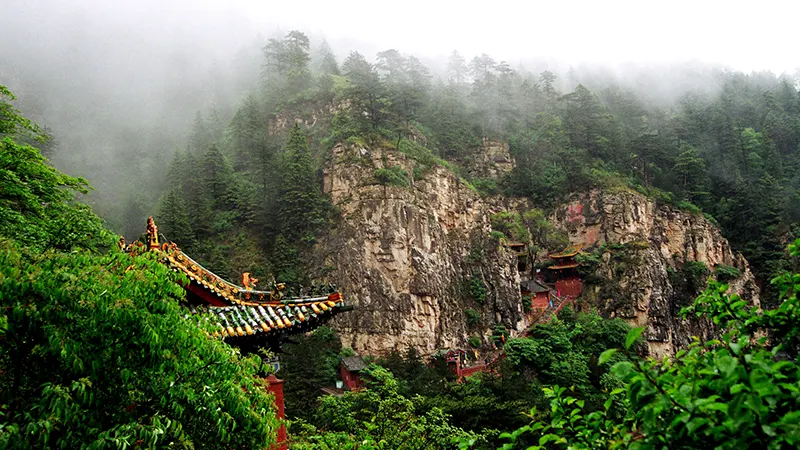
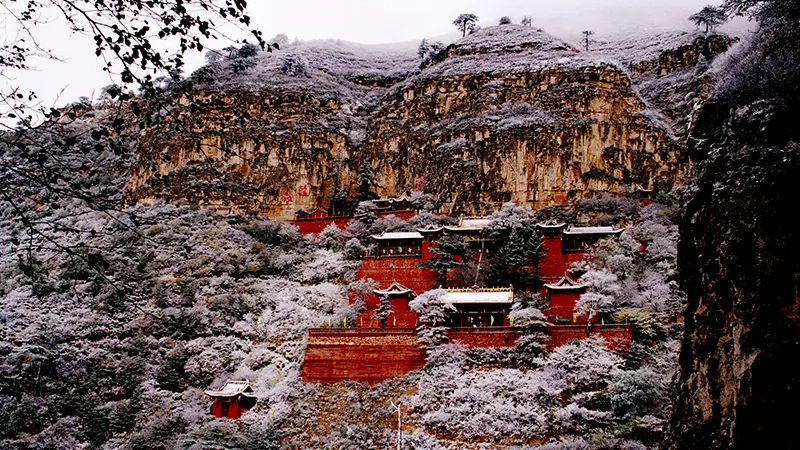
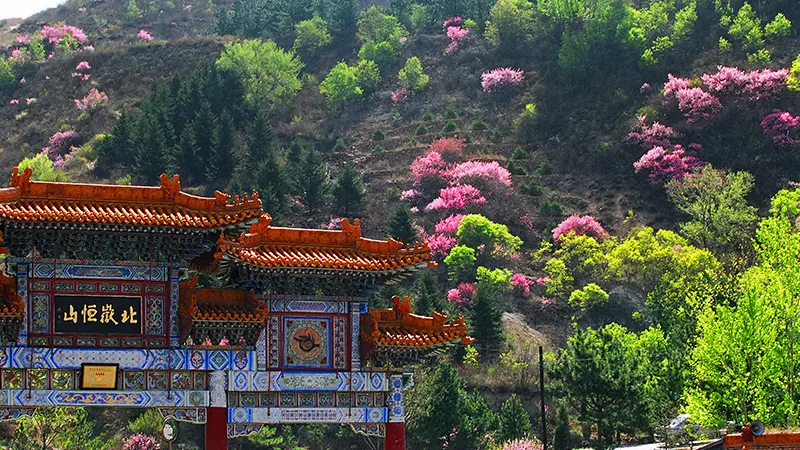
AboutMount Heng, an outstanding representative of the splendid mountains and rivers of China, a symbol of national prosperity, a totem of national spirit, an important geographical indication of the country, and holds the status of a national mountain.More
-
CultureHengshan has been a famous scenic spot and important birthplace of Taoism in northern China since ancient times. Carrying the symbols of Chinese civilization, it has nurtured profound regional culture and folk customs.More
-
-
Tourist GuideUnderstand relevant information about the scenic area and enjoy a better travel experience.More
-
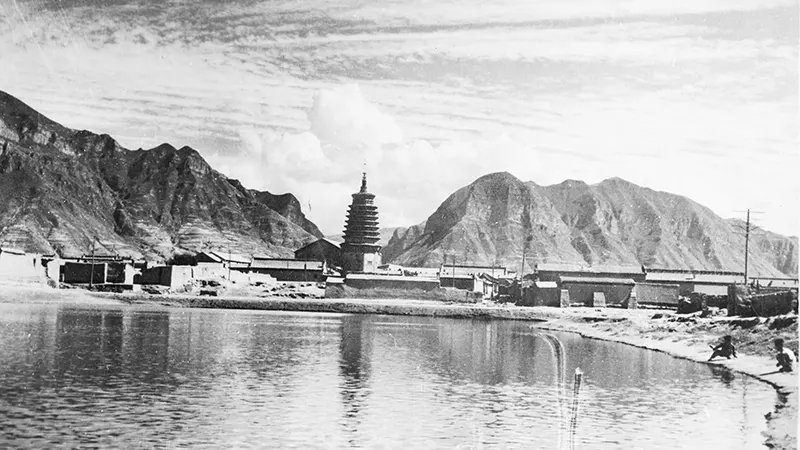
Surrounding activitiesThe ancient city of Hunyuan at the foot of Mount Heng in Beiyue has a long history, rich cultural heritage, beautiful scenery, and a convergence of agriculture, commerce, and animal husbandry. It has nurtured a unique regional culture and is renowned for its fine wine and delicious food.More


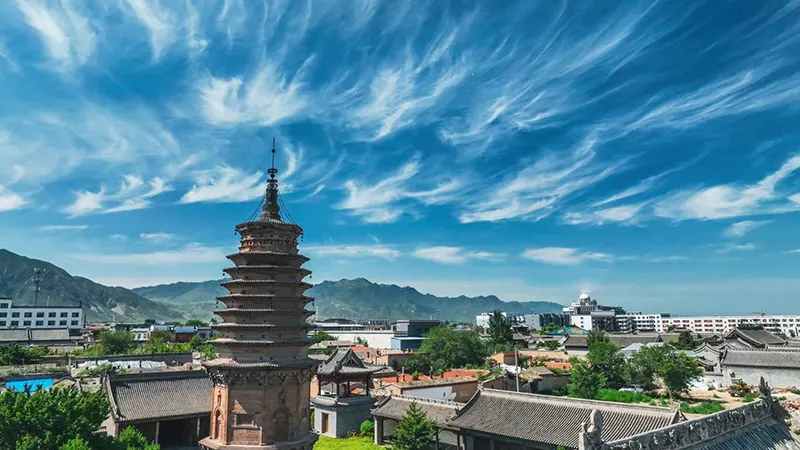
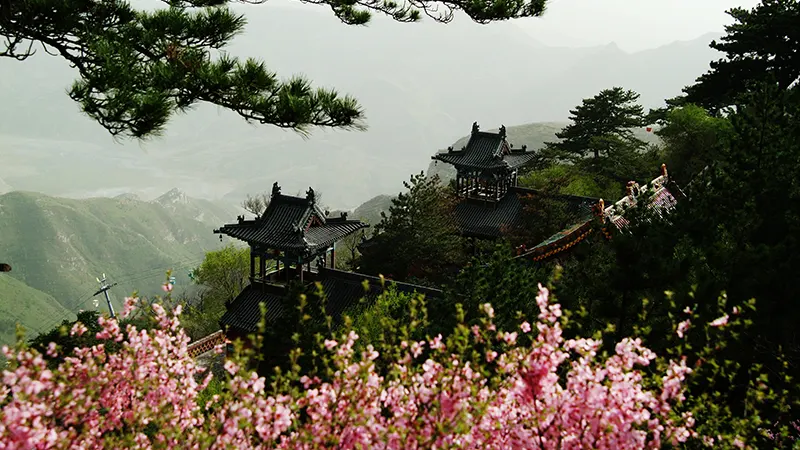
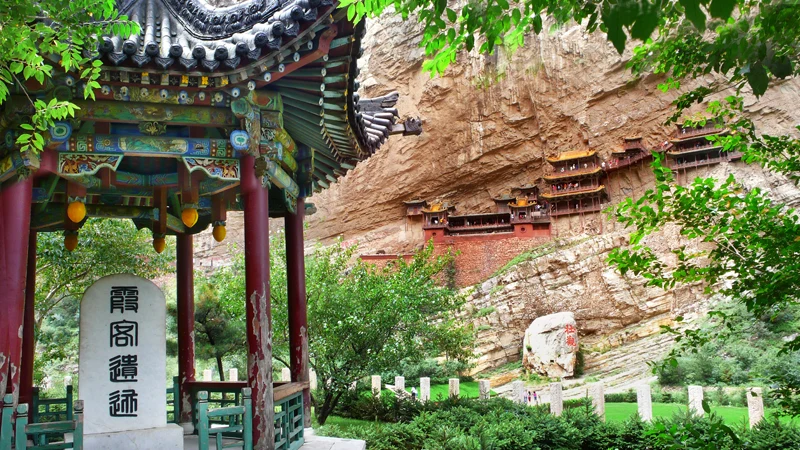






Lin Shijun, a Great Educator of Hunyuan Prefecture in the Late Qing Dynasty
Publish Time:
2026-05-09 13:17
Source:
On the southern slopes of Mount Heng, in the ancient prefecture of Hunyuan, a continuous tradition of learning has flourished since time immemorial, producing generations of outstanding scholars. From the Jin and Yuan dynasties onward, the Lei and Liu families upheld half of the region’s literary ethos; during the Ming and Qing periods, numerous academies sprang up, attracting teachers from far and wide. Among them, Lin Shijun of the late Qing era stands out as one of the most influential educators. Having passed the provincial examination in the Xinyou year of the Xianfeng reign (the eleventh year of Xianfeng, 1861), he remained indifferent to fame and fortune, retiring into seclusion to devote himself to teaching. Through moral integrity he nurtured his students, and through scholarly knowledge he enlightened their minds, thereby enriching the local youth and setting an exemplary standard for posterity for over a century. He was respectfully known in his day as “Mr. Lin,” and his profound educational legacy was inscribed on stone by his disciples, serving to this day as a vital mark on Hunyuan’s cultural heritage.
Lin Shijun, a native of Hunyuan Prefecture, was born with innate sincerity and a natural love of learning. According to his disciples, Li Zengxiang The inscription “Inscription on the Monument Commemorating the Teachings of Old Master Lin of Jiansan” records that from his earliest years the gentleman displayed extraordinary intelligence and diligence. Even as a young child, he devoted himself wholeheartedly to learning, reading widely and mastering all forms of literature; no text was beyond his grasp, and he could seamlessly integrate and comprehend the classics, historical works, philosophical treatises, collections of essays, and the myriad schools of thought and intellectual traditions. Before reaching adulthood, he was admitted as a student of the prefectural academy on the strength of his outstanding academic performance, thus earning a place among the ranks of the provincial school. Among his fellow students, his talent was truly exceptional: whenever he engaged in scholarly exchange and intellectual competition with others, he invariably came out on top, and was accordingly acclaimed by his peers as “the chief scholar,” becoming the recognized leader of the prefectural academy. Relying on his profound erudition and tireless effort, Lin Shijun ultimately passed the provincial examination in the Xinyou year of the Xianfeng reign (1861), thereby attaining the title of juren.
After passing the imperial examination, Lin Shijun did not, like his contemporaries, obsess over fame and official advancement or chase after wealth and honor. Instead, true to his original aspiration of “being indifferent to fame and profit,” he resolutely chose to retire to his native village and devote himself once more to teaching, painstakingly nurturing countless students. Huyuan, situated north of the Xing Pass (north of Yanmen Pass), has long been a land renowned for its flourishing culture and learning; during the Jin and Yuan dynasties, the Lei and Liu families maintained a scholarly tradition that was passed down from generation to generation. Lin Shijun, deeply nurtured by this rich cultural heritage, resolved to do his part to carry forward the local intellectual legacy and to cultivate talents who could serve the world. He established a private academy, eagerly accepting disciples, and soon attracted a steady stream of students seeking instruction—on one occasion, the number exceeded two hundred. For a time, his academy became a revered center of learning, the very destination that scholars from Huyuan and the surrounding prefectures and counties aspired to reach.

As an educator, Lin Shijun possesses a distinctive teaching philosophy and methodology, the core of which is “cultivating people through virtue and enlightening their minds through wisdom.” He “upholds moral integrity while encouraging diligent study, guiding students patiently and step by step,” placing equal emphasis on both the accumulation of knowledge and the cultivation of moral character. In his teaching, he “sets aside personal pride to impart knowledge without adopting an aloof or authoritarian stance,” never assuming the posture of a superior teacher. Instead, he treats others with humility, interacts with students as equals, and listens attentively to every student’s questions, ensuring that he “responds calmly to inquiries and imparts instruction tailored to each individual.” Hear only a little “Based on students’ aptitudes and individual characteristics, he adopts a tailored approach to teaching, ensuring that every student gains something from their studies and develops their own strengths. He is adept at recognizing and rewarding excellence: he offers generous encouragement to those who are diligent, eager to learn, and of upright character, while gently guiding and patiently persuading even those who show a slight lack of effort—never resorting to harsh criticism. This gentle yet rigorous teaching style has deeply moved countless students, earning him the respect and affection of all his pupils.”
Lin Shijun’s teaching achievements were extraordinarily prolific. Under his meticulous tutelage, his students repeatedly excelled in the imperial examinations—four passed the provincial examination, two were listed on the supplementary roster, and three were selected for higher posts—and countless others went on to secure positions in the officialdom. “The halls of learning were abuzz with their names; all looked up to them as models.” After leaving his academy, some entered the civil service, serving with integrity and bringing benefit to their communities, while others retired to private life to teach, thereby carrying forward the tradition of scholarship and preserving the cultural heritage. In this way, he truly fulfilled his original aspiration to “cultivate a great many” disciples. At the time, throughout the region north and south of Yanmen Pass, whenever scholars and teachers of the classics were mentioned, people would invariably say in unison: “It is Mr. Lin!” His erudition and prestige had long since transcended the boundaries of Hunyuan Prefecture, making him the leading figure in the scholarly community of northern Shanxi.
Throughout his life, Lin Shijun not only imparted knowledge and nurtured others through learning but also set an exemplary moral standard through his virtuous conduct. He held that “benevolence and righteousness are cultivated through self-cultivation, while filial piety and fraternal duty are rooted in one’s innate nature.” He integrated the Confucian principles of benevolence, righteousness, filial piety, and fraternal duty into his daily words and deeds, leading by example and influencing everyone around him with his own character. Even when living in the countryside and encountering those who were “stubborn and wayward—rebellious, arrogant, and incorrigible”—he was able to win their respect and submission through his own moral integrity and magnanimity. His noble character, marked by the demeanor of a true scholar and the grace of profound virtue, made him a model for his fellow villagers. Throughout his life, he remained indifferent to fame and fortune, devoting himself wholeheartedly to teaching, unattached to worldly honors or career advancement. He poured all his energy into the cause of education, thereby embodying, through his steadfast commitment, the true meaning of the teacher’s vocation: to transmit the Way, impart knowledge, and resolve doubts.
During the Tongzhi reign, Lin Shijun was unfortunately struck by illness and passed away at the age of sixty-four. “When a wise man suddenly departs, we mourn in our beds as one; though the way of the teacher lives on, we shall ever cherish his example.” His passing plunged the students and fellow villagers of Hunyuan Prefecture into profound grief. In accordance with ancient rites—“As for the teacher, we weep by his bedside”—all came to pay their respects and express their sorrow. To commemorate his benevolent teachings and noble virtues and to carry forward his spirit of teaching, more than two hundred of his disciples pooled their resources after his death to commission a stone monument. Li Zengxiang, a juren in the Jiazi year of the Tongzhi era (the third year of Tongzhi, 1864), composed the “Inscription on the Monument Commemorating the Benevolent Teachings of Old Master Lin of Jiansan,” which records Lin Shijun’s life, scholarship, moral character, and educational legacy on the stone, thus ensuring that his memory would endure forever.
In the epitaph, Li Zengxiang lavishly praises Lin Shijun with the words: “Great and flourishing, revered and supreme, stretching far beyond the heavens; lush and verdant, imbued with spiritual vitality across the ages. The Master has attained profound wisdom, his radiance shining upon the Western Rock.” He thus compares Lin Shijun to a renowned scholar of the Jin dynasty from Hunyuan, who styled himself “the Son of the Western Rock.” Liu Ji is comparable, thereby highlighting its important position within the local cultural context; with the motto “Through the transmission of moral virtue, the eight Gui regions share the same roof,” it underscores the profound educational influence of the Liu clan of Hunyuan during the Jin dynasty— Bagui Hall It is compared to the glorious era of the imperial examination system, thereby affirming its outstanding achievements in nurturing talent; and with the statement, “Among the literary works of the region north of the Xing Mountains, our prefecture stands out as a beacon of learning in recent antiquity. Since the times of the Lei and Liu families, the ranks of scholars and officials have continued unabated,” it underscores Lin Shijun’s pivotal role in the transmission of Hunyuan’s cultural heritage—after the Lei and Liu families of the Jin and Yuan dynasties, he single-handedly carried forward Hunyuan’s tradition of scholarly cultivation, setting a model for local education.
Hunyuan has long been a land of exceptional natural beauty and cultural brilliance, with an unbroken tradition of learning. During the Jin and Yuan dynasties, renowned scholars such as Liu Hui and Liu Qi upheld the region’s literary ethos; in the Qing era, educators like Lin Shijun carried on this legacy. Throughout his life, Lin Shijun lived in seclusion and devoted himself to teaching, seeking no fame or recognition. Yet he nourished his students with his erudition, inspired his community through his moral integrity, and, through decades of steadfast dedication, exemplified the sense of responsibility and heartfelt commitment of a true educator. His educational influence extended beyond the more than two hundred pupils of his time, reaching across the centuries to enrich subsequent generations of Hunyuan’s students; his virtuous conduct was not only admired by his contemporaries but also became an integral part of Hunyuan’s cultural DNA, passed down from one generation to the next.
The “Continued Records of Hunyuan Prefecture,” compiled in the sixth year of the Guangxu reign, faithfully preserves Li Zengxiang’s “Inscription on the Monument to the Teachings of Old Master Lin of Jiansan,” which vividly chronicles the life of Lin Shijun, a great educator. His original aspiration to “be indifferent to fame and fortune and devote himself wholeheartedly to nurturing talent,” his teaching approach of “patiently guiding students and tailoring instruction to their individual needs,” and his moral character of “embodying benevolence, righteousness, filial piety, and fraternal respect through personal example” have long been woven into the very soul of Hengshan Mountain and the cultural heritage of Hunyuan, serving as a model for generations of educators and as a precious cultural and educational treasure of this millennial ancient city.
Appendix: Inscription on the Monument to the Teachings of Old Master Sanlin
Li Zengxiang
The gentleman was a venerable scholar of enduring virtue; born with innate sincerity and integrity, he loved learning from earliest childhood and mastered every branch of the classics. Before reaching adulthood, he was appointed to the ranks of the imperial academy, where his peers vied for mastery in the arts and acclaimed him as their chief instructor. Time and again he was selected to take the provincial examination in the Xinyou year of the Xianfeng reign, yet he remained indifferent to fame and fortune, choosing instead to live in seclusion and devote himself to teaching, attracting more than two hundred students. His methods of encouragement were both judicious and effective, and he nurtured countless disciples. Throughout Wuchuan, north and south, whenever one spoke of a master of the classics, all would unanimously say: “It is Mr. Lin who speaks.” He humbly imparted his knowledge without erecting any barriers or imposing rigid boundaries. Benevolence and righteousness were cultivated through personal self-cultivation; filial piety and fraternal duty were rooted in human nature itself; and this profound, steadfast influence spread far and wide, uniting all in harmony. Though dwelling in the countryside, he transformed even the most wayward and unruly into upright, virtuous persons; his conduct was like that of Yan Fang, and his moral aura pervaded the land. At the age of sixty-four, he was unfortunately stricken by illness and passed away. Alas! When a sage suddenly departs, we mourn together as if we ourselves had fallen into deep grief; yet since the way of the teacher endures, may we evermore cherish his memory and aspire to follow in his footsteps. In days long past, when Zengzi retired to teach along the banks of the Fen River, two centuries later there still arose Pi Zi Rixiu, who imagined the burial mound and composed an epitaph from afar, in order to express his longing and admiration. How much more so now, when he lived close at hand in his native village, and many personally attended to him in his old age! His disciples, gathered together, have now had a stone inscribed with commemorative words, to extol his great virtues. The inscription reads: “Great and flourishing is the honored one, whose presence stretches beyond the heavens. Lush and verdant, he embodies the spirit of the ages. The Master has become a sage, whose radiance shines upon the western cliffs. With one teaching, his virtue spreads throughout the world, and the eight provinces stand equal under his influence. His illustrious reputation is renowned far and wide, and scholars from all quarters come to seek his guidance. Calm and composed, he awaits those who come to inquire, and imparts his wisdom within arm’s reach. In the northern regions, his writings are treasured as part of our local heritage, dating back to ancient times. Since the era of Lei and Liu, the scholarly tradition has continued unbroken. Some serve in official posts, others retire to private life, yet all alike dedicate themselves to teaching. Speaking of his native land, all revere him as a model. Though his physical form may fade, his vital spirit lives on. Carved upon the cliffs of Yuelu, these words stand tall and majestic, side by side.”
[Note]
[1] A wayward and obstinate person: “盩” denotes perversity and absurdity; “悛” signifies repentance. Thus, a “wayward and obstinate person” refers to one who is perverse, arrogant, and repeatedly refuses to be corrected despite repeated admonishment.
[2] Qièfú: to be in awe and submit; to be thoroughly convinced and won over.
[3] Crying at the inner chamber: In ancient ritual, the Son of Heaven had five gates, feudal lords three, and high officials two. The innermost gate was called the “inner-chamber gate,” which was also known as the “road gate.” Later, the term came to refer generally to the door of the inner chamber. In the “Rites of the Scholar’s Funeral” section of the Book of Rites: “When the ruler sends an envoy to offer condolences, the curtains are drawn back; the host goes out to meet the guest outside the inner-chamber gate, but does not weep upon seeing the guest.” Zheng Xuan’s commentary explains: “The inner-chamber gate is the inner gate.” To cry at the inner chamber means to weep in the inner chamber. In the “Tan Gong, Part I” section of the Book of Rites: “Bo Gao died in Wei, and word of his death was sent to Confucius. Confucius said: ‘Where shall I weep? For my brothers, I will weep in the ancestral temple; for my father’s friends, I will weep outside the temple gate; for my teachers, I will weep in the inner chamber; and for my friends, I will weep outside the inner-chamber gate.’”
[4] Zhongyan: Refers to Wang Tong, a prominent Confucian scholar at the end of the Sui dynasty, whose courtesy name was Zhongyan and pseudonym was Wen Zhongzi, native of Longmen in Jiangzhou, Hedong.
[5] Pi Zhiyou: Pi Zhiyou, courtesy name Ximei, was a native of Jingling in Fuzhou (present-day Tianmen, Hubei Province). He once lived on Lumen Mountain in Xiangyang and styled himself “the Son of Lumen.” He was a poet and literary figure of the Late Tang dynasty.
[6] Fengsui: an alternative term for a tomb. “Sui” refers to the burial passage.
[7] Xi Yan: Refers to Liu Ji, a jinshi of the Jin dynasty, in his later years. He built a hermitage on West Rock Mountain in his hometown of Hunyuan and lived in seclusion, finding joy in reading; he styled himself “the Hermit of West Rock” and authored the collection “The West Rock Anthology.”
[8] Bagui: Li An: During the Jin dynasty, a total of eight members of the Liu clan of Hunyuan passed the imperial examination and became jinshi. Liu Yan once invited the leading figure of the Jin dynasty’s literary circle. Zhao Bingwen He inscribed the plaque for his family’s study, “Baguaitang.” Zhao Bingwen remarked, “Is your family’s legacy truly confined to merely the eight osmanthus trees?” and then wrote the four characters “Conggui Chanku.”
[9] Biāoméng: to enlighten; to initiate. The term originates from the “Meng” hexagram in the Book of Changes: “Bāoméng, auspicious.” Lu Deming’s commentary cites Zheng Xuan as saying: “‘Bāo’ should be read as ‘biāo.’ ‘Biāo’ means ‘writing’ or ‘literature.’”
[10] Zhiwen: to be very close in distance and yet to have heard something. In the “Guoyu·Jin Yu Si”: “I am unable to act; but even a mere glimpse is enough.”
[11] Xingbei: north of Yanmen Pass; Yanmen Pass was historically known as Juzhu Xing.
[12] The Lei and Liu families: Refers to the Liu and Lei clans of Hunyuan, both renowned literary families during the Jin–Yuan transition.
Keywords:
Previous Page
Related News
Contact Us
Beiyue Hengshan Scenic Area:
Travel Inquiry:+86-352-8333077
Ticket Inquiry:+86-352-8333031
Travel Complaints:+86-352-8333081
Emergency Rescue:+86-352-8333037
Scenic Area Product After-Sales Service Hotline:
+86-18636203837
+86-15383522518
Mount Hengshan Scenic Area Administration Center (Official)
+86-352-8322142
Hanging Temple
+86-352-8327795
Yuemenwan (Hengshan Mountain Gate)
+86-352-8480060 +86-352-8328318 +86-352-8328530
Hengzong
+86-352-8480115
Tianfeng Ridge
+86-352-8480114
Yong'an Temple
+86-352-8322390
Li's Family Cemetery
+86-352-8322381
Hengshan Cableway
+86-352-8322255
Official Media

Tiktok