

-
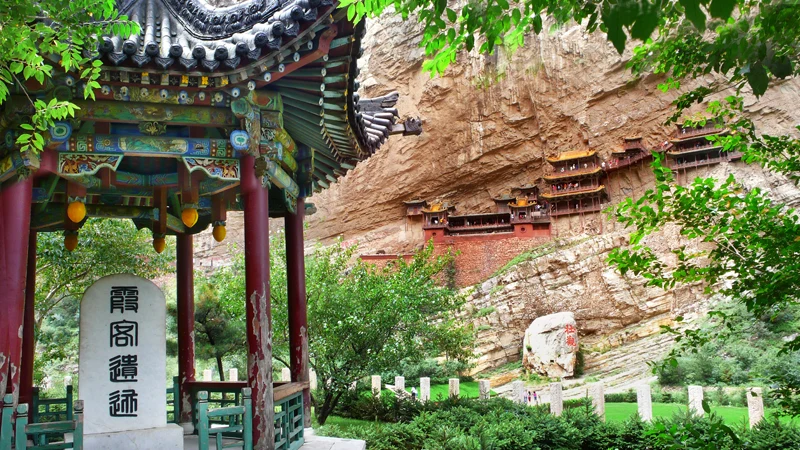
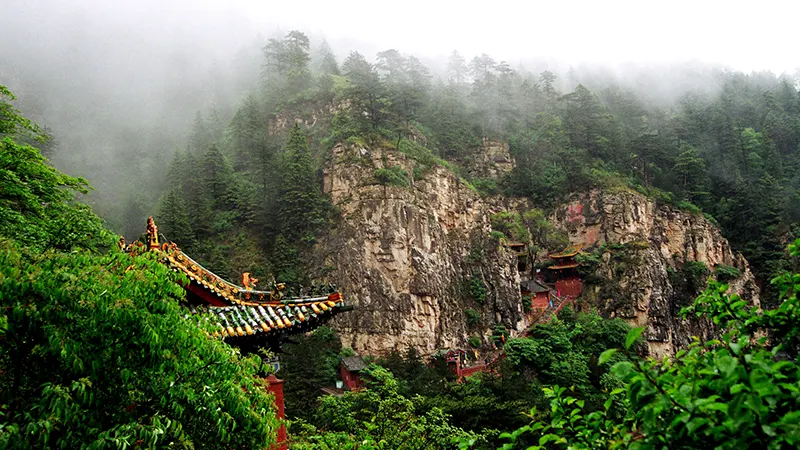
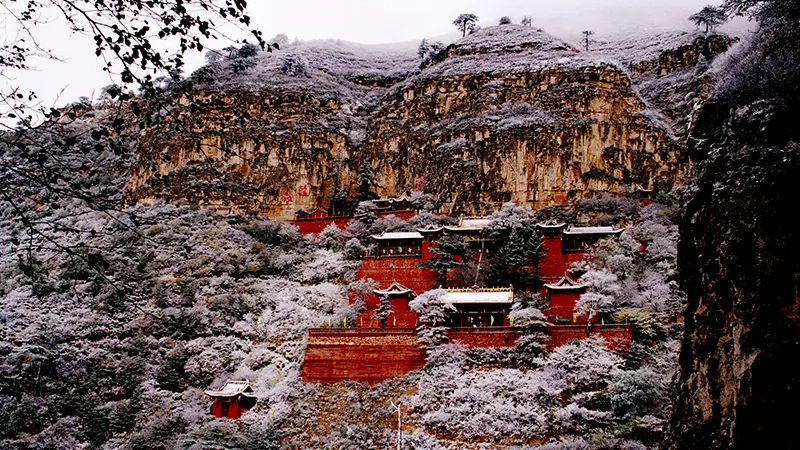
AboutMount Heng, an outstanding representative of the splendid mountains and rivers of China, a symbol of national prosperity, a totem of national spirit, an important geographical indication of the country, and holds the status of a national mountain.More
-
CultureHengshan has been a famous scenic spot and important birthplace of Taoism in northern China since ancient times. Carrying the symbols of Chinese civilization, it has nurtured profound regional culture and folk customs.More
-
-
Tourist GuideUnderstand relevant information about the scenic area and enjoy a better travel experience.More
-
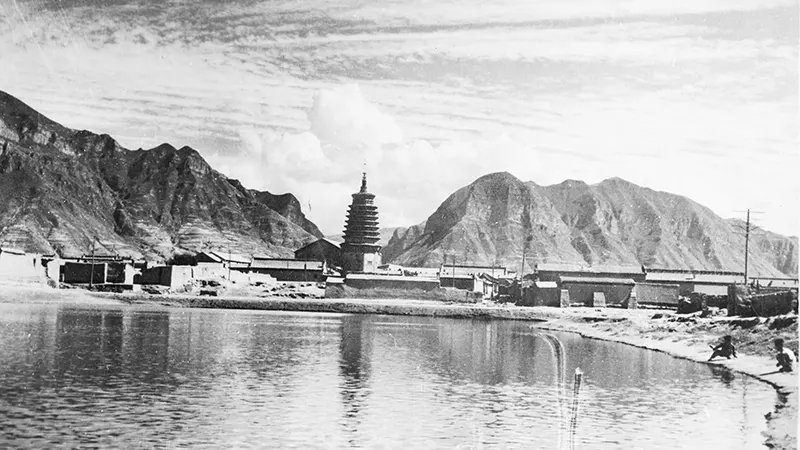
Surrounding activitiesThe ancient city of Hunyuan at the foot of Mount Heng in Beiyue has a long history, rich cultural heritage, beautiful scenery, and a convergence of agriculture, commerce, and animal husbandry. It has nurtured a unique regional culture and is renowned for its fine wine and delicious food.More








Records of the Deeds of All Virtuous and Wise Prefects of Hunyuan Prefecture during the Ming and Qing Dynasties
Publish Time:
2026-05-09 13:15
Source:
During the Ming and Qing dynasties, Hunyuan Prefecture saw the emergence of several prefects who were deeply concerned with the welfare of the people and achieved remarkable administrative accomplishments. Some were diligent in their duties and devoted to the people, reclaiming wasteland and promoting agriculture; others eradicated local scourges and ensured public safety, providing relief to the distressed and the impoverished; still others promoted education and culture and undertook the repair and maintenance of the city walls and fortifications; and yet others upheld integrity and uprightness, even sacrificing their lives in defense of their principles. All were profoundly revered by the local populace, with some honored through the erection of temples and steles in their memory, their benevolent influence enduring for centuries. The following sections, arranged chronologically according to their terms of office, outline the principal achievements of each prefect.

Records of the Virtuous and Wise Prefects of Hunyuan Prefecture during the Ming Dynasty
1. Zheng Yunxian
Zheng Yunxian was a native of Tiantai in Zhejiang Province. Having passed the Mingjing examination, he was appointed as the Prefect of Hunyuan Prefecture in the thirteenth year of the Hongwu reign (1380). At that time, the dynasty was still in the early stages of its transition; Hunyuan had only recently been incorporated into the Ming domain, and the local administration lay in ruins, with all undertakings in need of restoration. Upon assuming office, Zheng Yunxian treated the people as his own children, never encroaching upon or exploiting them in the slightest. During the day, he presided over official business in the main hall of the prefectural government; at night, he would go to the prefectural academy to expound on the classics and historical texts, thereby promoting moral education and cultural enlightenment among both the common people and the students.
He also actively urged the people to devote themselves wholeheartedly to farming. For those impoverished households that could not even afford farming tools, he personally persuaded the wealthier local families to share their surplus implements and draft animals with them. Under his governance, vast tracts of wasteland in Hunyuan were brought under cultivation, the people’s food and clothing gradually improved, and their lives steadily grew better. Even long after his time, the people of Hunyuan continued to cherish his benevolent legacy.
2. Zhou Yu
Zhou Yu was a native of Qidong in Shandong Province. In the second year of the Yongle reign (1404), he was appointed as the Prefect of Hunyuan Prefecture in his capacity as a supervising scholar. During his tenure, the region was struck by a severe locust plague: swarms of locusts filled the sky and devoured the crops, leaving the people with nothing to harvest. Rather than standing idly by, Zhou Yu observed a period of fasting and purification, devoutly praying to Heaven for deliverance. Soon thereafter, miraculously, all the locusts migrated elsewhere, thus saving the crops of Hunyuan.
At the time, tigers still roamed the Nanshan Mountains, injuring people; the common folk dared not enter the mountains, and public anxiety was rampant. Zhou Yu once again observed a period of fasting and ritual purification, then went to the Yue Temple to offer prayers for blessings. Afterward, he set up a trap at the foot of the mountain and prayed aloud: “O ferocious tiger that has been harming people, may you step into this very trap!” That very night, sure enough, the man-eating tiger fell into the trap and was captured without a hitch. Later, when a close relative in his family passed away, Zhou Yu, in accordance with ritual propriety, resigned his post to observe the mourning period. Subsequently, he was promoted to the post of prefect, and to this day the people of Hunyuan continue to praise his achievements.
3. Zhang Wenzhi
Zhang Wenzhi was a native of Fufeng in Shaanxi Province, holding the juren degree. In the tenth year of the Chenghua reign (1474), he was appointed as the prefect of Hunyuan Prefecture. He was erudite and of upright character, thoroughly versed in local administration, and handled official affairs with remarkable efficiency. At that time, vicious wolves were prowling about and wreaking havoc on the people. Zhang Wenzhi accordingly drew up an official memorial to the City God, and soon afterward dispatched men to capture the marauding wolf, which was then executed on the right side of the Southern Altar, thereby completely eradicating the wolf menace.
During a severe drought in the region, Zhang Wenzhi presided over prayers for rain, and each time his supplications were answered, bringing much-needed relief in the form of life-giving showers. Moved by his benevolence, the people of Hunyuan erected a stele to extol his virtues. Subsequently, he rose steadily through the ranks and eventually attained the post of prefect.
4. Yang Jian
Yang Jian was a native of Qingcheng in Shandong Province, holding the status of a jiansheng scholar. In the twentieth year of the Chenghua reign (1484), he was appointed as the prefect of Hunyuan Prefecture. Known for his uprightness and integrity, he was a man of great responsibility and commitment. Upon taking office, he prioritized the repair and renovation of the prefecture’s granaries, ensuring ample grain reserves to provide relief to the populace during times of famine. Thanks to these substantial food stocks, the people of Hunyuan were able to weather the lean years in relative peace, and throughout the entire prefecture, praise for him could be heard at every turn.
5. Dong Xi
Dong Xiji was native to Kuaiji in Zhejiang Province and was registered in the household records of the Imperial Medical Bureau. As a supervising scholar, he was appointed Prefect of Hunyuan Prefecture in the second year of the Hongzhi reign (1489). Known for his integrity and impartiality, as well as his efficiency and quick wit, he devoted himself upon taking office to thoroughly reorganizing local affairs, successfully reviving numerous long-neglected undertakings throughout Hunyuan.
His most outstanding achievements were, first, his leadership in the renovation of the Prefectural Academy, which provided an excellent learning environment for students; and second, his initiative in compiling the “Chronicles of Hunyuan Prefecture,” through which he systematically collated and recorded local historical documents, thereby ensuring the continued transmission of the region’s cultural heritage. His emphasis on education and his efforts to collect and preserve historical records left a profound and lasting legacy in Hunyuan, and he was later promoted to the post of Administrator in the Imperial Clan Office.
6. Qian Yuan
Qian Yuan was a native of Lingbi in Anhui Province and held the juren degree. In the seventeenth year of the Jiajing reign (1538), he was appointed as the prefect of Hunyuan Prefecture. He was exceptionally talented and highly capable, with a firm and resolute character who steadfastly upheld his principles. He frequently visited the prefectural academy to lecture the students, speaking in a gentle and affable manner that won their deep affection; yet when confronted with unreasonable orders from his superiors, he dared to speak his mind and argue forcefully, always maintaining a righteous and unyielding stance. It was precisely this unwavering integrity that ultimately led to his dismissal and return to his hometown.
7. Liu Yan
Liu Yan was a native of Chengshan Garrison and held the status of a supervising student. In the twenty-first year of the Jiajing reign (1542), he was appointed as the Prefect of Hunyuan Prefecture. He was tall and robust, with an imposing presence; he was firm and upright, steadfast in his principles, and never cowed by the powerful or the wealthy. Upon taking office, he resolutely forbade all private petitions or requests for favors, rigorously reined in the unruly commoners who ran amok in the countryside, and governed the region with strict laws and regulations. Later, when he reached the age of retirement, the local populace and scholars lined the roads to block his carriage, reluctant to see him depart.
8. Fu Yizhong
Fu Yizhong was a native of Nanzheng in Shaanxi Province, holding the juren degree. In the twenty-second year of the Jiajing reign (1543), he was appointed as the prefect of Hunyuan Prefecture. He was quick-witted and possessed profound insight; his dignified appearance and commanding presence were truly remarkable. With a solid foundation in literature, he handled official affairs with meticulous order and efficiency. In his spare moments from official duties, he often gathered with scholars and refined gentlemen, enjoying wine and composing poetry in a carefree and unrestrained manner. Later, he was falsely accused and slandered, leading to his dismissal; at the time, public opinion universally lamented his misfortune.
9. Liu Fuli
Liu Fuli was a native of Shanhaiguan and held the juren degree. In the sixth year of the Longqing reign (1572), he was appointed as the prefect of Hunyuan Prefecture. He was known for his integrity, incorruptibility, and impartiality in all matters; he exercised strict oversight over his subordinates, firmly prohibiting minor officials from manipulating documents or engaging in favoritism and corruption, and thereby discouraging the common people from frivolously filing lawsuits or making unreasonable complaints. Under his administration, there were very few instances of tax collection drives or compulsory summons of citizens, criminal cases were virtually nonexistent, and more than half of the prison cells lay empty.
He treated scholars with the utmost courtesy and propriety, yet never allowed such deference to sway his impartiality or lead him to bend the law for personal gain. During a severe drought, he devoted himself wholeheartedly to praying for rain, even neglecting his own food and rest, all in the service of the people; in the end, the drought did not bring about major calamity. He also took the initiative in proposing the reconstruction of Hunyuan Prefecture’s city walls, rigorously economizing on expenses throughout the construction process while personally overseeing progress. The project was completed smoothly in just over a year, with the local populace scarcely feeling the burden of corvée labor.
In addition, he procured the ritual implements for the prefectural school’s sacrifices, erected shrines to local worthies and distinguished officials, conducted monthly assessments of the students’ academic performance, and even used his own official stipend to subsidize their meals. Moreover, whenever he encountered commoners whose families were impoverished and unable to afford the expenses of weddings or funerals, he would personally provide financial assistance to alleviate their hardships. The people and scholars of the entire prefecture eagerly praised his benevolence and virtuous governance. At that time, there was a bitter well in the prefectural government office; one day, its water suddenly turned sweet, which the locals believed was the result of the divine influence of his righteous administration. To commemorate this extraordinary event, they specially erected a stone stele.
Liu Fuli served in Hunyuan for eight years, during which he achieved remarkable administrative accomplishments and was consistently rated as excellent in performance evaluations, eventually being promoted to the post of Assistant Director in the Department of Water Works under the Ministry of Public Works. On the day of his departure, both the elderly and the children of Hunyuan clung to his carriage and even lay down before it, refusing to let him go—truly a model of an upright and virtuous official.
10. Liu Chengxun
Liu Chengxun was a native of Xianning in Shaanxi Province, holding the juren degree. In the twenty-sixth year of the Wanli reign (1598), he was appointed as the prefect of Hunyuan Prefecture. By nature, he was generous and benevolent; in his administration, he imposed lenient punishments and conducted affairs with simplicity, eschewing cumbersome and overbearing edicts. He treated the people with the tender care of a loving mother, and they wholeheartedly revered and supported him.
Once, when he fell ill, the people of Hunyuan took to the streets in droves to pray for his recovery—some even offered to trade their own lives for his healing. The streets and alleys were filled with praying villagers, leaving nearly every household empty. Later, due to his poor health, he resigned from office and returned to his hometown. To this day, the people of Hunyuan still cherish his memory as deeply as they did back then.
11. Zhao Zhihan
Zhao Zhihan was a juren from Sishui County in Henan Province and served as the magistrate of Hunyuan Prefecture in the 38th year of the Wanli reign (1610). Noticing that Hunyuan Prefecture’s performance in the imperial examinations lagged far behind that of ancient times, he took the lead in building the Kuixing Tower to boost the local scholarly atmosphere and attract talented individuals. At the same time, he spearheaded the repair and revision of the “Chronicles of Hengshan Mountain” and the “Chronicles of Hunyuan Prefecture,” thereby enriching the local historical records. The people of Hunyuan were deeply influenced by his virtuous conduct and established a dedicated temple in his honor, where they have offered sacrifices to him ever since. Later, he was falsely accused and removed from office without cause, a move that drew widespread sympathy from public opinion at the time.
12. Zhang Shuling
Zhang Shuling was a juren from Hengyang County in Hunan Province. Upon assuming office, he ordered the extensive planting of trees along both sides of the main road; as these trees grew lush and verdant, they stretched all the way to Cixia, thereby enhancing the aesthetic appeal of the thoroughfare while providing much-needed shade for travelers. Among the important local structures he oversaw were the Hengyue Xinggong, the Taishan Temple, the Wenchang Pavilion, and the Kuixing Tower. Later, he was promoted to the post of Tongzhi of Guilin Prefecture. After his departure from Hunyuan, the local people had a statue of him erected in the Wenchang Pavilion and have since maintained an annual ritual in his honor.
13. Yuan Yundai
Yuan Yundai was a gongsheng from Sanyuan County in Shaanxi Province. He personally footed the bill to purchase the houses of local residents in front of the Confucian Temple, thereby creating a direct “Cloud Path” leading straight to the temple. He also commissioned the construction of three grand memorial archways—the Dacheng Archway, the Tengjiao Archway, and the Qifeng Archway—thus helping to foster a flourishing scholarly atmosphere in the region. Later, he was dismissed from office and returned to his hometown.
14. Cheng Liangqiu
Cheng Liangqiu was a juren from Huanggang County in Hubei Province. At the time, Hunyuan Prefecture was required by regulation to appoint four grass merchants to handle related administrative matters; however, there were no fixed criteria for selecting these merchants, and those chosen often found themselves so overburdened that they were driven to financial ruin and left with no means of support. Upon learning of the people’s hardships, Cheng Liangqiu voluntarily petitioned his superiors to abolish this oppressive policy altogether, thereby removing a major source of suffering for the populace. The people were deeply grateful to him, and later, following the death of a family member, he resigned his post to return home and observe the traditional period of mourning.
Records of the Virtuous and Wise Magistrate of Hunyuan Prefecture during the Qing Dynasty
1. Rong Erqi
Rong Erqi was a native of Dezhou in Shandong Province and passed the imperial examination in the Guiwei year. He initially held the post of Circuit Intendant of Jinan in Fen Prefecture, but was later demoted. In the fifth year of the Shunzhi reign (1648), he was appointed as the Prefect of Hunyuan Prefecture. In his administration, he was firm and discerning, yet treated the common people with gentleness and compassion; his edicts were concise and his punishments clear and just. He both cherished the populace and placed great emphasis on nurturing scholars.
During his tenure, the rebellion led by Jiang Xiang broke out, with the rebel forces running rampant and even coercing officials to ally themselves with the traitors and further oppress the people. Rong Erqi steadfastly upheld loyalty and righteousness, displaying unyielding integrity. Despite every form of intimidation and enticement, he refused to yield; in the end, in order to defend the city of Hunyuan, he heroically sacrificed his life, thereby embodying loyalty and moral integrity through his very existence.
2. Lang Yongqing
Lang Yongqing was a native of Liaodong and held the degree of gongshi. In the sixth year of the Shunzhi reign (1649), he was appointed as the prefect of Hunyuan Prefecture. At that time, the ravages of war had just been brought to an end, leaving the region in utter ruin and its people displaced and homeless. Upon assuming office, he promptly established a public cemetery to collect and properly bury the unclaimed corpses from the conflict; at the same time, he encouraged displaced residents to return to their hometowns, providing them with start-up capital to help them engage in trade and earn a livelihood; moreover, he urged the populace to reclaim wasteland and resume agricultural production.
He also petitioned his superiors to grant exemptions from corvée labor and tax arrears incurred during the years of war and chaos, when widespread desolation and mass flight had left the populace impoverished—totaling more than ten thousand taels of silver. In addition, he oversaw the repair and restoration of the city walls and the Confucian Temple, secured coordinated supplies for the relay stations, and provided comfort and relief to the surviving inhabitants. His benevolent governance was manifold, earning him the deep affection and admiration of the local gentry and common people alike. In commemoration of his achievements, the people erected a shrine and a stele on either side of the Confucian Temple in his honor. Later, he was promoted to the post of Prefect of Ganzhou in Jiangxi Province; upon his departure, the locals clung to his carriage and lay prostrate before it, pleading with him to stay, reluctant to see him go. Even today, many still fondly remember him.
3. Complete and finish
Wan Zicheng was a native of Liaodong and held the degree of gongshi. In the ninth year of the Shunzhi reign (1652), he was appointed as the prefect of Hunyuan Prefecture. At home, he devoted himself wholeheartedly to filial piety; in office, he spared no effort to pacify and comfort the people, serving them with unwavering dedication. The residents of Hunyuan hailed him as the “Blue Sky” and composed folk songs in his praise. He oversaw the repair and renovation of two government offices in the northeast, established a horse bureau, and revived numerous long-neglected administrative functions. The people erected a stele in his honor to extol his virtues, and he was later promoted to the post of prefect of Runing Prefecture.
4. Zhang Chongde
Zhang Chongde was a native of Liaodong, hailing from Changli County in Yongping Prefecture. A graduate of the imperial examination system, he was promoted in the fifteenth year of the Shunzhi reign (1658) from the post of county magistrate of Weinan to that of prefect of Hunyuan Prefecture. He approached his official duties with sincere dedication and practicality, displaying remarkable intelligence and efficiency, and promptly set about making a tangible impact. Upon assuming office, he took the initiative to visit the common people, thoroughly investigating their hardships and grievances; he vigorously fostered a culture of learning, rectified decadent and harmful customs, ensured that punishments were administered with clarity and impartiality, streamlined administrative procedures, and enforced fair collection of taxes and equitable allocation of corvée labor.
He personally footed the bill to purchase grain and cooked porridge to relieve the starving populace; he issued an edict abolishing such unreasonable and oppressive corvée labor as the li-ma and li-fu, thereby lightening the burden on the people; he purged long-entrenched malpractices, established charitable granaries, and used his own official stipend to buy and store grain for emergency relief in times of famine. Under his administration, the prisons were empty, with no backlogs of cases and no wronged citizens.
Considering that there was no fixed market in Hengshan Mountain’s urban area, making it inconvenient for the people to buy and sell goods, he established the Shuncheng Street Market, which soon attracted merchants to gather. The displaced people returned home one after another, the fugitives came back to resume their businesses, and the barren land was reclaimed, bringing a scene of peace and prosperity to the entire prefecture. He also donated his own money to repair the temples on Hengshan Mountain, renovate the prefectural government office, and build the Jade Pavilion, giving Hengshan City, which had suffered from war, a brand-new look.
As for Prefect Rong Erqi, who had died a martyr’s death in Hunyuan, he made every effort to petition his superiors to have Rong Erqi enshrined in the Temple of Eminent Officials; and for the “Hunyuan Prefecture Gazetteer” and “Hengshan Mountain Gazetteer,” which were lost or damaged during the war, he also donated money to have them revised and compiled anew. In short, whenever there was something beneficial to the people or capable of eradicating harm, he would spare no effort; the people were deeply grateful for his kindness, did their utmost to retain him, and even erected a stele at the Confucian Temple to praise him.
5. Gui Jingshun
Gui Jingshun was a native of Taixing in Jiangsu Province and held the degree of shengyuan. In the twenty-third year of the Qianlong reign (1758), he was appointed as the prefect of Hunyuan Prefecture. His courtesy name was Zhaoyi, and his sobriquet was Jiexuan. Upon assuming office, he promptly conducted on-site visits and surveys to assess the local conditions and identify both advantages and disadvantages. Any measure that benefited the people was systematically implemented one by one, thereby ensuring transparent governance and impartial adjudication of disputes.
In the spring of the Ji-Mao year of the Qianlong reign (1759), neighboring prefectures and counties were struck by famine and poor harvests, causing grain prices in Hunyuan to soar and making life exceedingly difficult for the local populace. Gu Jingshun promptly urged the people to donate grain and sell it at moderate prices, thereby ensuring stability throughout the region. Yong’an Temple, a prominent monastery in Hunyuan City, was where farmers annually prayed for a bountiful harvest. Taking the lead, he oversaw the temple’s renovation and, on the first and fifteenth days of each lunar month, delivered lectures there on the imperial edicts issued by the court. Both commoners and scholars flocked to hear these teachings, many of whom were enlightened and inspired to cultivate virtue and pursue goodness.
The Henglu Academy in Hunyuan had, over the years, gradually fallen into ruin and disrepair. He undertook a comprehensive restoration, renaming the academy’s front hall “Chonggu Hall” and its rear hall “Yangzhi Hall.” He also had additional buildings constructed nearby and convened scholars to lecture and conduct studies there, greatly revitalizing the local scholarly tradition. Situated in northern China, Hunyuan experiences cold winters and frequent frosts in early autumn that damage crops. In response, Gui Jingshun specially erected a Temple of the Frost God and led the people in devout prayers; thereafter, frost-related disasters markedly diminished, proving remarkably efficacious, and earning him the heartfelt admiration of the populace.
Following the turmoil at the beginning of the Qing dynasty, most local historical records were lost, and although local gazetteers had been compiled on several occasions beforehand, their contents remained fragmentary and incomplete. Gu Jingshun believed that local gazetteers were of paramount importance for local governance and moral education, and thus took the lead in undertaking a new compilation. He systematically categorized and organized the material, ensuring coherence and consistency throughout, so that the gazetteer would serve as a work of exhortation to virtue and admonition against wrongdoing. Today, the people of Hunyuan who exemplify loyalty, filial piety, integrity, and righteousness, and who possess both outstanding achievements and literary talent, far surpass those of earlier generations—largely because they have been inspired and guided by this very gazetteer.
6. Huang Zhao
Huang Zhao was a native of Longxi County in Fujian Province, holding the title of “fu bang” scholar. In the forty-ninth year of the Qianlong reign (1784), he was appointed as the Prefect of Hunyuan Prefecture. He regarded the revitalization of education and the moral cultivation of the people as his solemn duty. Upon observing that the Confucian Temple and the prefectural academy were dilapidated and lacked proper architectural standards, he took the lead in donating funds and advocating for their restoration. Over the course of six years, he persevered with unwavering determination. After the completion of the project, he even composed a special essay to encourage students, carefully distinguishing between moral principles and personal gain, with the hope that both the common people and the scholars would cultivate integrity, simplicity, honesty, and a sense of shame. His vision for the welfare of the people of Hunyuan was truly far-sighted.
In the fifty-second year of the Qianlong reign (1787), Hunyuan was struck by a severe famine. Huang Zhao urged the people to donate grain, established porridge kitchens in both urban and rural areas, and petitioned the authorities to open the official granaries for emergency relief. Moreover, all construction projects requiring labor in urban and rural areas were carried out on a work-for-relief basis, enabling the poor to earn food by working, thereby saving countless impoverished residents.
Originally, the Henglu Academy was located within the city; he subsequently relocated it about a li outside the eastern gate, converting the former site into a charitable school dedicated to providing children with their first lessons in reading and writing. Moreover, he personally economized on his official stipend to purchase farmland on the outskirts of the city, using the annual rental income to cover the teachers’ salaries and board. This benevolent effort to nurture young scholars continued to be praised by the people long after his time. On one occasion, while enjoying himself at East Lake, he planted more than a dozen willow trees; later, the local populace cherished these trees and were loath to harm them, evoking the ancient custom of cherishing the sweet osmanthus trees in memory of virtuous rulers. Subsequently, he was promoted to the post of Assistant Minister of the Ministry of Punishments.
7. Fang Xi
Fang Xi was a supervising student from Shitai County in Anhui Province and served as the Prefect of Hunyuan Prefecture in the thirteenth year of the Daoguang reign (1833). During his tenure, he vigorously promoted the establishment of schools, encouraged the local populace to reclaim wasteland, sternly cracked down on ruthless bandits, and provided reassurance to law-abiding citizens, thereby winning widespread popular support. In June of the sixteenth year of the Daoguang reign (1836), swarms of locusts swept into Hunyuan, devouring crops and causing grain prices to soar, which plunged the people into fear and anxiety.
Fang Xi personally instructed the common people in methods for catching locusts, decreeing that for every hundred jin of locusts captured, they would be rewarded with one hundred and thirty cash coins. Soon, villagers flocked to hunt locusts, carrying sacks on their backs and loading them onto carts, steadily delivering them to the prefectural capital. The captured locusts were either boiled to death in boiling water or incinerated; their carcasses piled up like mountains, only to be finally buried deep underground. All expenses for the locust-hunting campaign were borne entirely by Fang Xi himself, without requiring a single penny from the people.
Although Hunyuan was struck by a locust plague, thanks to Fang Xi’s effective disaster-relief measures, the region remained peaceful throughout. The following year, locust eggs were completely eradicated, and no further locust plagues occurred. Later, Fang Xi was promoted to the post of Assistant Governor of Shandong.
8. Yan Qingyun
Yan Qingyun, courtesy name Airu and sobriquet Danyuan, was a native of Mian County in Hanzhong Prefecture, Shaanxi Province. He passed the provincial examination in the Gengwu year of the Qianlong reign (1750) and the imperial examination in the Xinwei year (1751), subsequently being appointed as a county magistrate. He first served as magistrate of Luoci County in Yunnan and later of Lin County in Shanxi, before being promoted to the post of prefectural governor of Hunyuan Prefecture. Known for his upright character and unwavering commitment to pacifying and comforting the people, he governed with the principles of the Confucian classics, and disciplined his own conduct through scholarly cultivation. As a result, he earned an exceptionally high reputation among the people of Hunyuan, who regarded him as a model benevolent official.
In fostering a scholarly atmosphere, the Henglu Academy, once located to the east of the Hunyuan Prefectural Office, consisted of only nine classrooms and suffered from severe funding shortages, making it difficult to cultivate talent. Qingyun took the lead in donating 400 taels of his official stipend and urged local gentry and commoners to contribute as well. Together, they rebuilt the Henglu Academy outside the eastern gate, constructing 56 new classrooms and raising a total of 2,600 taels in funds. From that time on, Hunyuan repeatedly produced successful candidates in the imperial examinations, and the culture of learning was greatly revitalized.
In terms of disaster prevention for the people, the southern gate of Hunyuan City faced directly toward the prefectural city; whenever heavy rains fell, flash floods would surge down the mountain, frequently washing away fields and houses along the city’s edge. Upon conducting on-site surveys of the terrain, Qingyun erected a stone dam at Tangjiazhuang, stretching more than six li in length, thereby providing thorough protection for the surrounding farmland and dwellings.
In response to the abuses inherent in the tax system, Hunyuan had previously collected the poll tax and the land tax separately. Poor commoners, lacking the means to pay the poll tax, often resorted to fleeing, thereby imposing a burden on their villages and neighbors. In the thirty-eighth year of the Qianlong reign (1773), Qingyun petitioned the higher authorities to consolidate the poll tax into the land tax for unified collection, with separate accounting thereafter. This measure effectively abolished the arbitrary and oppressive additional levies, encouraged fugitive villagers to return home, and enabled everyone at last to live and work in peace and prosperity.
Moreover, in the past, Hunyuan was supposed to deliver rice and beans to the garrisons at Youwei and other posts, but this task had to be borne entirely by the local populace. Once the provisions reached the camps, officers and soldiers frequently used the pretext of dampness and breakage to extort money from the people, causing them immense hardship. In response, Qingyun petitioned to switch to collecting silver instead, with the garrisons themselves purchasing the supplies locally—a change that proved highly convenient for both the soldiers and the common folk.
The land in Hunyuan was infertile, and Qingyun, fearing that a famine would leave the people without food, specially brought round yam seeds from his hometown in Mian County and taught the locals how to cultivate them in sandy soil, yielding remarkably substantial returns. In the fifty-second year of the Qianlong reign (1787), Hunyuan suffered a poor grain harvest, yet the yam crop thrived exceptionally; the people relied on yams to stave off starvation and thereafter began to plant them on a large scale. During the Renchen year (1832) and the Bingshen year (1836) of the Daoguang reign, two severe droughts struck, and countless villagers survived only by cultivating yams.
In the Mushi area to the west of the prefectural city, the terrain was low-lying and damp, making it unsuitable for growing grain; the harvests were so meager that they could not even cover the tax payments. In response, Qingyun instructed the people to dig wells and cultivate cash crops such as indigo and vegetables. As a result, the villagers reaped substantial profits and eagerly followed his example. Songs praising him have been passed down through the ages.
The original sites of the Temple of the God of Agriculture and the Temple of the God of the State had fallen into ruin, and ritual venues such as the Altar of the God of Famine and the Altar of the Gods of Wind and Rain were formerly commemorated only by erecting temporary shelters. Upon receiving a donation of one thousand strings of cash from Qingyun, four new altars were meticulously rebuilt, accompanied by the construction of temple buildings to enshrine the divine tablets; around each altar, vast groves of pines and cypresses were planted. Even later, when local elders would rest beneath these trees, they would fondly recall his benevolence—just as ancient people cherished the memory of the sweetbriar tree.
In the summer of the fortieth year of the Qianlong reign (1775), locusts swarmed into Hunyuan, with both nymphs and adults wreaking havoc and causing severe damage to the crops. During the day, Qingyun urged the people to hunt down the locusts; at night, he observed a fast and lodged in the City God Temple, praying for the welfare of the populace. Overnight, the locusts vanished without a trace, and all hailed it as the result of his sincere devotion moving the gods.
Qingyun served in Hunyuan for twelve years, throughout which he remained impeccably honest and self-disciplined, steadfastly refusing all gifts and requests for favors; even his daily necessities were purchased at his own expense. His subordinates were strictly forbidden from venturing into the countryside to harass the common people without official orders. When local residents brought lawsuits, they universally admired his impartial and discerning judgments, which were rendered swiftly and without any backlog. Later, he was promoted to the post of Assistant Minister of the Ministry of Punishments; upon leaving office, he took only a few books with him, his personal effects being exceedingly modest. Subsequently, he was further elevated to the position of Prefect of Gongchang Prefecture, and, at the recommendation of high-ranking officials, transferred to the post of Prefect of Pingliang Prefecture, where he served for several months. There, too, he adhered firmly to moral integrity and refused to curry favor with the powerful and influential. He then resigned and returned to his hometown, paying no heed to promotions or demotions. After returning home, he settled in Huangsha Town, supporting himself by teaching and living with an open, unburdened spirit. In the third year of the Jiaqing reign (1798), when bandits invaded Hanzhong, the villagers warned one another not to enter his district; thanks to him, the entire community was spared harm.
Upon Qingyun’s passing, the people of Hunyuan—men, women, and children alike—were overcome with sighs and tears at the news. In the twenty-fourth year of the Daoguang reign (1844), local gentry jointly petitioned for his inclusion in the Temple of Distinguished Officials, a request that was duly approved by the imperial court. Yet even this seemed insufficient to repay but a tiny fraction of the immeasurable kindness he had shown; so the people erected a monument to his virtuous governance along the main road outside the eastern gate of the prefectural city and established a memorial tablet in the local academy, where annual rites have been performed ever since. His exemplary conduct has profoundly moved generation after generation of the people of Hunyuan.
9. Wang Gezheng
Wang Gezheng, courtesy name Renfu and art name Mifeng, was a native of Mian County in Kaifeng Prefecture, Henan Province. He passed the provincial examination in the Bingzi year of the Jiaqing reign (1816) and was recommended as a model official of filial piety and integrity in the first year of the Daoguang reign (1821). Following the metropolitan examination in the Bingxu year (1826), he was ranked first in the special selection and appointed as a county magistrate, being assigned to serve in Shanxi Province. In the Ximao year of the Daoguang reign (1831), he served as acting prefect of Hunyuan Prefecture.
He was upright and prudent in character, diligent and clear-minded in his administration of state affairs. Upon assuming office, he immediately imposed strict discipline on his own household servants, forbidding them from entering or leaving the yamen at will; moreover, he promptly meted out severe punishment and held accountable those yamen officials and auxiliaries who had allowed lawsuits to pile up. As for the long-standing, unreasonable local customs and practices in various trades and industries throughout Hunyuan Prefecture—though they had been perpetuated for generations—he flatly refused to accept them, winning the heartfelt admiration and respect of both the common people and the scholars.
With regard to Henglu Academy, he modeled its rules on those of the ancient Ziyang and Bailudong Academies, requiring students to abide by strict regulations and regularly offering guidance and encouragement, thereby gradually fostering a more upright scholarly atmosphere in the local community. In the autumn of the Renchen year of the Daoguang reign (1832), Hunyuan was struck by a frost disaster, and the Datan region imposed a ban on the export of grain, cutting off Hunyuan’s grain supply. Situated in a desert region, even well-to-do families rarely kept any grain reserves, leaving the populace facing a severe food shortage.
Ge Zheng formulated a system for donating and borrowing grain: households with surplus grain were permitted, at their discretion, to borrow from the official granaries, to be repaid in the following year of bountiful harvest. At the same time, porridge kitchens were established at the East Gate, with separate facilities for men and women, dedicated to providing sustenance to the poor and destitute. The needy were registered, their names entered in official ledgers, and they were issued identification tags; the impoverished were categorized into two groups—extremely poor and relatively poor—and grain was distributed on a rotating basis among the four surrounding townships. Steadfast and trustworthy local gentry were selected to oversee the distribution, with strict prohibition against interference by lower-ranking officials and their subordinates, thereby preventing any embezzlement or misappropriation by these officials. As a result, the common people truly benefited, and this measure saved the lives of no fewer than tens of thousands.
In the autumn of the Gui-Si year of the Daoguang reign (1833), as Ge Zheng was about to leave office, he personally donated funds to provide clothing and food for the lonely and impoverished. Upon his passing, the people of Hunyuan were deeply grieved and lamented his loss. In the seventh year of the Xianfeng reign (1857), local gentry jointly petitioned that he be enshrined in the Temple of Distinguished Officials for worship; their request was approved by the imperial court, and he has since been honored with ancestral rites by the local populace for generations.
Keywords:
Related News
Contact Us
Beiyue Hengshan Scenic Area:
Travel Inquiry:+86-352-8333077
Ticket Inquiry:+86-352-8333031
Travel Complaints:+86-352-8333081
Emergency Rescue:+86-352-8333037
Scenic Area Product After-Sales Service Hotline:
+86-18636203837
+86-15383522518
Mount Hengshan Scenic Area Administration Center (Official)
+86-352-8322142
Hanging Temple
+86-352-8327795
Yuemenwan (Hengshan Mountain Gate)
+86-352-8480060 +86-352-8328318 +86-352-8328530
Hengzong
+86-352-8480115
Tianfeng Ridge
+86-352-8480114
Yong'an Temple
+86-352-8322390
Li's Family Cemetery
+86-352-8322381
Hengshan Cableway
+86-352-8322255
Official Media

Tiktok