

-
AboutMount Heng, an outstanding representative of the splendid mountains and rivers of China, a symbol of national prosperity, a totem of national spirit, an important geographical indication of the country, and holds the status of a national mountain.More
-
CultureHengshan has been a famous scenic spot and important birthplace of Taoism in northern China since ancient times. Carrying the symbols of Chinese civilization, it has nurtured profound regional culture and folk customs.More
-
-
Tourist GuideUnderstand relevant information about the scenic area and enjoy a better travel experience.More
-
Surrounding activitiesThe ancient city of Hunyuan at the foot of Mount Heng in Beiyue has a long history, rich cultural heritage, beautiful scenery, and a convergence of agriculture, commerce, and animal husbandry. It has nurtured a unique regional culture and is renowned for its fine wine and delicious food.More






Ten captivating landscapes in Hunyuan
Publish Time:
2022-05-23 22:19
Source:
I am deeply moved by the power of nature itself, always able to control the universe. A mountain has stood for hundreds of millions of years, regardless of wind, frost, rain, or snow, never changing its original nature. Even when humans realize its importance, it remains the same, nurturing and protecting its children. Hengshan Mountain, holding up the sky with one hand and supporting the earth with the other, eternally upholding its mission of supporting the heavens and protecting mankind. How many people, like me, live at its foot, peacefully enjoying its protection, day after day, without ever noticing its uniqueness?
Hengshan Mountain, like a line
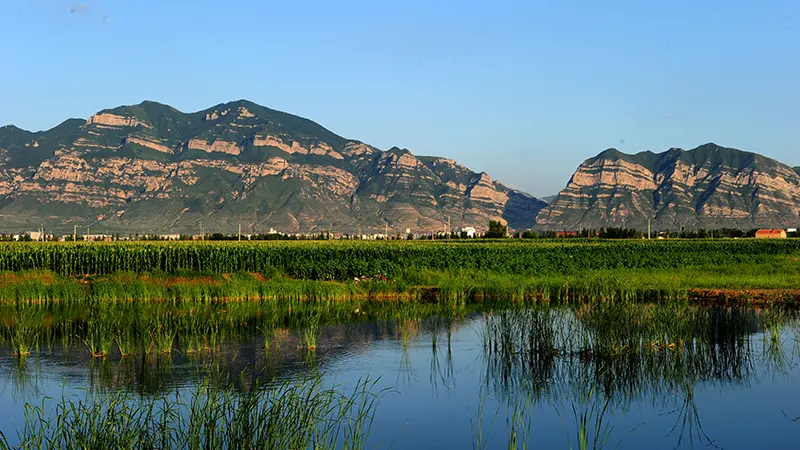
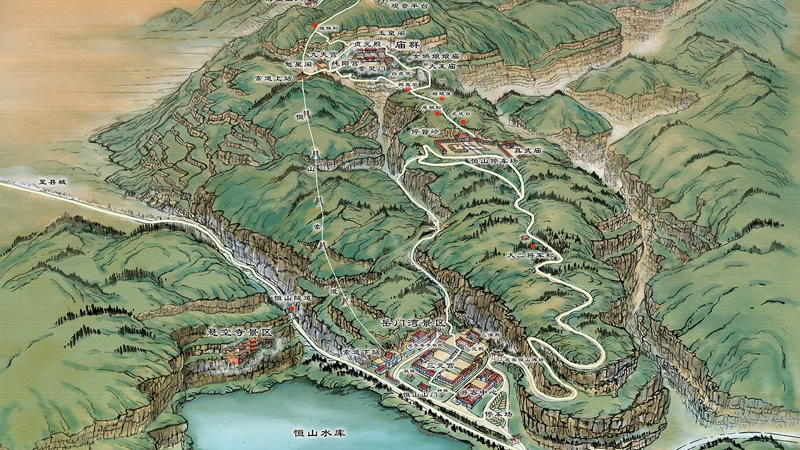
The Hengshan Mountain range stretches for thousands of miles from the Yin Mountains in Inner Mongolia, extending from northeast to southwest, finally converging with the Taihang Mountain system. It stretches 500 li from east to west, with 108 peaks side by side, with an average altitude of about 2000 meters. The main peak, Tianfengling, is located in Hunyuan County, Shanxi Province, with an altitude of 2016.1 meters. It is known as the "North Pillar of Heaven and Earth" and the "Famous Mountain of the Remote Frontier." Since ancient times, it has, along with Mount Tai (East), Mount Hua (West), Mount Heng (South), and Mount Song (Central), carried the heavy weight of Chinese mountain civilization, and together with the Taihang Mountains, the Lüliang Mountains, the Wangwu Mountains, the Zhongtiao Mountains, and the Yellow River, it has formed Shanxi's "inner and outer mountains and rivers." Historically, "Hengshan Mountain embraces the three Jin states to the south, crosses Youyan to the east, controls Yanguan to the west, and encircles Daigun to the north. South of the capital, it uses its shoulders and back to control the northern border; north of the capital, it uses its throat to control the Central Plains; its strategic position is unparalleled." Therefore, the military significance of Mount Heng is unmatched by the other four sacred mountains.

Climbing this mountain and letting your eyes wander, you always have a feeling of traversing a thousand years. Perhaps you will brush shoulders with Zhao Xiangzi, who is searching for treasure; you can also personally experience the "danger of Hengshan Mountain that can break the spine of the world" as described by Zhang Yi; and you can also meet famous generals such as Wei Qing and Huo Qubing, experiencing the thrill of winning thousands of miles away from the strategic planning. Vaguely, isn't that the Northern Wei army marching south to the Central Plains in the distance? They all relied on this mountain, and depended on this mountain.
Today, it still stands here, performing "Hengshan Mountain, like a line" for you and me. It is like a huge wave rolling to the edge of the northern sky, roaring all the way here and instantly turning to stone; it is also like the strong bones of Kuafu, the ancient giant, left behind on earth. It stretches endlessly, surging endlessly. 108 peaks rise and fall into the clouds. Looking around, it has the momentum of supporting the sky and towering over the earth. It is a barrier blocking the southward migration of nomads, and it is also the ancestral home that our ancestors have guarded for generations.
Eternal Lake Charm
The water of Hengshan Lake was originally an arch-shaped reservoir built in the 1950s under the direction of the famous water conservancy expert Qian Zhengying. With the changes of time, what was initially a dam reservoir to prevent floods now complements the scenic area perfectly, appearing naturally formed. The lake and mountains are picturesque, and the charm is extraordinary. The water of Heng Lake ripples with morning mist and evening sun, embracing the shadows of clouds and sky. The water, when surging, has the beauty of light, and this light has a thousand and one forms. When the morning glow first appears, the lake water, under the caress of the gentle breeze, circles unevenly, spreading a faint blush, and extending to the distance until the shadow of the sun slowly appears in the water; at noon, the sun is scorching, and the surface of the water glitters with silver light, occasionally gathering and scattering like wild horse dust. At this moment, the fish in the water also appear tired, not as lively as in the morning, and they all sink to the bottom to cool off and rest; when the setting sun falls, the surface of the lake is like cinnabar, and under the surrounding mountains, the glow seems to have a human touch, half permeating the lake and half permeating the mountain. The water, when calm, has the beauty of reflection, and this reflection makes one's imagination run wild. The flickering lights are the faint lights of the immortal; the gradually receding figures are the trekking backs of Xia Ke; the fluttering figures are the immortal demeanor of Li Bai; several willows stand quietly across the bank, like Buddhas and immortals meditating and seeking enlightenment…

The water of Hengshan Mountain thickly paints the scroll of North Shanxi, allowing the dust of thousands of years of iron horses and wind and sand to settle, leaving us with a place of ultimate beauty. If you were to boat on the lake, pick flowers and drink wine, although you may be alone on your journey, all things are thriving, and people can also be in harmony with each other.
Eternal Shade of Years
When the first ray of morning light breaks through the curtain of night, in an instant, thousands of golden rays of light fearlessly sweep from the other side of the mountain. It illuminates this sleepy city, and the golden waves instantly immerse everything here. Looking from afar, Hengshan Mountain, which carries thousands of years of human history, is like a wise man, standing in the vast golden sea, guiding you on your way.
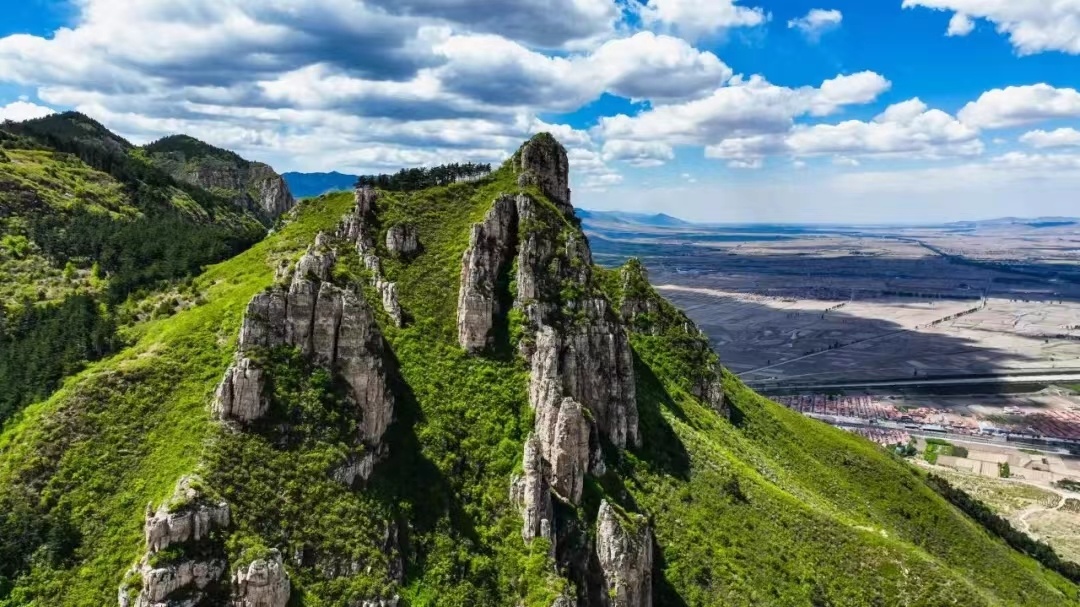
Because of its vast size and mysterious age, we who live at the foot of the mountain naturally feel that the care and protection provided by this natural backing are perfectly normal. Everyone tacitly understands this, and life goes on as usual, just like each family has a wise old person, everyone lives carefree and secure. The south slope of Hengshan Mountain is also our backyard. Every day, when dawn breaks, many people come here for morning exercises, walking through the winding paths and valleys, waking up the mountain; in the summer evenings, many children play here, catching crickets and chasing yellow butterflies; at the foot of the mountain, you can always see young couples whispering; older people stroll leisurely, enjoying the tranquility of life. You see, the people of Hunyuan have unknowingly incorporated this mountain into their own courtyards, and if there are distant guests who come to visit, they will generously share with you the stories and wisdom of this place for thousands of years.
Sunset Glow
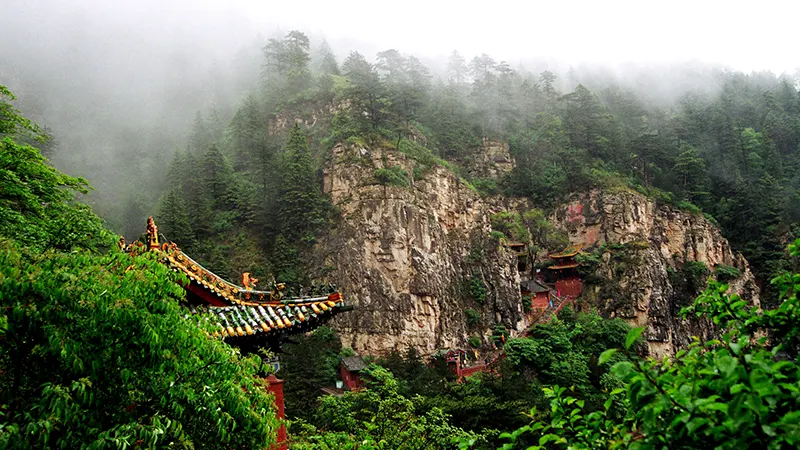
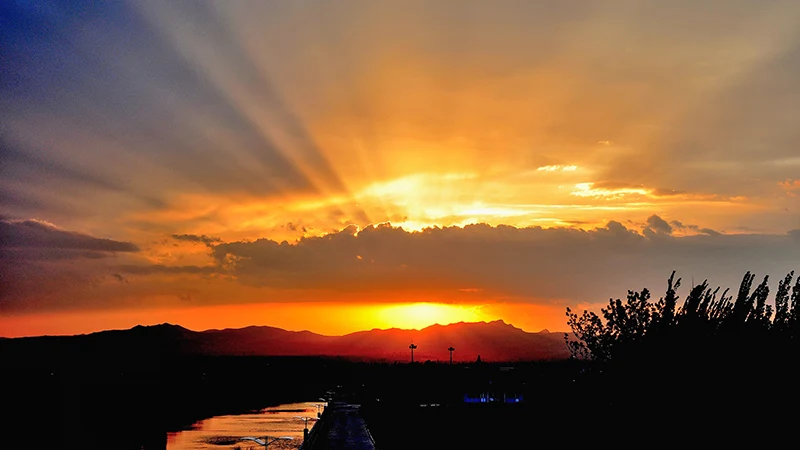
Since its construction in the early Northern Wei Dynasty, the Hengshan Taoist temples have gone through the changes of dynasties and the ravages of time, and have long been integrated with the mountain. They interpret and achieve each other. When the setting sun is still lingering on the horizon, and as the light fades, the mountains and forests gradually return to tranquility. At this moment, if you are here, don't rush to go down the mountain. Wait a little longer, and you will see "Sunset Glow," one of the eighteen scenic spots of Hengshan Mountain. Standing in the courtyard of Huixianfu and leaning on the railing to look out, the opposite valley instantly comes alive. It is the most beautiful moment of the day, which can be described as "The remaining light shines on thousands of mountains, and the entire valley is as picturesque as a painting."

The setting sun, sunset, and afterglow are usually the footnotes of loneliness and decay, but in these famous mountains and great rivers with thousands of years of accumulation, this scene is a close-up of the continuation of life's power. Like winter giving way to spring, although it is an ancient temple under the setting sun, when the bell rings again the next day, another sunrise will burst forth. Such a colorful scene, who would not be moved?
Spring Flowers and Autumn Moon
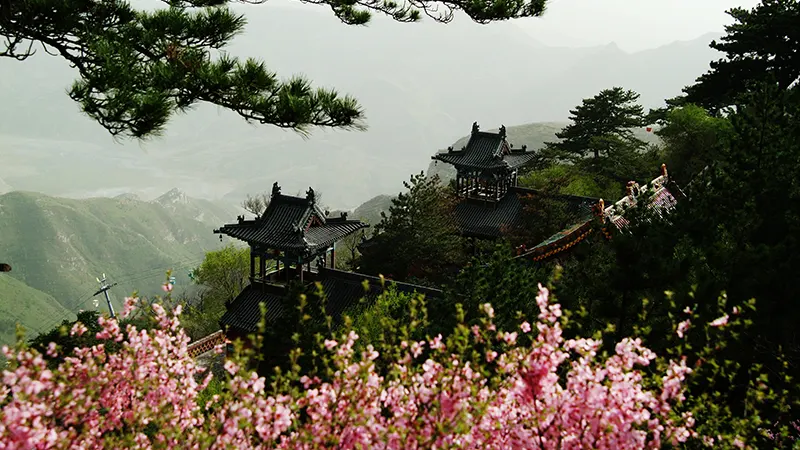
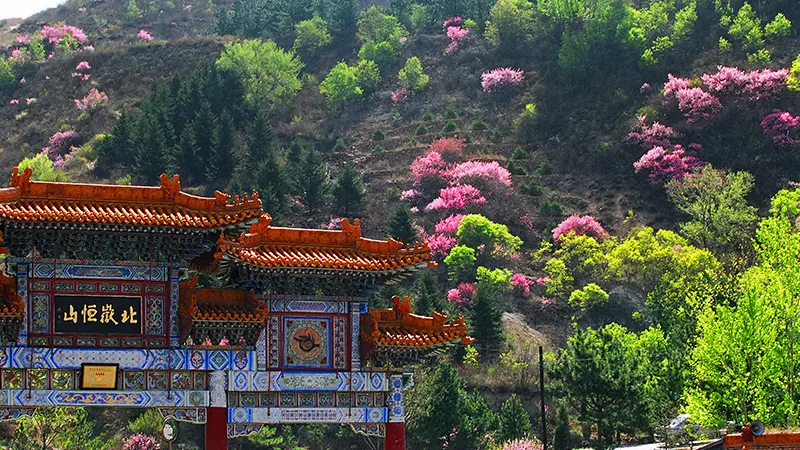
Although spring arrives slightly later in North China than in the South, the spring wind here comes with a fierce force. It shatters the hundred-zhang thick ice, sweeps across all the cliffs, and wherever it reaches, red flowers and light shades of blue immediately spread. At this time, the late spring of Hengshan Mountain will, as scheduled, interpret the romance of the classic Tang poem "Mountain Temple Peach Blossoms Begin to Bloom". Hengshan Mountain has already unfurled a 500-li canvas, and the painters of the four seasons have opened their eyes. The peach blossoms of Hengshan Mountain, with the colors of legend, are reflected in the spring mountain scroll overnight, exuding a unique delicate and graceful temperament as they unfurl their leaves and blossoms. Because of its sudden and unexpected arrival, everyone will come to enjoy the spring outing in groups of three or five, with the fastest speed and the most joyful mood, participating in this dynamic scroll. At that time, it is unknown whether people are in the painting or people and mountains become a painting, only the faint laughter echoing in this long mountain valley…

I don't know since when, spring flowers have always been accompanied by autumn moon. Spring and autumn also symbolize years and history. Perhaps the Chinese people do not like strong extreme alternations; spring and autumn are a bit more gentle. The autumn moon is the essence of autumn; it has sprinkled Tang poetry, reflected Song Ci, and also shines into our hearts. Climbing Hengshan Mountain and looking at the autumn moon, this border moon always has a touch of solemnity beyond the sorrow of parting. Looking at the bright moon as clear as water on one side and the infinitely profound inner heart on the other, life goes on endlessly from generation to generation, and the mountain moon looks similar year after year. Sometimes I wonder why not take advantage of my youth to travel across thousands of mountains and seas to find the moon in my life. Upon returning, I find that the mountain still stands there, you stand there, the bright moon is in the sky, and it is already a poem.
Summer Clouds and Cold Pines
Climbing mountains and visiting waters, discarding one's identity labels, will one's feelings be filled with the mountains and rivers, and one's emotions be entrusted to the mountains and rivers? In the summer of Hengshan Mountain, after a heavy rain, the streams in the valley will instantly swell. At this time, entering the mountains and forests, approaching the water's edge, besides the murmuring sounds of birds, there are also the gurgling sounds of streams and valleys. When the mountain wind blows, the sound of pines on the mountain peaks resounds, which is very pleasant to the ears, instantly refreshing the body and mind. If you catch the right moment, you will also have a sea of clouds to play with. After the rain, there are few tourists. Walking slowly on the stone road in the mountains, the body will occasionally pass through clouds and mist. Looking ahead, it is like a fairyland, dreamlike, indistinguishable from east to west. Looking up, you can see that some mountains are hidden in the clouds, and some are entangled by clouds and mist like jade belts, only revealing the mountain peaks like hats. With the flow and change of the clouds and mist, the shape of the mountains will also change in various ways. The strange peaks and rocks are now a matter of your imagination. It really fits the saying "Summer clouds have many strange peaks." If you can spread your arms and breathe in unison with the energy of heaven and earth, completely integrating your body and mind into the mountains and rivers, what kind of experience would it be? Would it be like Zhuangzi said, "Alone with the spirit of heaven and earth," would you truly feel "the unity of heaven and man"?
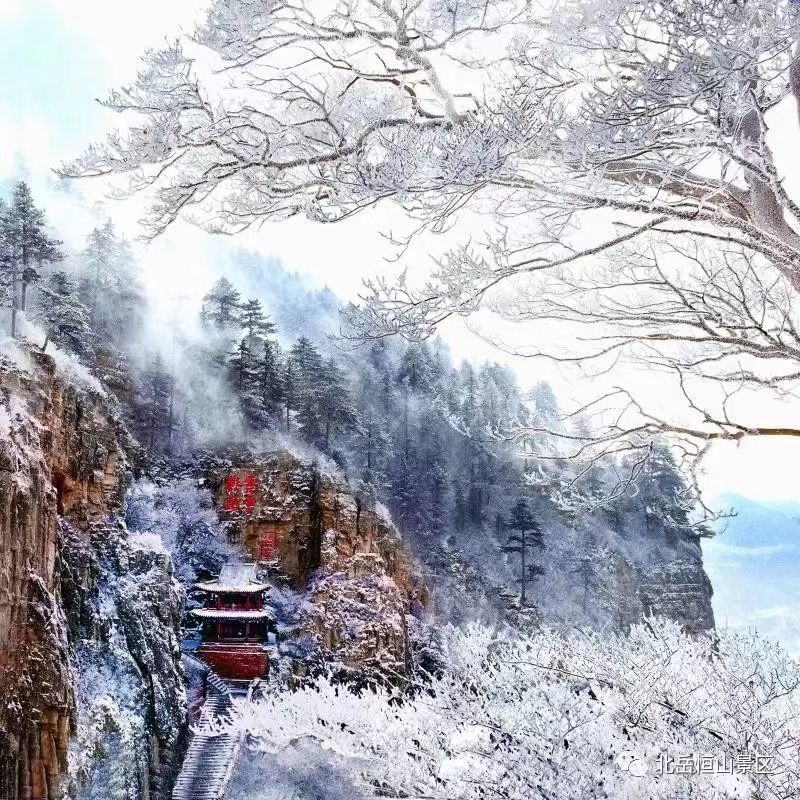
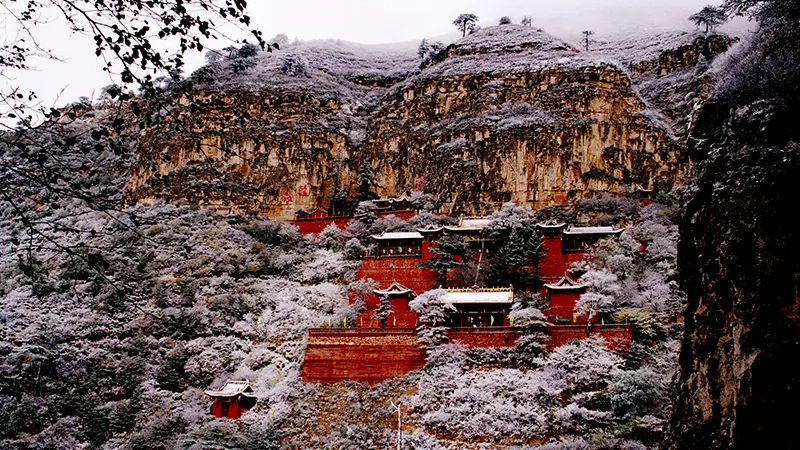
Winter is the season of Mount Heng. In the Book of Changes, winter is the beginning of the annual cycle in a practical sense. The Great Emperor of Mount Heng presides over winter; he allows all things to lie dormant, accumulating energy for spring. After a heavy snowfall, the mountains turn into snow-capped peaks, but they still cannot conceal the strings of devout climbing footprints. Here, cliffs reach into the clouds, snow pines stand proudly, and ice waterfalls hang straight down… Tourists are reluctant to leave for a long time. If this road needs witnesses and guardians, I think the most suitable ones are the cold pines on the mountain. Pines are one of the three friends of winter, best able to demonstrate the unyielding demeanor under the harsh winter of the north. These pines standing on the rocks of Hengshan Mountain, some are hundreds of years old, and some are more than 1400 years old. No matter how the wind and clouds change, they always maintain a majestic and tenacious posture, "no matter the wind from east, west, south, or north." They stand taller and see farther than we do; the vicissitudes of time they have experienced are something we can never reach in our lifetime. With these guardians, Hengshan Mountain is not lonely, and we are not lonely. So people, with their firm and calm hearts, walk from winter to spring, through the four seasons of life, and watch the scenery with a smile.
Beacon Fires and Autumn Cold

Beyond the Yanmen Pass, the land beyond the pass has always been filled with the desolation and vastness rarely seen in the inland civilization. The strong seasonal changes, the vast terrain, and the rugged mountains have come together to create the unique charm of this place. Because Hunyuan is located between the inner and outer Great Walls, there have been frequent wars in history, and it naturally possesses this border atmosphere. After summer, the west wind sweeps the land, the white grass turns autumnal first, the vegetation colors are activated, and under the colorful light and shadow, these beacon towers are particularly desolate and simple. Standing here, you will occasionally hear the sound of warhorses and see the scenes of nomadic attacks and farming people defending to the death. Looking at the beacon towers, my heart is filled with sadness. Their blurry faces flash through my mind; I can't tell whether they are enemies or friends, but they are all husbands of wives, fathers of children, and sons of mothers. The beacon fires left peace for posterity and war for themselves. Now, if you want to seek traces and sigh, you can only do so through the remains of these Great Wall beacon towers. Only then can you freeze history and vaguely see the tug-of-war between nomadic and farming people on the border, and feel the spiritual struggle deep within their hearts. In the disorderly switching between turmoil and peace, you can experience their helplessness and difficulties in advancing and retreating, and understand the vicissitudes of life experienced by the people here for thousands of years.
Shenxi's Grace
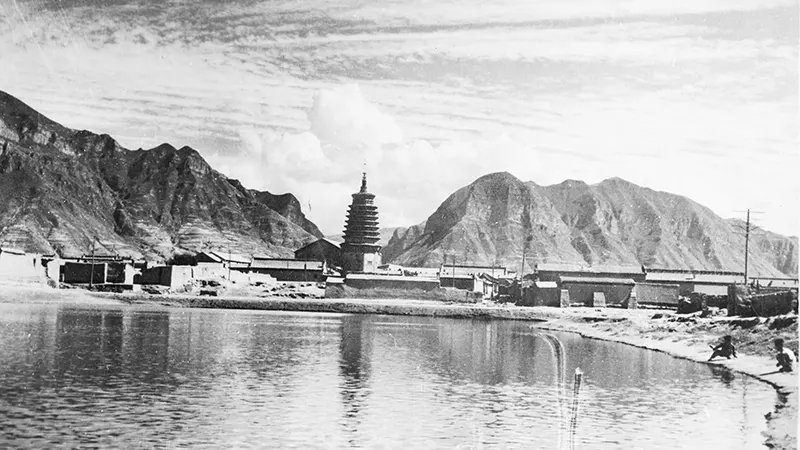
3 kilometers north of the county town at the foot of Hengshan Mountain, there is a small mountain of 0.5 kilometers in diameter, named Phoenix Mountain because of its shape like a phoenix. At the foot of the mountain, there are several springs, which are one of the sources of the Hun River, called Shenxi. Among them, a temple dedicated to the god of music from the Northern Wei Dynasty has been quietly located on a solitary rock in the water for thousands of years, with continuous incense. The north has always had long winters and short, windy summers, and under the added effect of the border's murderous atmosphere, this rare wetland lake in Shenxi has undoubtedly become an infinitely beautiful existence in people's hearts. It is like a beautiful dream, allowing you to temporarily leave your worries and sorrows; it is also like a mother's comforting hands, adding a touch of gentleness and peace to this land of both farming and herding.

As fallen flowers vanish in the flowing light, the silhouette of Hengshan Mountain becomes increasingly clear in the lake. After a thousand years, this place remains timeless, its beauty surpassing its former glory. Just as the east wind awakens the smoky green, the reeds in the water sway in the breeze. Spring and summer, unable to contain themselves, burst into laughter—a sound of swans flapping their wings and birds singing merrily. The summer lotus pond is lively and full of energy; several flocks of wild ducks appear and disappear, chasing and playing. The pond is unable to contain the unrestrained elegance of the lotus flowers; they stand tall and proud, scattering the charm of the Jiangnan region in clusters. Looking into the distance, the majestic Hengshan Mountain stands nearby. As the setting sun shines, the lake and mountains blend together, making one wonder if they are in the desolate and vast north or the richly flowered Jiangnan. Perhaps this is the essence of Shenxi, where scenery seamlessly combines strength and gentleness.
Mysterious Temple, Bright Moon

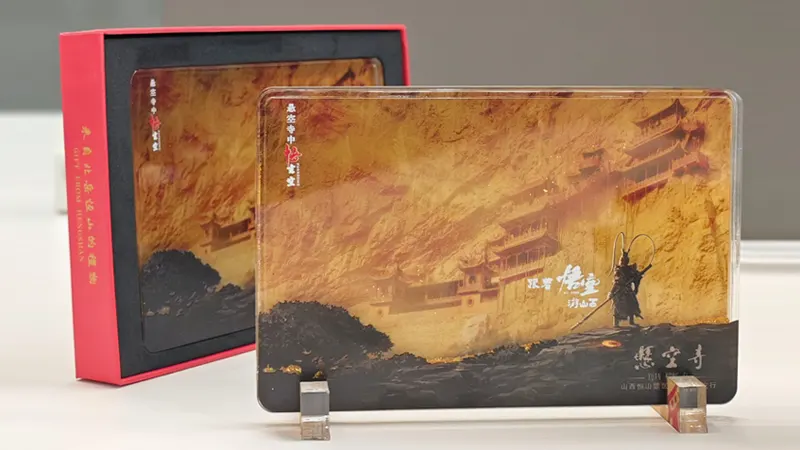
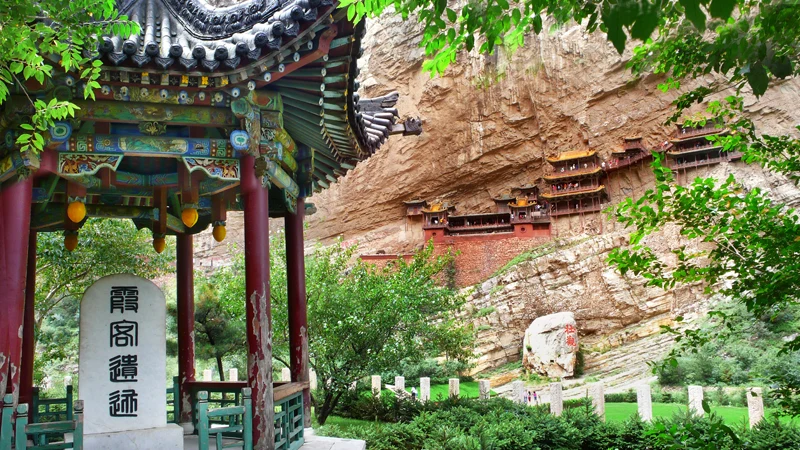
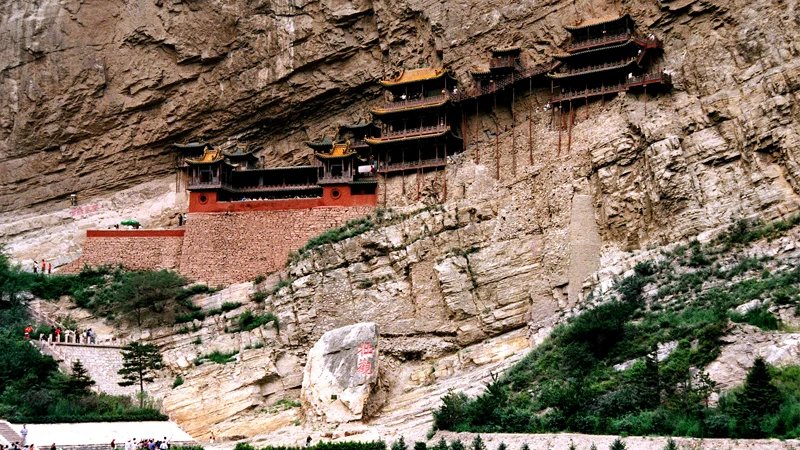
You are certainly familiar with the photos of Hanging Temple in various media: mountain temple peach blossoms, dangerously suspended buildings, a thousand-foot ice waterfall... Tourists from all over the country travel thousands of miles to witness its unparalleled beauty, but they often come and go in a hurry, neglecting other aspects. Every time a photo is taken, the fatigue of the journey is forgotten, and they happily pack up their bags. There aren’t many opportunities to encounter such beautiful scenery in life. Why not slow down your pace and carefully measure every inch of this land? Have you ever escaped the hustle and bustle of the world, sat quietly under the moon, and contemplated the vastness of the universe and the wonders of the mountain temple? The moonlit night, stars, mountains, and ancient temple are all independent and beautiful images. If they are connected, it is because the stars are bright because of the night, the night is profound because of the stars, the mountains are heavy because of the ancient temple, and the ancient temple is mysterious because of the mountains. Here, Confucianism's "self-cultivation, family harmony, governance, and peace," Buddhism's "all things are empty," and Taoism's "the way follows nature" complement each other from different stages of life and different levels of life, perfectly interpreting the vastness of the universe and its "way".
Ancient City Reborn
Hunyuan, a small city named after the river that flows through it, a small city famous for its hanging temple, a small city where the ancient city is reborn.

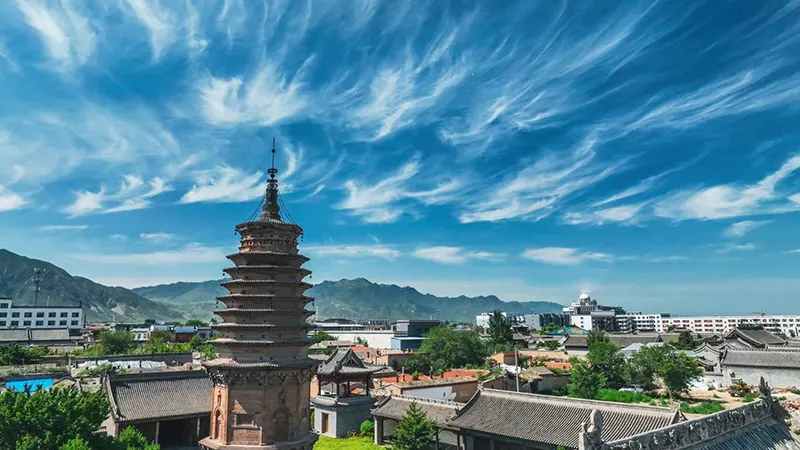
Rivers give birth to life and create civilization. Nourished by the Hunyuan River, the unique humanistic spirit of this land is strong, rich, harmonious, and inclusive. Ancient temples tell stories of history and continue legends. The world's architectural museum has our traces because of the unique Hanging Temple, and Hunyuan has become a frequently mentioned name, quietly transforming as tourists from all over the world come to visit.
Few people know the past and present of this thousand-year-old city. From the pioneering efforts of the early settlers to the hardships faced by camel caravans and wars, the city experienced periods of glory and decline, with joys and sorrows intertwined, profoundly etched into the genes of this land, yet we had never noticed. Today, this reborn ancient city has blown away the dust of history, restoring the city's past memories. During the day, the streets are bustling with crowds and lively shops; at night, the ancient city is illuminated, with lights and shadows flowing through the streets. People gather in groups, and if they were watching lanterns, it would be more accurate to say they are observing themselves.
The lights are dim, blending with the starry sky. In the hazy night, we also stay in the city's memory along with the ancient city.
Author: Deng Jing
Keywords:
Hengshan
Previous Page
Next Page
Related News
Contact Us
Beiyue Hengshan Scenic Area:
Travel Inquiry:+86-352-8333077
Ticket Inquiry:+86-352-8333031
Travel Complaints:+86-352-8333081
Emergency Rescue:+86-352-8333037
Scenic Area Product After-Sales Service Hotline:
+86-18636203837
+86-15383522518
Mount Hengshan Scenic Area Administration Center (Official)
+86-352-8322142
Hanging Temple
+86-352-8327795
Yuemenwan (Hengshan Mountain Gate)
+86-352-8480060 +86-352-8328318 +86-352-8328530
Hengzong
+86-352-8480115
Tianfeng Ridge
+86-352-8480114
Yong'an Temple
+86-352-8322390
Li's Family Cemetery
+86-352-8322381
Hengshan Cableway
+86-352-8322255
Official Media

Tiktok