

-
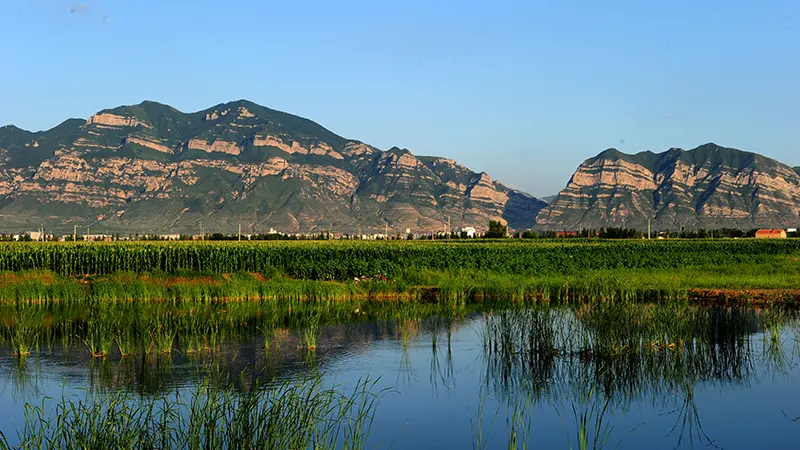
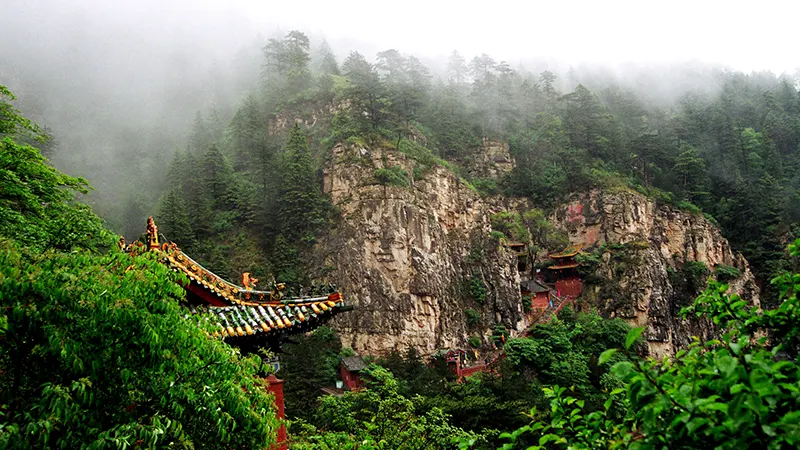
AboutMount Heng, an outstanding representative of the splendid mountains and rivers of China, a symbol of national prosperity, a totem of national spirit, an important geographical indication of the country, and holds the status of a national mountain.More
-
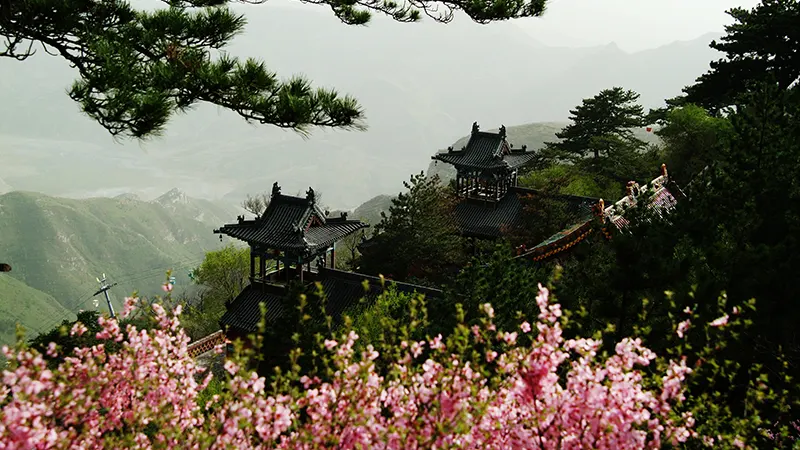
CultureHengshan has been a famous scenic spot and important birthplace of Taoism in northern China since ancient times. Carrying the symbols of Chinese civilization, it has nurtured profound regional culture and folk customs.More
-
-
Tourist GuideUnderstand relevant information about the scenic area and enjoy a better travel experience.More
-
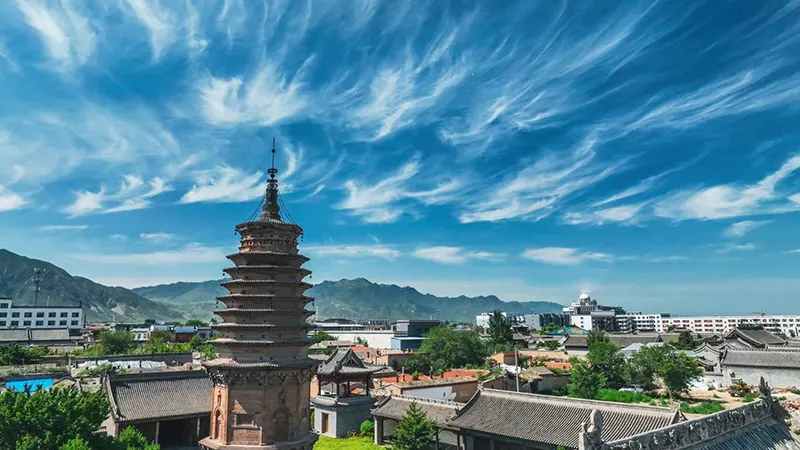
Surrounding activitiesThe ancient city of Hunyuan at the foot of Mount Heng in Beiyue has a long history, rich cultural heritage, beautiful scenery, and a convergence of agriculture, commerce, and animal husbandry. It has nurtured a unique regional culture and is renowned for its fine wine and delicious food.More








May 19th China Tourism Day - Retracing Xia Ke's Journey, and Enjoying Hengshan Mountain!
Publish Time:
2023-05-17 20:14
Source:
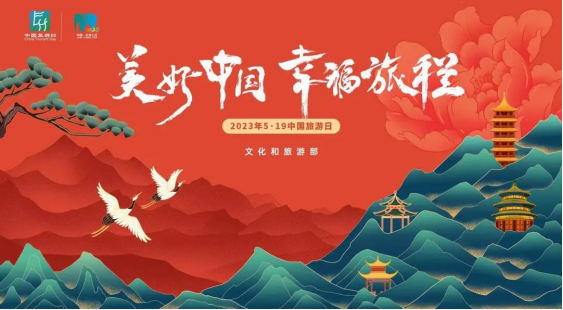
May 19th marks the 13th "China Tourism Day." On May 19th, 1613, the renowned Chinese traveler and geographer Xu Xiake began his travelogue, leaving behind the famous "Travels of Xu Xiake." This is the origin of designating May 19th as "China Tourism Day."
To thoroughly implement General Secretary Xi Jinping's important instructions in the 20th National Congress of the Communist Party of China report on "using culture to enhance tourism and tourism to highlight culture, and promoting the in-depth integration of culture and tourism development," and to meet the people's growing needs for high-quality and diversified tourism, the Ministry of Culture and Tourism will launch the 2023 "May 19th China Tourism Day" from May 1st to 31st nationwide, themed "Beautiful China, Happy Journey."
The main visual for the 2023 "May 19th China Tourism Day" publicity and promotion uses "China Red" as the main color, incorporating traditional Chinese elements such as peonies, pines, white cranes, and pavilions and towers. The overall image presents a scene of a vast landscape with peonies in bloom, pines and white cranes, and rolling mountains, symbolizing national prosperity and harmony, the happiness and well-being of the people, and harmonious coexistence with nature. The main visual is grand in style, showcasing Chinese aesthetics, aiming to express the Chinese people's beautiful expectations for life and the bright future of the Chinese nation through the magnificent mountains and rivers and brilliant culture of the land."
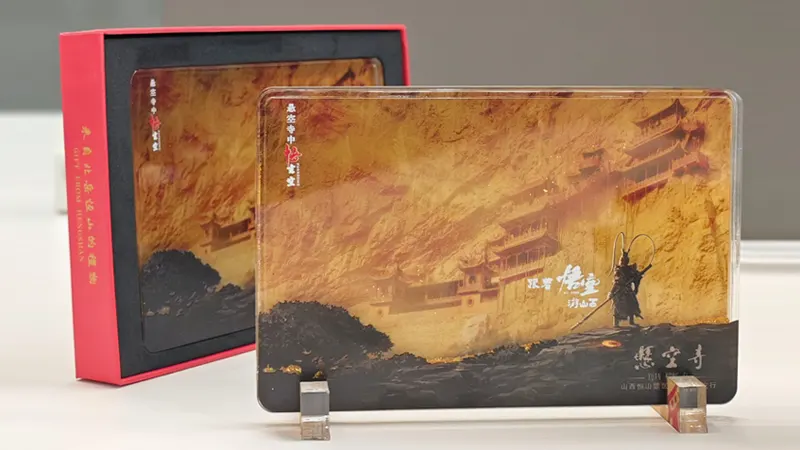
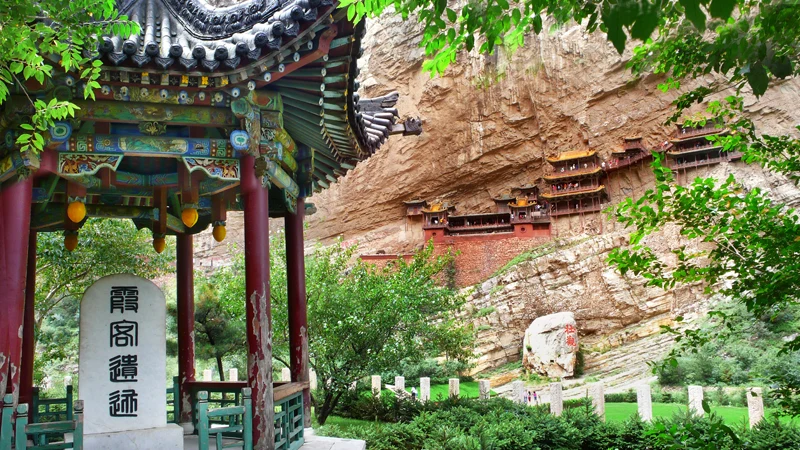
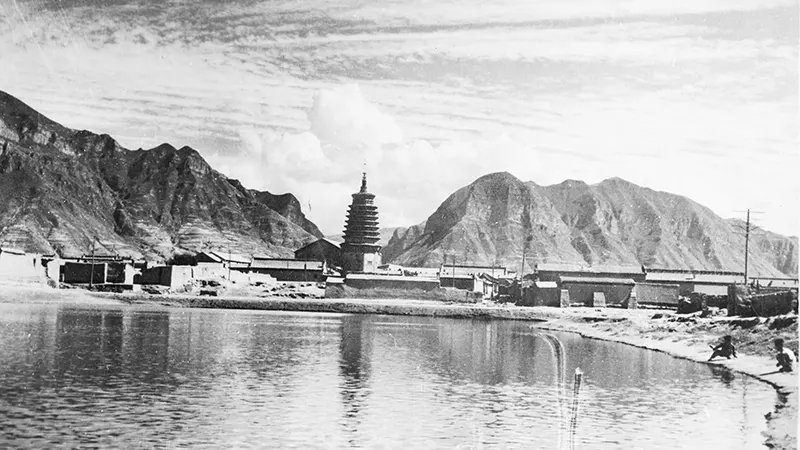
On May 19th, Hengshan Mountain temple complex, Hanging Temple, and the Yong'an Temple in the ancient city of Hunyuan will offer half-price discounts to domestic and international tourists.
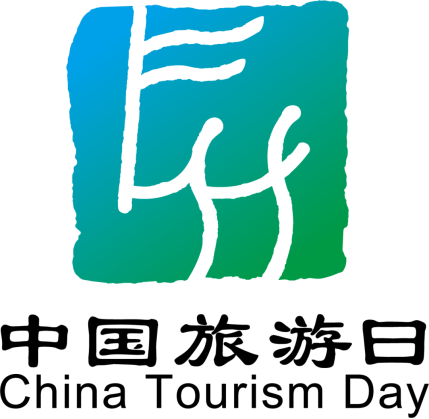
Logo and slogan for "China Tourism Day"
The main creative design of the China Tourism Day logo is derived from the oracle bone inscription of the character "旅" (travel) and traditional seal art. The logo uses traditional Chinese seal script for "China Tourism Day" and the English Arial font for "China Tourism Day" in a bilingual presentation, showcasing the international perspective and modern development concept of Chinese tourism. The use of blue and green colors—blue representing the sky and green representing nature—symbolizes the vigorous vitality of China's tourism development, and the green, environmentally friendly, harmonious, and civilized development advocated by China's tourism industry. The logo is steady in design, cleverly creative, with bright colors and a prominent theme, embodying a strong cultural flavor and distinctive appeal.
The origin of "May 19th China Tourism Day"
——In 1983, China became a member of the World Tourism Organization.
——In 1985, China designated a province, municipality, or autonomous region each year as the main venue for World Tourism Day celebrations. Since then, there has been discussion in the tourism academic and industry circles about whether China should also have a "China Tourism Day."
——In 1987, an article in "Tourism World" proposed the establishment of a "China Tourism Festival"; in 1999, someone inspired by World Tourism Day also proposed the establishment of a "China Tourism Day."
——On May 19, 2001, Ma Shaoqin, a resident of Ninghai, Zhejiang Province, issued a proposal to establish "China Tourism Day" in the name of the Ninghai Xu Xiake Tourism Club: "As China is transitioning from a major tourism resource country to a world tourism powerhouse, it should have its own tourism commemorative day. We propose that May 19th, the starting day of the first entry in "Travels of Xu Xiake" ("Diary of a Trip to Tiantai Mountain"), be designated as "China Tourism Day" to commemorate Xu Xiake and inspire all Chinese people to strive towards becoming a world tourism powerhouse."
——In 2007 and 2008, representatives from 12 cities in seven provinces and regions (Zhejiang, Anhui, Fujian, Jiangxi, Hunan, Guangxi, and Yunnan) jointly signed the "Declaration of Tourism Cooperation in the Xu Xiake Tourism Belt" at the Xu Xiake Tourism Belt Cooperation Summit, calling for the designation of May 19th, the start of "Travels of Xu Xiake," as "China Tourism Day."
——On June 16, 2008, the China National Tourism Administration convened relevant department leaders from Zhejiang and Jiangsu, leaders of the Ninghai County Tourism Bureau, and a group of experts and scholars to hold a symposium on "China Tourism Day" in Beijing. Most experts at the meeting believed that either May 19th, the starting date of "Travels of Xu Xiake", or the third Sunday of May would be suitable for "China Tourism Day."
——On February 12, 2009, Zhejiang Province held a tourism development conference, and the China National Tourism Administration and Zhejiang Province signed a memorandum of understanding on a close cooperation mechanism, which mentioned that the China National Tourism Administration supports designating May 19th, the starting day of "Travels of Xu Xiake", as "China Tourism Day."
——On December 1, 2009, the State Council issued "Opinions on Accelerating the Development of the Tourism Industry", which proposed the establishment of a "China Tourism Day."
——On December 4, 2009, the China National Tourism Administration officially launched the work of establishing "China Tourism Day."
——In December 2009, the "China Tourism Day Collection and Planning Special Working Committee" of the China National Tourism Administration authorized Sina.com to conduct a special survey on the establishment date of "China Tourism Day."
——On the morning of March 30, 2011, the State Council's executive meeting passed a resolution to designate May 19th, the starting date of "Travels of Xu Xiake", as "China Tourism Day."
The connection between Xu Xiake and Hengshan Mountain
Xu Xiake had a deep connection with Hengshan Mountain. This great traveler, praised as a "remarkable person of all time," beautifully described Hengshan Mountain with his powerful writing. His "Record of a Trip to Hengshan Mountain" is even included in middle school textbooks, and the Hanging Temple has a pavilion named Xia Ke Pavilion, with stone carvings inscribed by him.
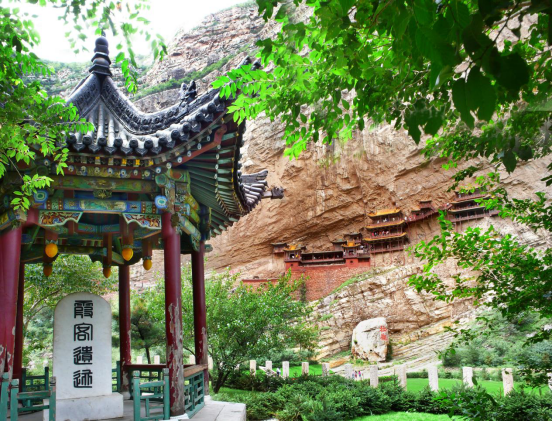
On the eleventh day, the wind and clouds cleared, and the sky was washed clean and blue. I climbed the mountain with a cane, facing east. The hills and mounds were gentle and easy to climb.
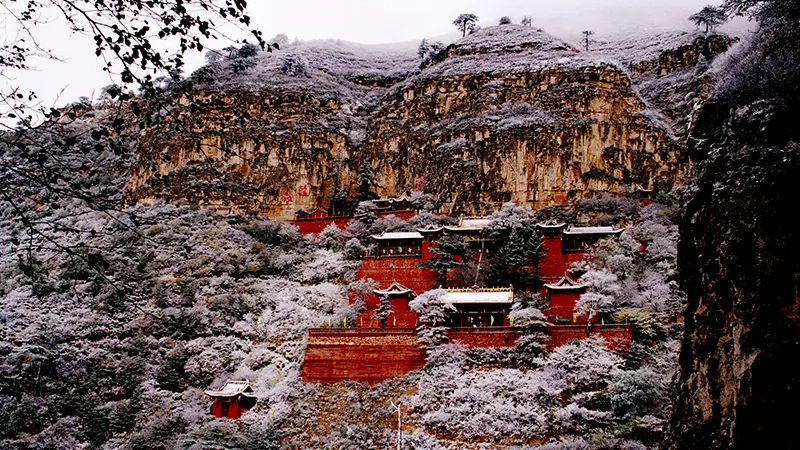
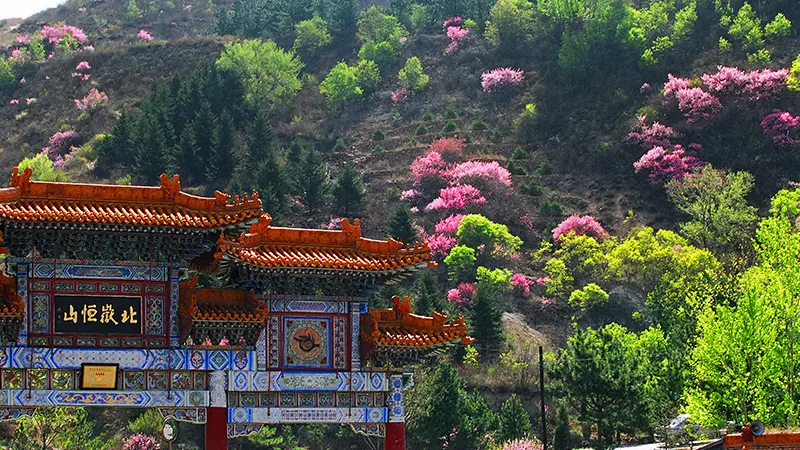
After one li (about 500 meters), I turned north. The mountains were all coal, readily accessible without deep mining. Another li, and the earth and stones were all red. There were coiled pines standing apart by the road, with a pavilion called Wangxian Pavilion. Another three li, and the cliffs began to rise, with the shadows of the pines dappling the sunlight. This is known as the Tiger Wind Pass. Then the stone road wound around, beginning to climb up the cliffs. After three li, there was a magnificent archway that read, "The First Mountain of the North," with government offices, kitchens, and wells inside. To the right of the archway, going east up the steps, halfway up the cliff was a palace. North of the palace was a cave with flying stones, and above that, the Northern Mountain Temple. It was supported by sheer cliffs on its back, and overlooked government offices below; under the temple, cloud-like steps reached to the sky, and above and below the gate were rows of stone tablets.
Going up from the right side of the temple, there was a stone cave, transformed into a room, called Huishen Terrace. Within the terrace, images of immortals filled the space. I wished to climb the steep cliffs and ascend the highest peak. I went back past the east of the temple, looking at the place where the two cliffs were cut off, and the grass and trees hanging down in the middle, a thousand feet deep, which was a path to the top; I took off my clothes, and climbed up. After two li, I climbed out of the cliff and looked up to the summit, which still stood mightily in the sky, but the whole mountain was covered with short, dense trees, withered and knotted bamboo branches, which scratched and pricked. Every step was hard-won, the effort was great, like falling into a torrent; I could barely move forward. I mustered my courage and went on. After a long time, the thorns disappeared, and I finally reached the top.
The day was clear and bright. Looking down from the north of the mountain, I saw collapsed cliffs and tangled, dense trees. The earthen mountains were treeless, while the stone mountains were wooded. The north side was all stone, so the trees were all on the north side. The city of Hunyuan Prefecture lies at the foot of the mountain. Looking north across the mountain range, the view was boundless and hazy. To the south was Longquan, and to the west was Wutai Mountain, their green peaks standing in company with this one. Nearby, the Longshan Mountain stretched westward, its branches extending eastward, as if shoulder to shoulder, they were about to seize the desert.
Then, descending the western peak, I followed the path into the gorge of dangerous cliffs. Looking down into the vast expanse below, I dared not descend. Suddenly, turning my head to look east, I saw a person swaying above. I climbed up to where he was and asked him. He pointed to the southeast, among the pines and cypresses, and I went in that direction. I reached the top of the dangerous cliff behind the sleeping palace. Soon, I found a path. Going south through the pine and cypress forest, I first looked down from the top, seeing the pines and cypresses lush and green, like garlic leaves and grass stems. But here, they were thick enough to embrace, towering into the sky. The pines and cypresses at Hufengkou were not a hundred times larger than these. Descending directly from the cliff crevice, I arrived at the right side of the sleeping palace, which is the Feishi Grotto.
——From the middle school textbook "A Journey to Hengshan Mountain" (by Xu Xiake)
Xu Xiake's Journey to Hunyuan
After touring Wutai Mountain, Xu Xiake entered Hunyuan from Fanshi. He arrived at Tuling on the evening of the ninth day and stayed overnight at a "house where residents share the same surname".
On the tenth day, Xu Xiake continued northward, following the stream that came from the south. Before reaching Longshan Mountain, he specifically mentioned two place names: "Jianling" and "Longyukou." In Pei Village Township, Jian Gan Liang still exists; whether this is the same as "Jianling" requires further confirmation. As for Longyukou, it may be the present-day Lingyunkou, which is the Longyukou recorded in Xu Xiake's "A Journey to Hengshan Mountain Diary" (the two names are homophones).
The description of the scenery between "Jianling" and "Longyukou" in the travelogue is particularly beautiful. Let's take a look:
Climbing the mountain and fording streams from Shahe, winding through the valleys, all I encountered were barren hills. Unexpectedly, I suddenly reached a high place, but the south of the ridge was still low-lying. Once over the northern ridge, I looked down and saw the east and west peaks connected like walls, with green and red streams flowing between them. Those that circled and reflected the sky were all stone, and the stones were all covered with trees. The color of the stones was uniform, but their shapes and textures were varied and beautiful. The colors of the trees were not uniform, but their interweaving created a beautiful tapestry. The stones, adorned with trees, were rugged and leaning, their beauty enhanced by the embellishment. The trees, growing on the stones, were flat and winding, their ancient appearance accentuated by the ruggedness of the stones.
The account continues with descriptions of Longshan Mountain, Longshan Dayun Temple, Jinlong Gorge, and Hanging Temple. On the evening of the tenth day, Xu Xiake rested at a "local earthen house" by the mountain gate of Hengshan Temple. At that time, "there were three gate plaques to the east of the stream, standing high on the mound, with hundreds of stone steps supporting them below." "The temple was still ten miles away, and on both sides were layers of earthen mountains, with the mountaintop invisible." This mountain gate should be the original entrance archway of the Hengshan Sanyuan Palace.
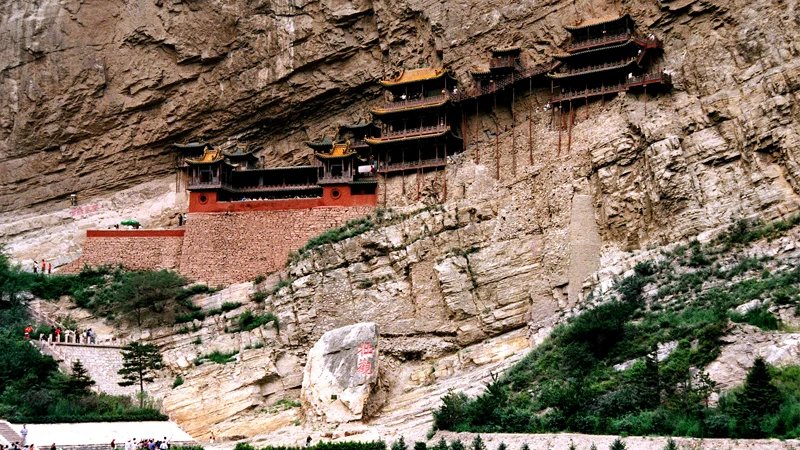
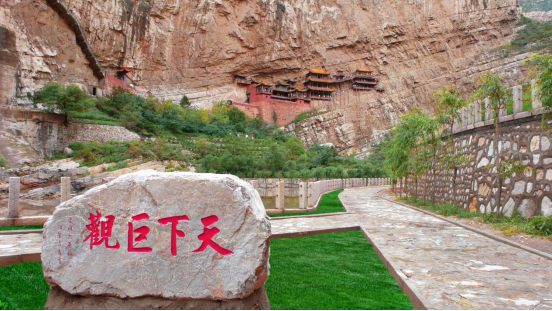
The Hanging Temple still preserves the stone inscription "A Great Wonder of the World" written by Xu Xiake, and a Xiake Pavilion has been built in his memory. It can be said that Hengshan Mountain is undoubtedly a must-visit destination for Xu Xiake's Shanxi tour.
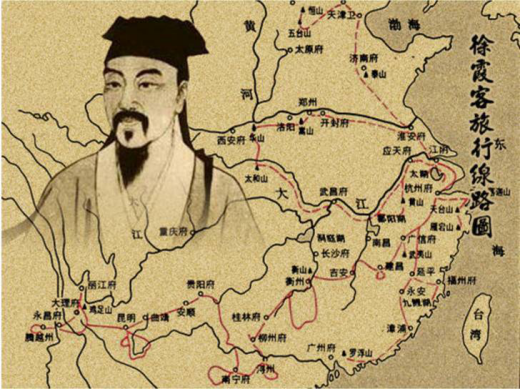
Coinciding with "May 19th China Tourism Day," "Eternal North Mount Hengshan, Honest Hunyuan" extends a sincere invitation to every tourist: Walk the path Xu Xiake walked, see the magnificent mountains and rivers described by Xu Xiake. Poetry and the distance will be yours!
Keywords:
Hengshan
Related News
Contact Us
Beiyue Hengshan Scenic Area:
Travel Inquiry:+86-352-8333077
Ticket Inquiry:+86-352-8333031
Travel Complaints:+86-352-8333081
Emergency Rescue:+86-352-8333037
Scenic Area Product After-Sales Service Hotline:
+86-18636203837
+86-15383522518
Mount Hengshan Scenic Area Administration Center (Official)
+86-352-8322142
Hanging Temple
+86-352-8327795
Yuemenwan (Hengshan Mountain Gate)
+86-352-8480060 +86-352-8328318 +86-352-8328530
Hengzong
+86-352-8480115
Tianfeng Ridge
+86-352-8480114
Yong'an Temple
+86-352-8322390
Li's Family Cemetery
+86-352-8322381
Hengshan Cableway
+86-352-8322255
Official Media

Tiktok